Top 10 Yoga Poses for PCOS and Thyroid in 2026
Discover 10 effective Yoga Poses for PCOS and Thyroid to balance hormones naturally. A beginner-friendly guide with steps, benefits, and daily routine.
Summarize this blog with:
Polycystic ovary syndrome (PCOS) and thyroid disorders are two of the most common hormone-related conditions women ask about, and many ask the same question: can yoga help? This guide covers what the research actually says and gives you 10 beginner-friendly yoga poses for PCOS and thyroid health, with clear steps and honest expectations.
What Are PCOS and Thyroid Disorders?
Before discussing yoga, it helps to understand what these conditions actually mean.
Polycystic ovary syndrome (PCOS) is a common hormonal and metabolic condition associated with reproductive, metabolic, and psychological features. Symptoms can include irregular menstrual cycles, excess androgen activity, acne, unwanted hair growth, difficulty with weight management, and fertility challenges.
PCOS is not simply a problem with the ovaries. It can involve several interconnected aspects of health, which is why modern management often includes physical activity, nutrition, psychological support, and medical treatment when appropriate.
The international PCOS guideline recommends lifestyle management for women with PCOS, including physical activity and healthy eating, with goals tailored to the individual's needs rather than relying on a one-size-fits-all approach.
Thyroid disorders are different. The thyroid is a small gland in the front of the neck that produces hormones involved in energy use, temperature regulation, heart function, brain function, and many other processes. Hypothyroidism occurs when the body does not have enough thyroid hormone.
PCOS and thyroid disorders can sometimes occur in the same person, but having one does not automatically mean you have the other.
That distinction matters because the goal of yoga should be supporting overall health, not claiming that a particular pose can "balance hormones" or directly repair an endocrine disorder.
Can Yoga Help With PCOS and Thyroid Health?
Possibly, as a complementary practice.
A 2026 systematic review of yoga for PCOS identified nine randomized controlled trials and reported potential improvements across some metabolic, endocrine, menstrual, anthropometric, and psychological outcomes. However, the researchers also highlighted considerable differences between studies, small sample sizes, and limitations in how confidently the results can be generalized.
Earlier systematic reviews have similarly found potentially beneficial effects of yoga therapy on menstrual irregularity, fasting glucose, insulin, insulin resistance, and some signs of hyperandrogenism, but rated the overall evidence as low strength.
Research involving hypothyroidism is also promising but preliminary. A 2024 systematic review included 11 studies involving 516 participants and found that yoga programmes commonly combining postures, breathing practices, meditation, and sometimes Surya Namaskar were associated with improvements in several measured outcomes. The authors emphasized the need for better-quality research. For more on yoga safety and evidence, see the National Center for Complementary and Integrative Health's overview.
So what does this mean practically?
Think of yoga as one part of a larger health routine.
It can help you move regularly, develop body awareness, practise controlled breathing, manage stress, and build consistency. Those are valuable goals even when a specific hormone level does not change. If you're choosing when to practise, choose a time that helps you build a consistent routine.
Top 10 Yoga Poses for PCOS and Thyroid
There is no scientifically established list of "special" poses that treats both PCOS and thyroid disease.
The following Top 10 Yoga Poses for PCOS and Thyroid are selected because they combine gentle mobility, strengthening, hip and spinal movement, relaxation, and breath awareness.
They are particularly suitable as a starting point for generally healthy beginners.
Quick comparison
| Yoga pose | Main focus | Beginner level |
|---|---|---|
| Cat-Cow | Spine and breathing | Easy |
| Child's Pose | Relaxation and hips | Easy |
| Cobra Pose | Back and chest | Easy–Moderate |
| Bridge Pose | Glutes and back | Moderate |
| Bound Angle | Hips and pelvic mobility | Easy |
| Garland Pose | Hips and legs | Moderate |
| Chair Pose | Legs and strength | Moderate |
| Locust Pose | Posterior-chain strength | Moderate |
| Legs Up the Wall | Relaxation | Easy |
| Easy Pose + breathing | Calm and mindfulness | Easy |
1. Cat-Cow Pose
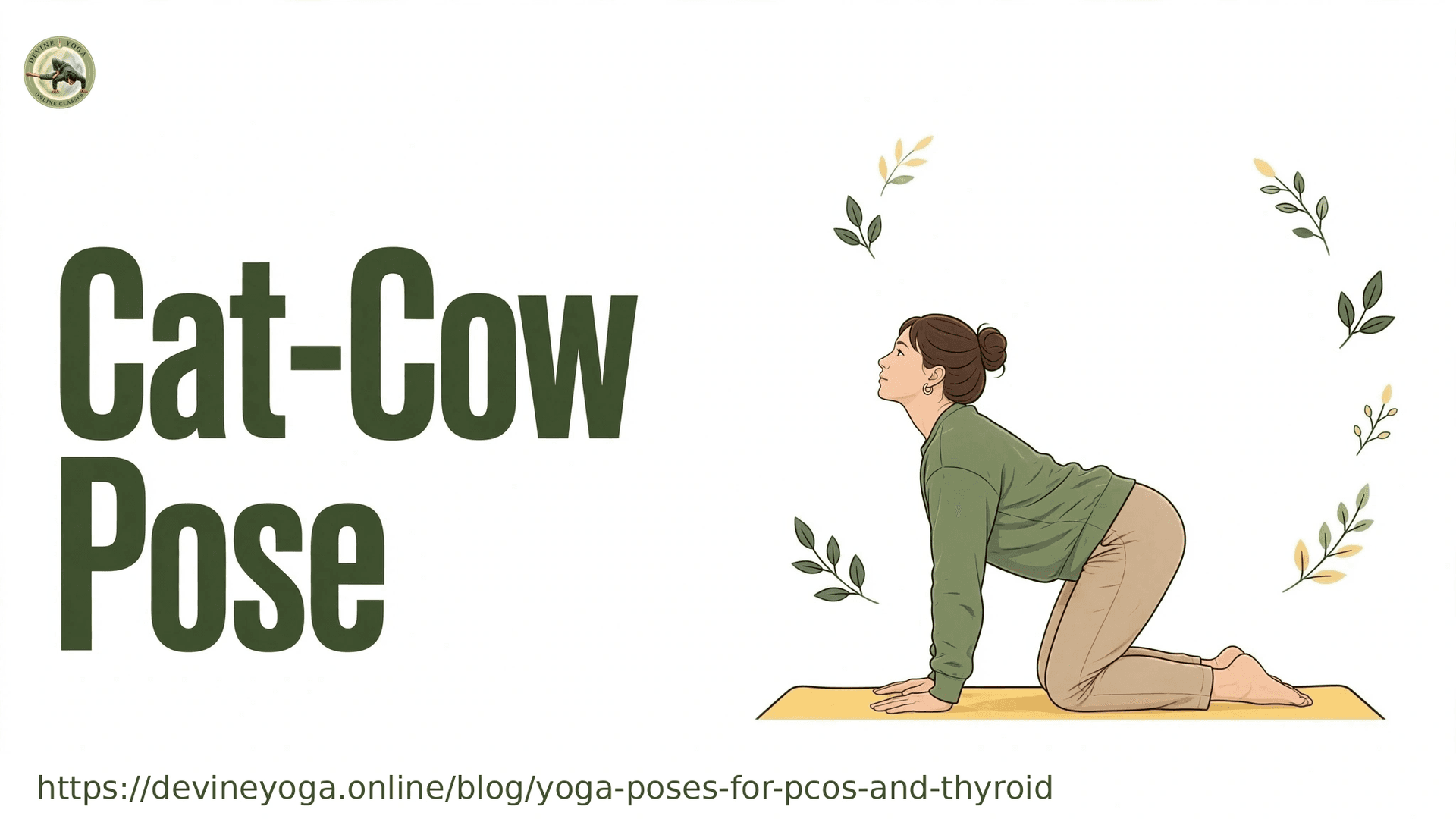
Sanskrit: Marjaryasana–Bitilasana
Cat-Cow is an excellent starting movement because it gently moves the spine between flexion and extension while coordinating movement with breathing.
How to practise
- Come onto your hands and knees.
- Place your wrists roughly below your shoulders.
- Place your knees below your hips.
- Inhale and gently lift your chest while allowing the spine to extend.
- Exhale and round your back comfortably.
- Continue slowly for 6–10 cycles.
Do not force the movement by throwing your head backward or pressing your belly toward the floor.
Why include it?
Beginners often spend long periods sitting. Cat-Cow provides a simple way to reconnect movement with breathing and gently mobilise the spine.
For someone beginning a PCOS or thyroid-friendly yoga routine, it also provides a gradual transition from rest into movement.
2. Child's Pose
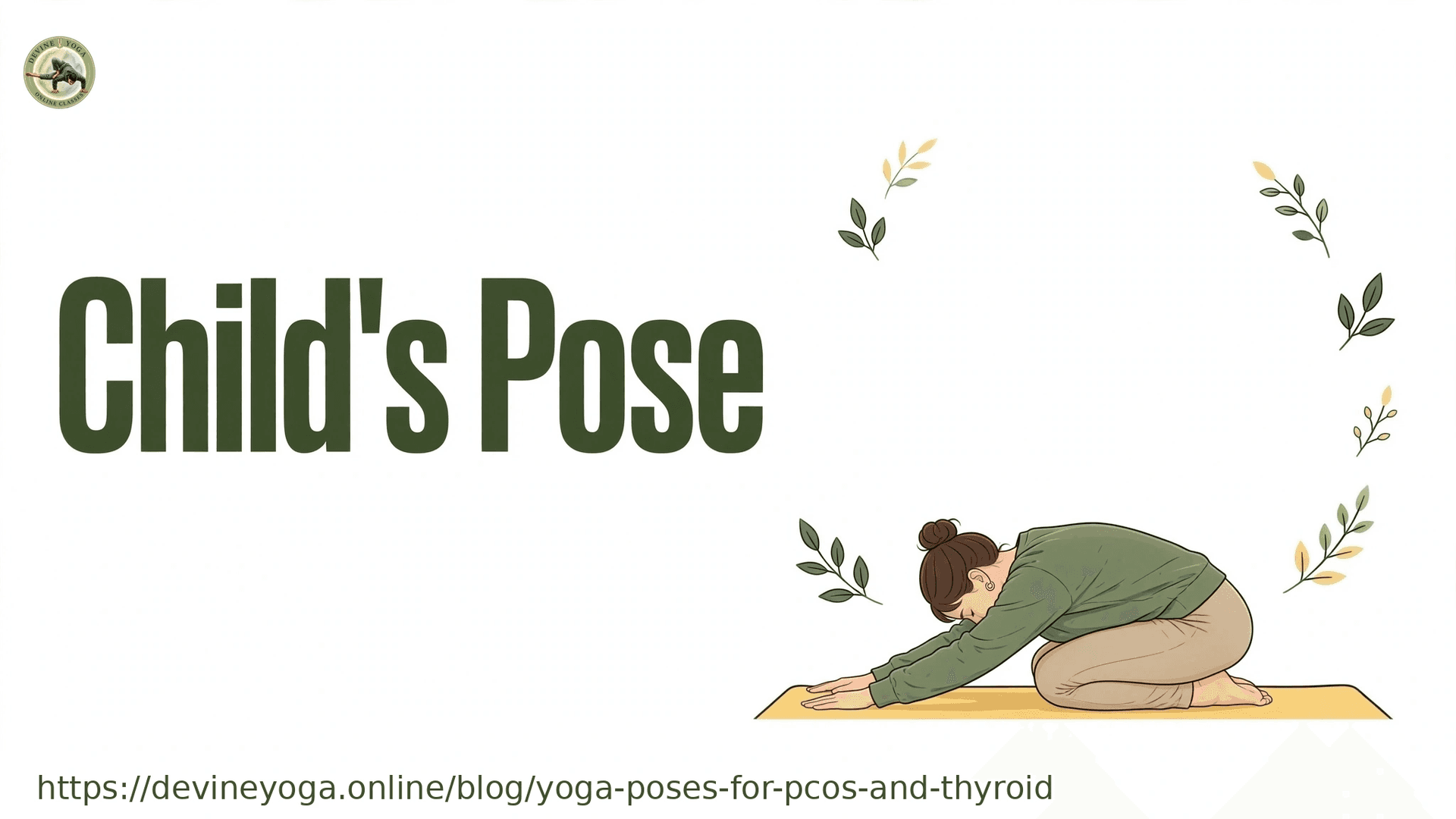
Sanskrit: Balasana
Child's Pose is less about "fixing" hormones and more about creating a comfortable pause.
How to practise
- Kneel on your mat.
- Bring your hips toward your heels.
- Fold your torso forward.
- Rest your forehead on the mat or a cushion.
- Extend your arms forward or keep them alongside your body.
- Breathe slowly for 30–60 seconds.
If your hips do not comfortably reach your heels, place a cushion between your thighs and calves.
Why include it?
A restorative posture can be useful between more active poses. It gives beginners an opportunity to notice their breathing and release unnecessary muscular effort.
If you have knee discomfort, modify the position rather than forcing the traditional shape.
3. Cobra Pose
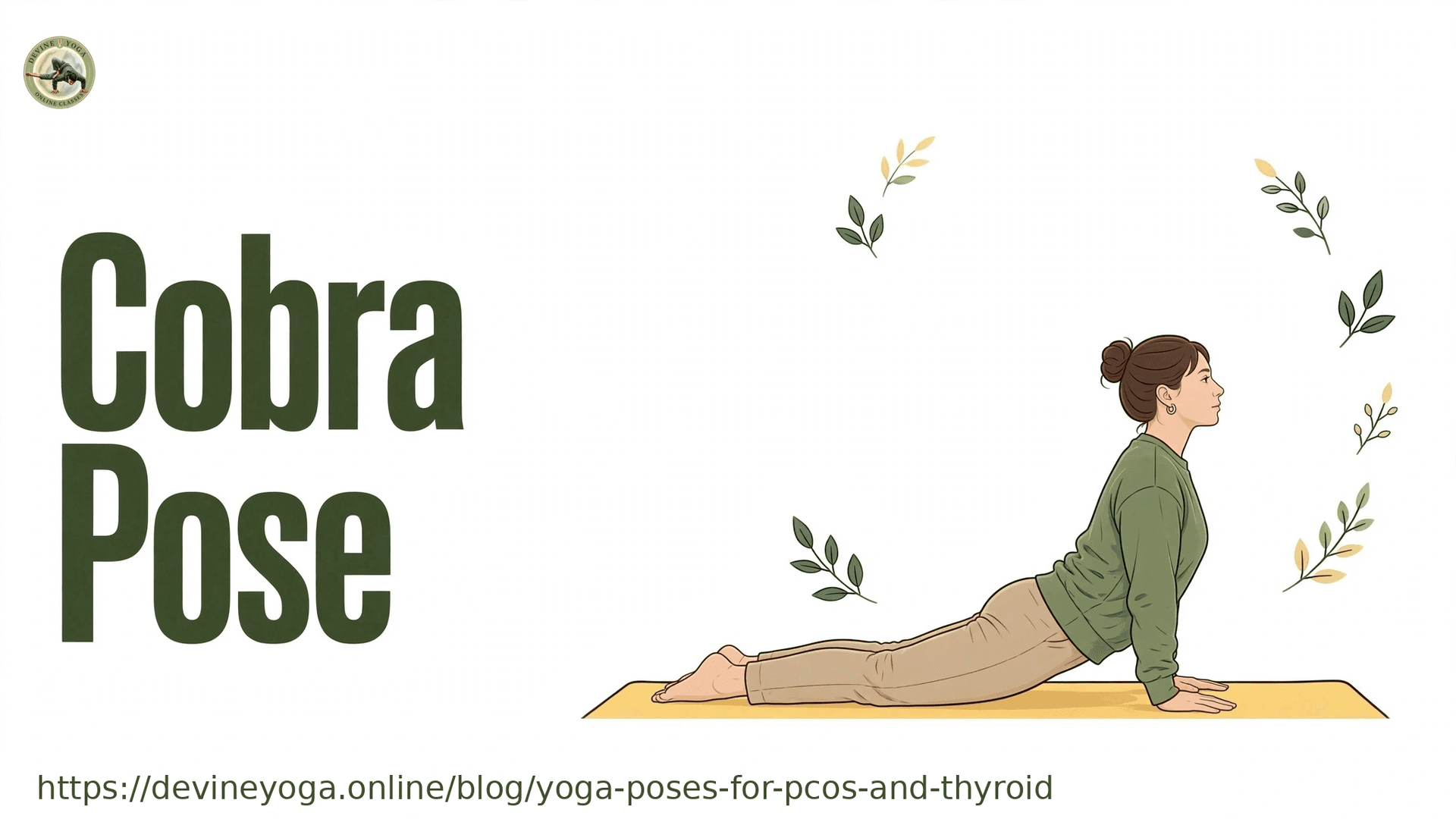
Sanskrit: Bhujangasana
Cobra Pose is a gentle backbend that works the muscles around the back and shoulders while opening the front of the body.
How to practise
- Lie on your stomach.
- Place your palms near your ribs.
- Keep your elbows close to your body.
- Press the tops of your feet into the floor.
- Inhale and gently lift your chest.
- Keep your pelvis and lower abdomen comfortably grounded.
- Hold for 10–20 seconds.
- Release slowly.
The most common beginner mistake is trying to lift too high.
A smaller Cobra performed with control is usually more useful than a dramatic backbend.
Why include it?
It provides gentle strengthening and mobility for the back and shoulders and can complement poses involving forward folding or prolonged sitting.
4. Bridge Pose
Sanskrit: Setu Bandhasana
Bridge Pose introduces more active strengthening.
How to practise
- Lie on your back.
- Bend your knees.
- Place your feet approximately hip-width apart.
- Keep your arms beside your body.
- Press your feet into the floor.
- Lift your hips gradually.
- Keep your knees pointing forward.
- Hold for 15–30 seconds.
- Lower slowly.
Try not to push your knees outward or inward.
Why include it?
Bridge Pose engages the glutes, hamstrings, back and core.
For PCOS, regular physical activity is an important part of overall lifestyle management. Yoga can contribute to that activity, although it should not be considered a substitute for all forms of exercise.
5. Bound Angle Pose
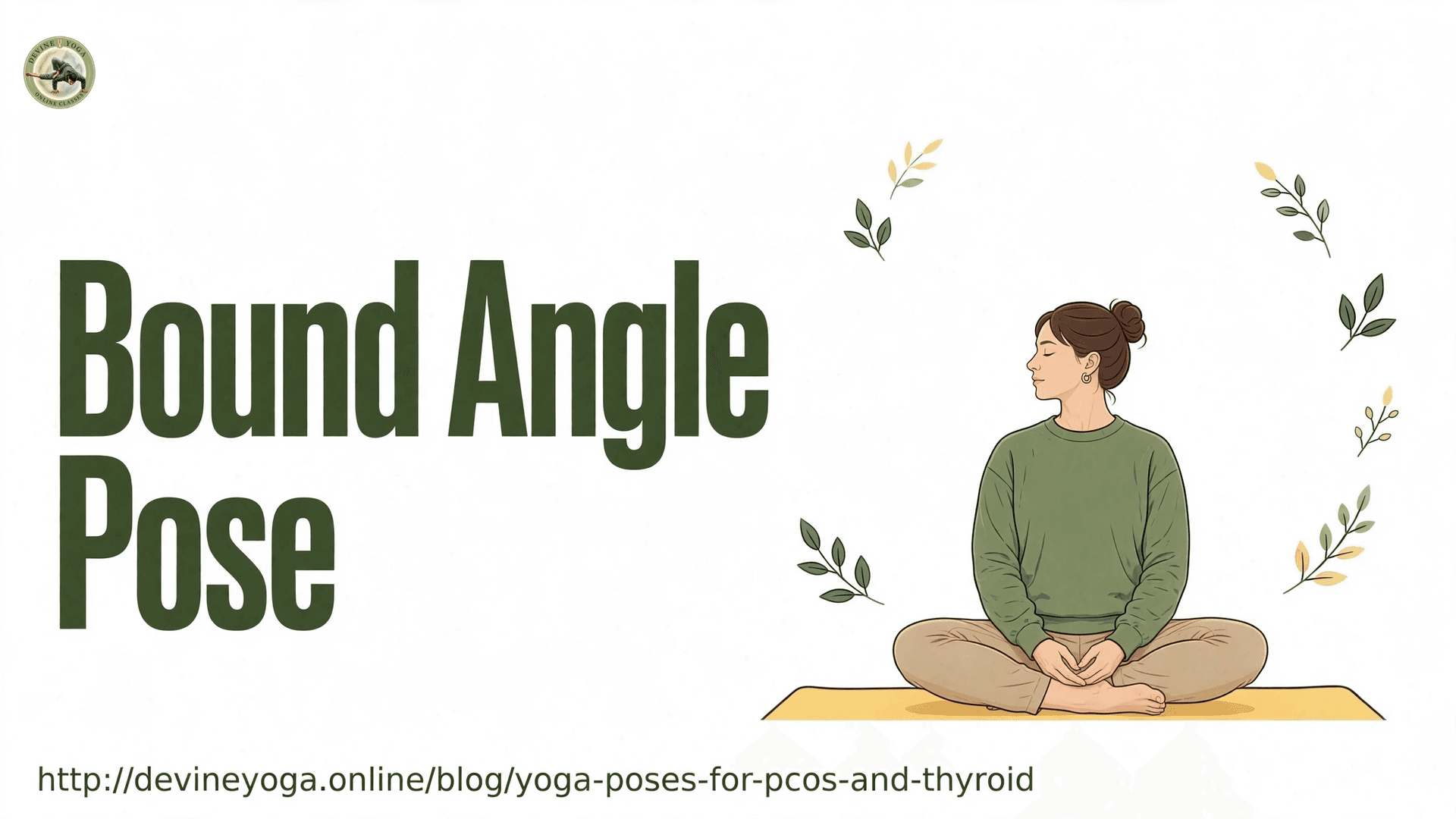
Sanskrit: Baddha Konasana
This seated posture is commonly used for gentle hip mobility.
How to practise
- Sit comfortably.
- Bring the soles of your feet together.
- Allow your knees to move outward naturally.
- Hold your feet or ankles.
- Sit tall.
- Stay for 30–60 seconds.
Do not repeatedly push your knees toward the floor.
Why include it?
Bound Angle Pose can help you explore comfortable hip movement while encouraging upright posture and slower breathing.
It is often useful at the beginning or end of a practice because it does not require intense strength.
6. Garland Pose
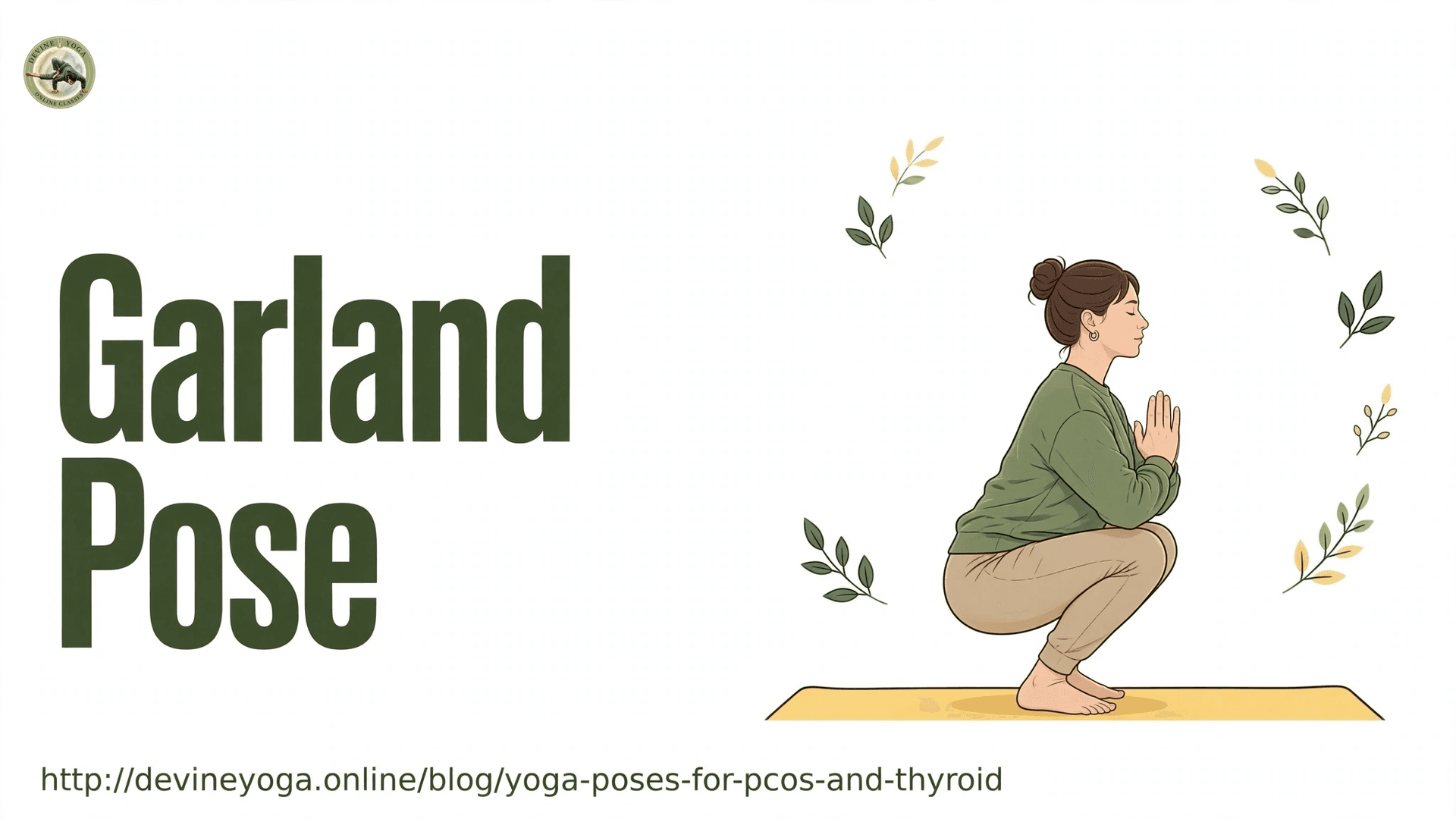
Sanskrit: Malasana
Garland Pose is a deeper squat that challenges the legs, hips, ankles, and balance.
How to practise
- Stand with your feet slightly wider than your hips.
- Turn your toes out slightly.
- Bend your knees and lower your hips.
- Bring your palms together if comfortable.
- Keep your spine reasonably long.
- Hold for 15–30 seconds.
Place a folded blanket or yoga block under your hips if you cannot squat comfortably.
Why include it?
Squatting is a functional movement that involves several large muscle groups.
For beginners, the supported version is often better than trying to achieve the deepest possible squat.
If you have significant knee, hip, or ankle problems, choose a gentler alternative.
7. Chair Pose
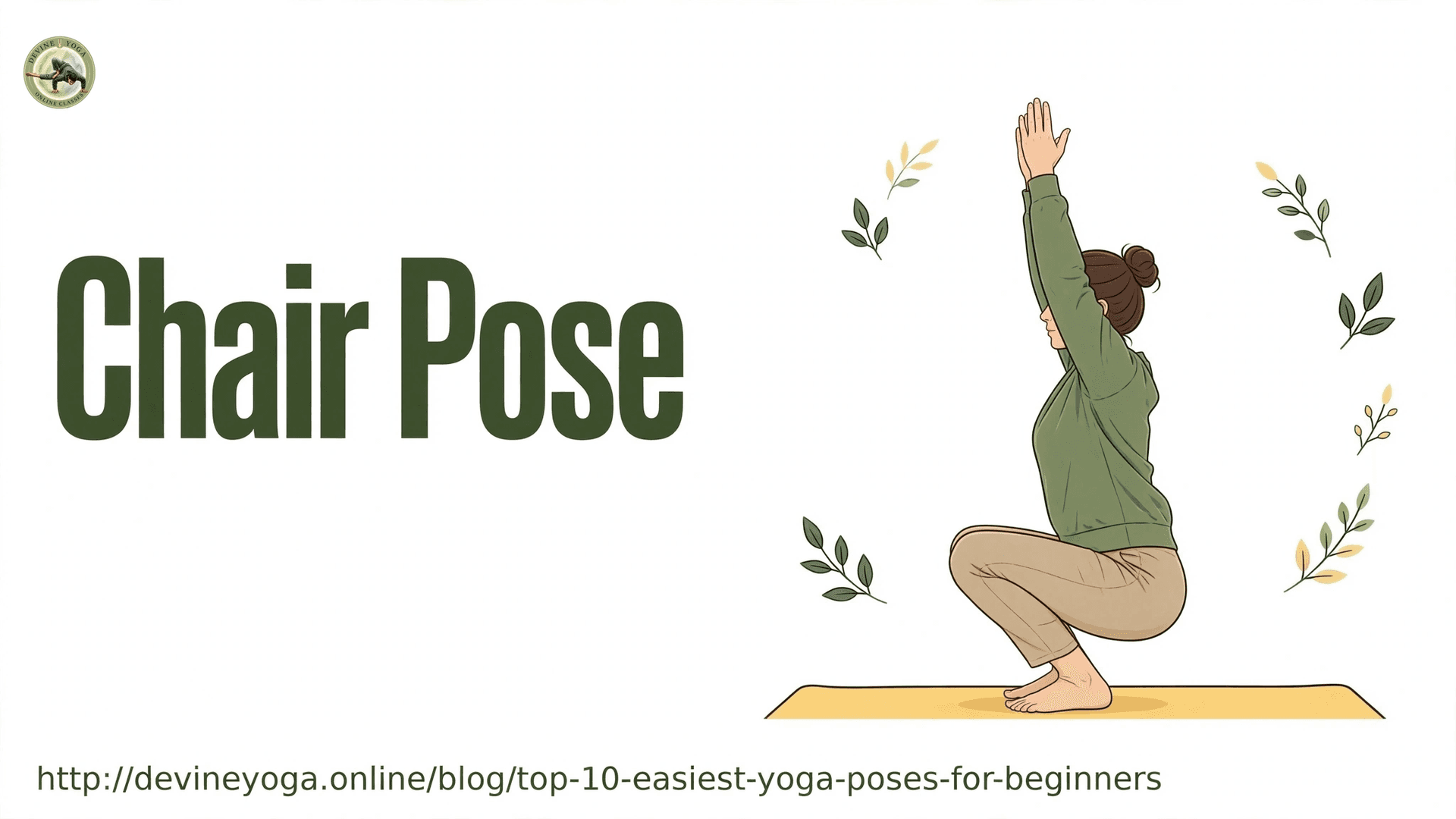
Sanskrit: Utkatasana
Chair Pose adds a stronger standing element to the sequence.
How to practise
- Stand with your feet comfortably apart.
- Bend your knees.
- Move your hips backward as if sitting into a chair.
- Keep your chest lifted.
- Extend your arms upward or forward.
- Hold for 15–30 seconds.
- Stand slowly.
Why include it?
Chair Pose trains the legs and glutes and raises the physical demand of the practice.
This is useful because yoga for PCOS should not become entirely passive. Depending on your fitness level, strengthening and other forms of physical activity can be valuable components of an overall movement routine. New to standing poses? Start with our guide to hatha yoga for beginners.
8. Locust Pose
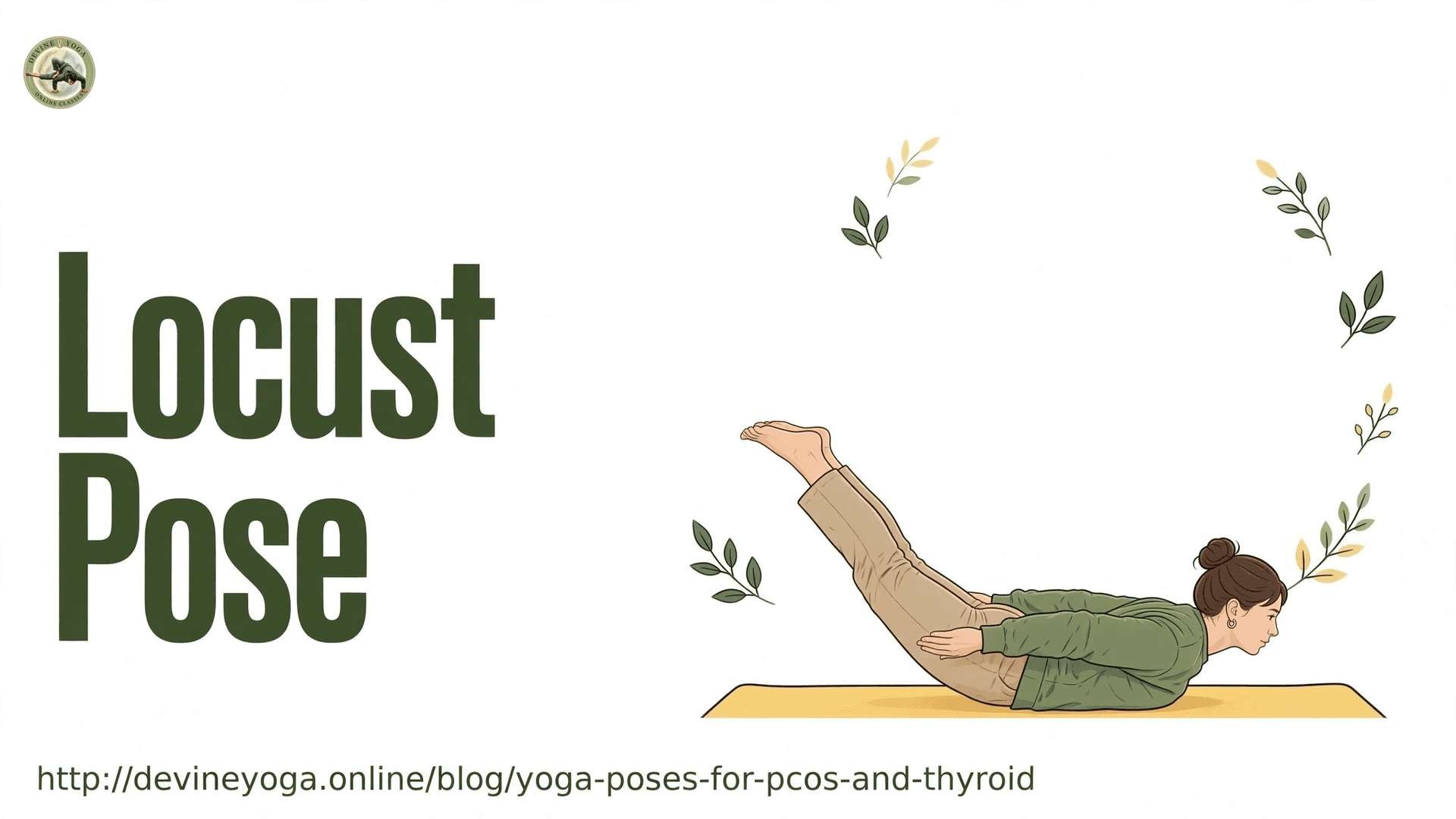
Sanskrit: Shalabhasana
Locust Pose strengthens the back of the body without requiring the large spinal extension of more advanced backbends.
How to practise
- Lie on your stomach.
- Keep your legs extended.
- Place your arms alongside your body.
- Inhale gently.
- Lift your chest and legs slightly.
- Keep the movement controlled.
- Hold for 10–20 seconds.
- Rest and repeat once or twice.
You do not need to lift your legs high.
Why include it?
The pose targets muscles along the posterior chain, including the back and gluteal region.
Beginners should focus on controlled engagement rather than height.
9. Legs Up the Wall
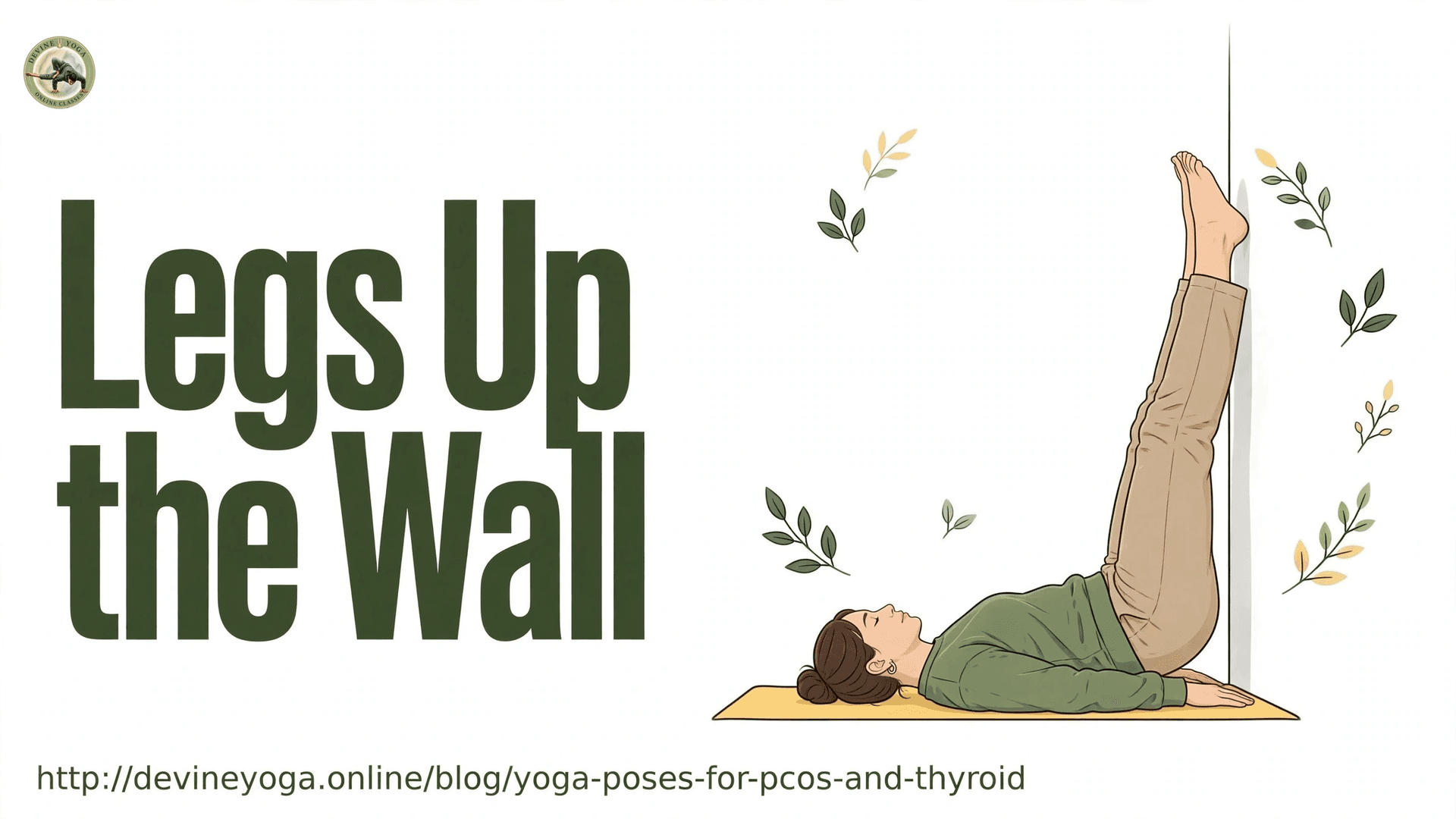
Sanskrit: Viparita Karani
This is one of the gentlest poses in the list.
How to practise
- Sit sideways beside a wall.
- Lie down and turn toward the wall.
- Bring your legs upward.
- Rest your legs against the wall.
- Keep your arms relaxed.
- Stay for 3–5 minutes while breathing comfortably.
A folded blanket under the hips or head may make the position more comfortable.
Why include it?
After stronger poses, a quiet posture gives the body an opportunity to slow down.
The value here is primarily relaxation and body awareness, not a claim that the pose "flushes toxins" or directly balances thyroid hormones.
10. Easy Pose With Breath Awareness (Sukhasana)
Sanskrit: Sukhasana
End your session with stillness.
How to practise
- Sit comfortably on the floor or on a chair.
- Keep your spine naturally upright.
- Relax your shoulders.
- Close your eyes if comfortable.
- Breathe naturally.
- Notice the movement of your abdomen and chest.
- Continue for 2–5 minutes.
You do not have to control every breath.
Simply noticing breathing can make the transition from physical practice to rest more deliberate.
Why include it?
Yoga traditionally treats breath, attention, and physical practice as interconnected aspects of practice.
For modern beginners, this can be especially useful because the benefit of a yoga session does not have to end when the final posture ends. To add structured breathing, see our pranayama guide and the Surya Namaskar guide for a full warm-up flow.
Common Mistakes Beginners Make
1. Looking for one "hormone-balancing" pose
No single posture has been established as a cure for PCOS or thyroid disease.
2. Practising too intensely
More sweating does not automatically mean a better yoga session.
3. Ignoring strength
A PCOS-friendly routine does not have to consist only of restorative postures. Appropriate strengthening and regular physical activity matter too.
4. Holding the breath
Beginners sometimes unconsciously stop breathing during challenging poses. Keep breathing naturally unless a qualified teacher has specifically taught you a breath technique.
5. Comparing your flexibility
Your body does not need to resemble an Instagram photograph for yoga to be useful.
For more common mistakes beginners make, see our beginner's guide.
6. Stopping prescribed treatment
This is one of the most important mistakes to avoid.
For hypothyroidism, levothyroxine is a standard hormone-replacement treatment, and authoritative medical guidance advises against stopping or changing thyroid medication without medical advice.
Can Yoga Replace PCOS or Thyroid Treatment?
Yoga can be used as a complementary wellness practice, but it should not replace appropriate diagnosis, medication, nutrition support, physical activity, or follow-up care.
For hypothyroidism, treatment commonly involves thyroid hormone replacement such as levothyroxine, depending on the individual's diagnosis and medical circumstances.
Likewise, PCOS management is individualized. Lifestyle intervention is an important part of evidence-based PCOS care, but some people may also require medication or specialist support.
A useful way to think about yoga is:
Medical care + movement + nutrition + sleep + stress management + sustainable habits
Yoga can comfortably occupy the movement and mind-body portion of that picture. If your periods are heavy or irregular, also read which yoga poses to avoid during periods, and for the stress side of the picture see yoga for stress relief.
This article is for general information and is not medical advice. Check with your doctor before starting a new exercise routine, especially if you have a diagnosed thyroid or hormonal condition.
Frequently asked questions
Can yoga really help with PCOS and thyroid?
Yoga is a supportive practice, not a replacement for medical treatment. Research suggests it may help by lowering stress, supporting regular movement and weight management, and improving some metabolic markers such as insulin resistance, but the evidence is still limited and varies between studies.
Which yoga is best for PCOS and thyroid at home?
There is no single best sequence. A gentle mix of spinal movement (Cat-Cow), hip openers (Bound Angle), light strengthening (Chair, Locust, Bridge), restorative poses (Child's Pose, Legs Up the Wall) and slow breathing is a sensible starting point for most healthy beginners.
How long does it take to see results?
Many beginners notice better sleep, energy and mood within a few weeks of regular practice. Changes in cycle regularity or metabolism, if they happen, are slower and differ from person to person, so track them with your doctor over several months.
Can I do yoga while taking thyroid medication?
Yes. Yoga does not interfere with thyroid medication. Take your medicine exactly as your doctor advised, usually on an empty stomach, and never stop or change the dose because you started yoga.
Is Sarvangasana (shoulder stand) safe for all thyroid types?
Not for everyone. It puts load on the neck, so avoid it if you have a neck injury, uncontrolled high blood pressure, or any thyroid condition your doctor has asked you to be careful with. Legs Up the Wall is a gentler alternative.
How many times should I repeat each pose?
For beginners, holding each pose for the times suggested above while breathing slowly is enough. Quality, comfort and consistency matter more than the number of repetitions.
What time of day is best for PCOS and thyroid yoga?
The best time is the one you can keep up regularly. A gentle morning practice suits many people, while restorative poses and slow breathing in the evening can help you wind down before sleep.
Reading is a start. A live teacher is the shortcut.
In a Devine Yoga Online class your trainer sees you, corrects you by name and adapts every pose to your body - beginners included.
Related blogs
Top 10 Easiest Yoga Poses for Beginners
Discover Top 10 Easiest Yoga Poses for Beginners. Simple, safe steps, benefits, breathing tips and mistakes to avoid.
15 min read
What Is Aerial Yoga? Meaning, Benefits, and Basics
What is aerial yoga? Learn its meaning, how aerial hammock yoga works, benefits, safety tips, basics for beginners & who should avoid it.
12 min read
Yoga for Senior Citizens: Benefits, Easy Poses and Safety Tips
Explore gentle yoga for senior citizens, including chair yoga, beginner-friendly poses, benefits, safety tips and a simple daily routine for healthy ageing.
18 min read