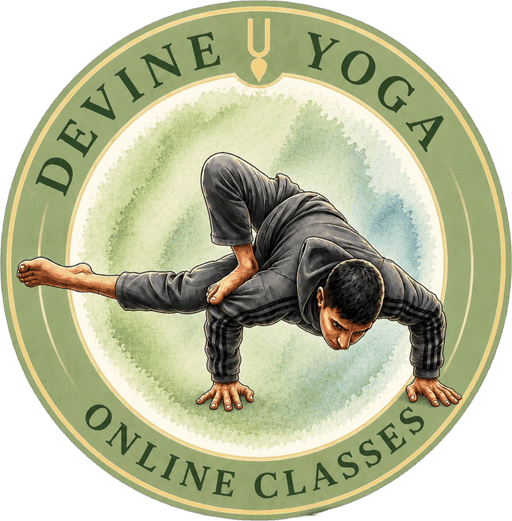
What Is Aerial Yoga? Meaning, Benefits, and Basics
What is aerial yoga? Learn its meaning, how aerial hammock yoga works, benefits, safety tips, basics for beginners & who should avoid it.
Summarize this blog with:
Have you ever seen someone practising yoga while suspended in a beautiful fabric hammock? It may look like an acrobatic performance, but it is actually a modern yoga practice known as aerial yoga.
Unlike traditional yoga, where most postures are performed on a yoga mat, aerial yoga uses a soft fabric hammock suspended from a secure overhead support. The hammock helps support the body during stretches, movements and selected yoga postures. It also allows practitioners to explore positions that may feel different from those performed on the floor.
For beginners, aerial yoga can be an interesting way to experience movement, flexibility and relaxation. Some classes focus on gentle stretching and supported postures, while others include more challenging movements and inversions.
What Is Aerial Yoga?
Aerial yoga is a hybrid yoga style where a wide, soft parachute-silk hammock, hung at hip height, supports your body weight while you practice traditional and adapted yoga poses in the air and on the ground.
In Sanskrit terms, think of it as supported asana. The hammock is not a circus prop; it is like a prop in Iyengar yoga - similar to a belt, bolster or wall rope. It helps you achieve sthira sukham asanam - steady and comfortable posture - with less strain.
Aerial Yoga Meaning and Origin
What Does Aerial Yoga Mean?
The term aerial refers to something related to the air or taking place above the ground. Yoga is a practice traditionally associated with the union of body, mind and awareness.
Together, aerial yoga describes a style of yoga in which participants use a suspended hammock to perform selected movements and postures.
You may also hear it called:
- Hammock Yoga: A name that describes the use of a fabric hammock.
- Anti-Gravity Yoga: A term used by some aerial fitness programmes and studios.
- Flying Yoga: An informal name referring to the suspended movements.
These names are sometimes used interchangeably, although individual studios and branded programmes may follow different methods.
Where Did Aerial Yoga Originate?
Traditional yoga has a long history rooted in India. Aerial yoga, however, is a much more recent development.
Modern aerial yoga grew through the combination of yoga postures and ideas from aerial arts, dance, gymnastics and fitness training. Christopher Harrison is commonly associated with the development and popularisation of the AntiGravity Yoga approach in the late 1990s and early 2000s.
Over time, different instructors and studios developed their own hammock-based yoga classes.
Today, aerial yoga is practised in fitness studios, yoga centres and wellness spaces around the world.
Although it draws inspiration from traditional yoga, aerial yoga should be understood as a modern variation rather than an ancient traditional yoga system.
How Does Aerial Yoga Work?
The main feature of aerial yoga is the fabric hammock.
It is usually made from strong, flexible fabric and attached to a professionally installed overhead rigging system. The fabric forms a loop or sling that can support the practitioner during selected movements.
1. The Hammock Provides Support
In a traditional yoga class, your hands, feet and other body parts usually support your weight against the floor.
In aerial yoga, the hammock can support part of your body weight. For example, it may hold your hips during a supported stretch or provide assistance while you lean backwards.
This changes the way you experience certain yoga postures.
2. You Practise Both Grounded and Suspended Movements
Aerial yoga does not mean that your entire session takes place in the air.
Many beginner movements are performed with the feet on the floor. The hammock is used for balance, support or gentle stretching.
As you become familiar with the fabric and receive appropriate instruction, you may explore more challenging suspended movements.
3. Some Classes Include Inversions
An inversion is a position in which the head is below the heart.
Aerial yoga may include supported inverted positions, depending on the class and the practitioner's experience.
However, inversions are not compulsory. Beginners can participate in classes that focus entirely on grounded movements, supported stretches and relaxation.
4. Breathing and Awareness Remain Important
Although the hammock makes aerial yoga different from mat-based yoga, breathing and mindful movement remain important parts of the practice.
Move slowly, pay attention to your body and follow your instructor's guidance.
The aim is not to perform impressive tricks. It is to practise movements with control and awareness.
Benefits of Aerial Yoga
Aerial yoga combines physical movement with the experience of using a suspended hammock. Many practitioners enjoy its playful approach to stretching, balance and relaxation.
However, research specifically examining aerial yoga is still limited. Some potential benefits are based on the general effects of physical activity and yoga, while others are reported by practitioners rather than firmly established through large clinical studies. For broader context, read the NCCIH overview of yoga research and safety; it covers yoga generally, not aerial yoga specifically.
Here are some possible benefits to understand.
1. Encourages Flexibility
Flexibility is the ability of muscles and joints to move through a comfortable range of motion.
The hammock can support parts of your body while you practise selected stretches. For example, it may support your hips during a gentle forward fold or help you explore a comfortable back-opening movement.
With regular, appropriately guided practice, aerial yoga may help you work on flexibility.
Remember that the fabric should support your movement, not force your body into a deeper stretch.
2. Develops Body Awareness and Balance
Aerial yoga introduces a different movement environment.
The hammock can move slightly, so you need to pay attention to your body position and coordinate your movements.
Some exercises involve keeping your feet grounded while holding the fabric. Others involve controlled weight shifts or supported movements.
These activities may help you develop body awareness and coordination.
3. Engages the Core Muscles
The core includes muscles around the abdomen, back and pelvis that help support the body during movement.
Some aerial yoga exercises require you to stabilise your body while the hammock supports part of your weight.
For example, maintaining a controlled seated position in the hammock may involve the abdominal and back muscles.
The amount of muscular effort depends on the posture, class intensity and your individual ability.
4. Provides Different Ways to Stretch
One interesting feature of aerial yoga is that the hammock offers an alternative way to approach familiar stretches.
Instead of performing every movement on the floor, you can use the fabric to support your hips, legs or upper body.
This may help some practitioners explore movements that feel unfamiliar or difficult in a traditional mat-based class.
However, supported does not mean risk-free. A stretch should always remain within a comfortable range.
5. Offers an Enjoyable Exercise Experience
Some people find conventional exercise routines repetitive.
Aerial yoga introduces a different environment and a playful way to explore movement. The experience of using a hammock may make exercise more interesting for people who enjoy trying new activities.
Enjoyment matters because choosing an activity you like may make it easier to maintain a regular routine.
6. Encourages Relaxation
Many aerial yoga classes finish with a resting posture in which the practitioner lies comfortably inside the hammock.
The fabric surrounds the body and creates a quiet space for relaxation.
Combined with slow breathing and a calm environment, this part of the session may help some people feel relaxed.
The experience varies from person to person, and aerial yoga should not be considered a treatment for anxiety or other mental health conditions.
7. Offers a New Movement Challenge
Aerial yoga introduces movements that are different from traditional mat yoga.
Learning how to hold the fabric, move with support and coordinate your body can provide a new physical and mental challenge.
For experienced yoga practitioners, this may be an opportunity to explore familiar movements in a different way.
For beginners, the challenge can simply be becoming comfortable with the hammock.
8. May Support General Physical Fitness
Aerial yoga can involve stretching, muscular engagement, balance and continuous movement.
A small study commissioned by the American Council on Exercise examined a six-week aerial yoga programme involving 16 healthy, physically active women aged 18 to 45. The researchers reported changes in certain fitness and cardiovascular risk indicators.
However, the study was small and involved a specific group of participants. Its results should not be treated as proof that aerial yoga produces the same outcomes for everyone.
Aerial yoga can be one form of physical activity, but it should not automatically replace other forms of exercise recommended for your needs.
Basic Aerial Yoga Poses for Beginners
If you are new to aerial yoga, begin with simple movements that keep you close to the floor.
The following are examples of common beginner-style movements. Their names and exact techniques may differ between studios.
Practise them only with a properly installed hammock and a qualified instructor. Do not attempt suspended or inverted positions by following written instructions alone.
1. Aerial Mountain Pose
This is a simple starting position that helps you become familiar with the hammock.
How it is generally practised:
- Stand comfortably with your feet on the floor.
- Hold the hammock with both hands.
- Keep your shoulders relaxed.
- Stand tall without arching your lower back.
- Breathe naturally and notice how the fabric feels in your hands.
Focus: Body awareness, posture and getting comfortable with the hammock.
2. Supported Aerial Forward Fold
This movement uses the hammock to provide support while you practise a gentle forward fold.
How it is generally practised:
- Stand facing the hammock.
- Hold the fabric as instructed by your teacher.
- Keep your feet firmly on the floor.
- Gently move your hips backwards as your upper body leans forward.
- Avoid pulling yourself into a deeper stretch.
- Return to standing slowly.
Focus: Comfortable movement around the hips and back of the legs.
3. Aerial Chair Pose Variation
Aerial chair variations use the hammock to support a controlled bending movement.
How it is generally practised:
- Stand with the hammock positioned as instructed.
- Hold the fabric securely.
- Bend your knees slightly as if beginning to sit on an imaginary chair.
- Keep your feet grounded.
- Maintain a comfortable upper-body position.
- Slowly return to standing.
Focus: Leg engagement and controlled movement.
4. Supported Aerial Lunge
A supported lunge may use the hammock to assist balance while one leg moves forward and the other remains behind.
How it is generally practised:
- Stand in a comfortable position near the hammock.
- Hold the fabric for support.
- Step one foot forward and the other slightly backwards.
- Bend the front knee only as far as comfortable.
- Keep your body controlled and avoid forcing the hips forward.
- Return to the starting position and change sides.
Focus: Leg movement, balance and hip mobility.
5. Aerial Butterfly Variation
Some beginner classes include a supported seated or butterfly-style position.
How it is generally practised:
- Follow your instructor's guidance to position the hammock securely.
- Sit in the supported position only if you can enter it safely.
- Allow the fabric to support your body as demonstrated.
- Keep your shoulders relaxed.
- Breathe naturally without forcing the hips or knees.
Focus: Comfortable movement around the hips and inner thighs.
6. Aerial Cocoon Pose
Aerial Cocoon is a relaxation position commonly used near the end of an aerial yoga class.
How it is generally practised:
- Follow your instructor's instructions to enter the hammock.
- Allow the fabric to support your body comfortably.
- Rest your arms and legs.
- Close your eyes if you feel comfortable.
- Breathe naturally and relax for a few minutes.
Focus: Rest and relaxation.
This position should only be attempted after the instructor has checked that the hammock is correctly positioned and can safely support you.
Are Inversions Necessary for Beginners?
No. You do not need to hang upside down to practise aerial yoga.
Some classes include inversions, but they are optional and require appropriate preparation, equipment and supervision.
If you are uncomfortable with heights, experience dizziness or have a medical condition that may be affected by inverted positions, discuss this with your healthcare provider and instructor before joining. In particular, people with glaucoma should ask their healthcare provider whether inversions are appropriate.
Common Mistakes Beginners Make and How to Avoid Them
1. Gripping too tight and holding breath.
Avoid: Hammock is strong. Hold with firm but not death grip. Breathe. If knuckles white, soften.
2. Wearing loose, slippery clothes.
Avoid: Loose kurtis or shorts cause fabric burns and lack of grip. Fitted, cotton-blend with sleeves best.
3. Going upside down too fast.
Avoid: Inversions need warm-up. Never go inverted in first 15 minutes or when cold. Come up slowly to avoid dizziness - like mantra practice, slow is safe.
4. Comparing to Instagram acrobatics.
Avoid: What you see online is advanced performance after years. Your first class is about learning to sit and breathe safely. Enjoy basics.
5. Eating heavy before or drinking too much water right before inversion.
Avoid: Light stomach. Small sip okay, but full stomach + inversion = nausea.
6. Ignoring contraindications.
Avoid: Aerial inversions are not for everyone. Avoid or get medical clearance if you have uncontrolled high blood pressure, glaucoma, recent eye surgery, heart disease, hernia, severe vertigo, or late pregnancy. This is not weakness; it is ahimsa.
7. Not using best yoga mat underneath.
Avoid: Even in aerial, you need a stable mat below for standing parts and for safety when dismounting. A good yoga mat can help provide a stable surface for standing movements and dismounting.
Conclusion
Aerial yoga offers a different way to explore yoga through the support of a suspended fabric hammock. By combining traditional yoga-inspired movements with aerial equipment, it creates opportunities to practise supported stretches, balance, body awareness and relaxation.
For beginners, the best approach is to start with simple movements and learn how to use the hammock safely under the guidance of a qualified instructor. There is no need to rush into inversions or advanced positions.
If you are new to yoga, review these beginner-friendly yoga poses before exploring aerial variations.
Remember that aerial yoga is not about performing impressive tricks. It is about understanding your body, moving with control and enjoying a new form of physical activity.
If you are curious about exploring different yoga styles, learning about aerial yoga can be a great starting point for discovering how movement and mindful practice can fit into your lifestyle.
Explore more yoga guides with Devine Yoga Online and take a thoughtful step towards a regular yoga practice.
Start slowly, breathe naturally and allow your body to move at its own pace.
Frequently asked questions
What is aerial yoga in simple words?
Aerial yoga is a modern style of yoga that uses a fabric hammock suspended above the floor. The hammock supports the body during selected stretches, postures and relaxation exercises.
Is aerial yoga safe for beginners?
Yes, when taught by certified instructor in a properly rigged studio. Beginner classes stay low to ground, focus on safety, and avoid advanced flips. Inform teacher about any health issues before class.
Is aerial yoga suitable for beginners?
Yes, many studios offer beginner-friendly classes. You do not always need previous yoga experience, but you should start with a qualified instructor who explains hammock safety and basic movements.
What should I wear for aerial yoga?
Wear comfortable, fitted clothing that covers your underarms and legs where possible. Avoid jewellery, zippers and accessories that may catch on the hammock.
Reading is a start. A live teacher is the shortcut.
In a Devine Yoga Online class your trainer sees you, corrects you by name and adapts every pose to your body - beginners included.
Related blogs

Yoga for Senior Citizens: Benefits, Easy Poses and Safety Tips
Explore gentle yoga for senior citizens, including chair yoga, beginner-friendly poses, benefits, safety tips and a simple daily routine for healthy ageing.
18 min read
Cat Cow Pose: How to Do It, Benefits and Common Mistakes
Learn Cat Cow Pose step by step, its benefits, correct breathing, beginner modifications and common mistakes.
14 min read
What Is Ashtanga Yoga? A Complete Beginner’s Guide
What is Ashtanga Yoga? Learn history, 8 limbs, Primary Series, science-backed benefits and how to start this powerful practice safely today.
9 min read