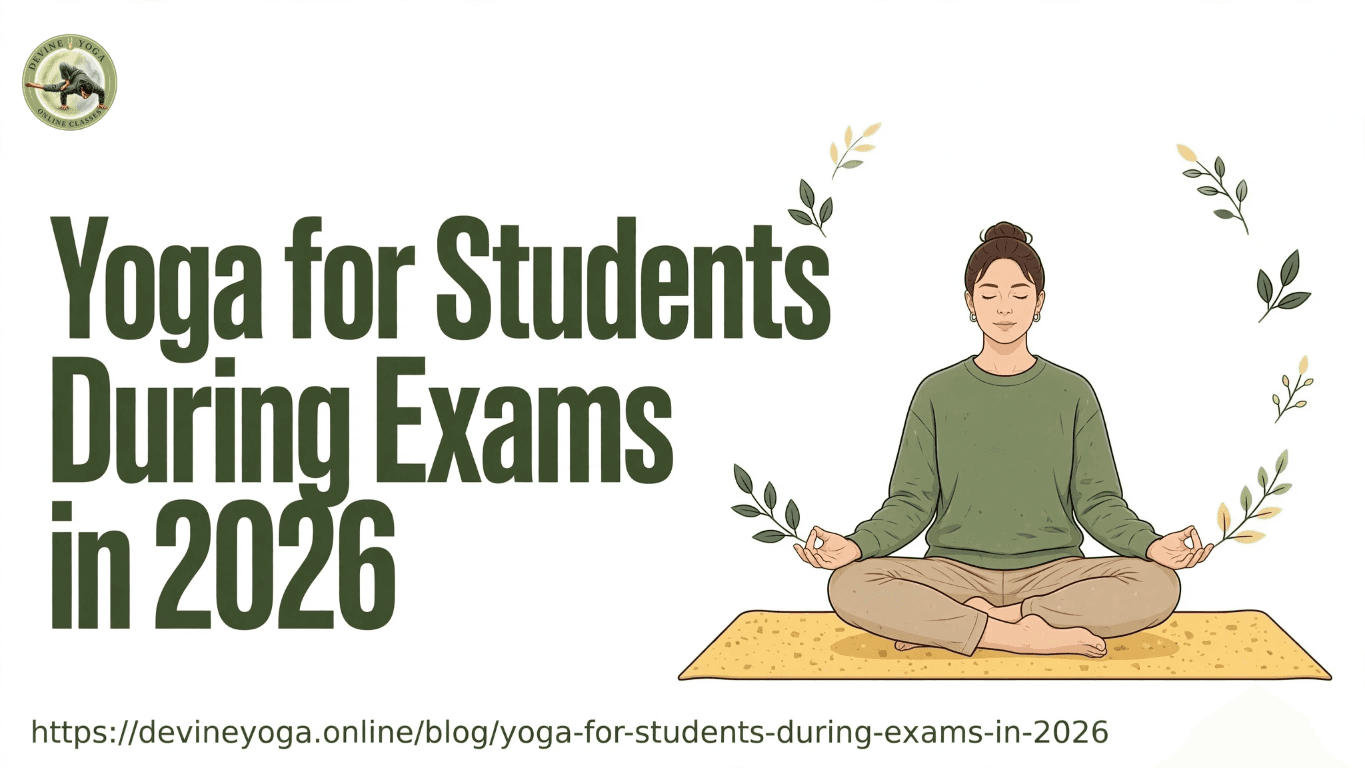
Yoga for Students During Exams in 2026
Discover how yoga can help students manage exam stress in 2026. Explore easy yoga poses, pranayama, meditation and a simple daily study-break routine.
Summarize this blog with:
Exam preparation can involve long study sessions, practice papers and pressure to perform. A short yoga or movement break may help students pause, move after sitting and pay attention to their breathing. It is not a replacement for studying, sleep or professional support, but it can be one small part of a balanced routine.
You do not need advanced flexibility or a long practice. In this guide, you will find beginner-friendly yoga poses, gentle breathing exercises, mindfulness ideas and practical ways to fit a study break into your day.
Move slowly and stay within a comfortable range. Stop if you experience pain, dizziness or unusual discomfort. Students with an injury or health condition should ask a qualified professional which movements are appropriate.
Why Do Students Experience Stress During Exams?
Exam stress is a common experience among students. It can develop when the pressure of preparation, expectations and performance feels difficult to manage.
Consider a student preparing for board examinations in 2026. They may have several subjects to revise, practical work to complete and mock tests to attend. At the same time, they may compare their preparation with classmates or worry about their final results.
Students preparing for competitive examinations can experience additional pressure because of a large syllabus, limited seats and intense competition.
Some common reasons for exam stress include:
1. A Large Syllabus and Limited Time
When students have several chapters to complete, they may feel that there is not enough time. Instead of focusing on one topic, they may think about everything that remains unfinished. This can make studying feel overwhelming.
2. Fear of Poor Performance
Some students worry about disappointing their parents, teachers or themselves. Thoughts such as “What if I forget everything?” or “What if I do not get the marks I need?” can increase nervousness before an examination.
3. Long Hours of Sitting
Exam preparation often involves spending several hours at a desk. Remaining in one position for a long time may contribute to stiffness in the neck, shoulders, back and hips. Gentle Cat-Cow movement can be one way to change position after sitting, if it feels comfortable. Physical discomfort can make it harder to feel comfortable during study sessions.
4. Irregular Sleep Schedule
Some students stay awake late to finish revision or solve practice papers. Consistently reducing sleep can affect attention, mood and learning. Studying for additional hours is not always useful if the brain and body are exhausted.
5. Constant Comparison With Others
Students sometimes compare mock-test scores, study schedules and revision progress with friends. A classmate completing more chapters does not necessarily mean your preparation is inadequate. Everyone has a different learning pace.
Recognising these sources of pressure is an important first step. Yoga can become one small part of a healthier routine that includes realistic study planning, adequate sleep and appropriate support.
Top 8 Easy Yoga Poses for Students During Exams
Students do not need advanced yoga experience to begin. These beginner-friendly poses can be practised at home or in a quiet study area. Move slowly and stay within a comfortable range.
If you experience pain, dizziness or unusual discomfort, stop the exercise.
1. Tadasana (Mountain Pose)
Tadasana is a basic standing posture that encourages awareness of body alignment. It is a simple option for students who have been sitting at a desk for a long time.
How to practise:
- Stand with your feet comfortably apart.
- Keep your weight evenly distributed across both feet.
- Relax your shoulders.
- Let your arms rest beside your body.
- Keep your head in a comfortable position.
- Breathe naturally while standing for 20–30 seconds.
Potential benefits:
- Encourages awareness of standing posture.
- Provides a break from prolonged sitting.
- Helps students reconnect with their body position.
Beginner tip: Avoid locking your knees or forcing your shoulders backwards.
2. Marjaryasana-Bitilasana (Cat-Cow Pose)
Cat-Cow is a gentle movement that alternates between rounding and extending the spine. It can be a comfortable way to move after a long time sitting.
How to practise:
- Come onto your hands and knees on a yoga mat.
- Place your wrists approximately below your shoulders and your knees below your hips.
- As you inhale, gently lift your chest and move your back into a comfortable arch.
- As you exhale, round your back gently and allow your head to follow the movement.
- Repeat slowly for five to eight rounds.
Potential benefits:
- Encourages spinal movement.
- Offers a change of position after sitting.
- Connects movement with breathing.
Beginner modification: If kneeling is uncomfortable, practise a seated version on a stable chair.
3. Balasana (Child’s Pose)
Balasana is a resting posture that gently folds the body forward.
How to practise:
- Begin on your hands and knees.
- Slowly move your hips towards your heels as far as comfortable.
- Rest your forehead on a mat or folded blanket if it reaches comfortably.
- Place your arms beside your body or extend them forward.
- Breathe naturally for 20–30 seconds.
- Return slowly to a seated position.
Potential benefits:
- Provides a resting position.
- Encourages gentle movement around the hips and back.
- Gives students a quiet moment away from their books.
Beginner modification: Place a cushion between your thighs and calves or under your forehead. Avoid this pose if it causes knee, hip or back discomfort.
4. Bhujangasana (Cobra Pose)
Bhujangasana is a gentle backbend commonly included in beginner yoga sequences.
How to practise:
- Lie on your stomach with your legs extended.
- Place your palms beside your chest.
- Keep your elbows close to your body.
- Inhale and gently lift your chest using your back muscles.
- Keep your pelvis on the floor.
- Lift only as far as comfortable.
- Exhale and slowly lower yourself.
Potential benefits:
- Encourages movement through the upper back.
- Provides a change from a seated posture.
- Helps students practise controlled movement.
Beginner tip: Keep the lift small. Do not push hard through your hands or force your lower back into a deep arch.
5. Paschimottanasana (Seated Forward Bend)
Paschimottanasana is traditionally a seated forward-bending posture. Beginners can practise a gentle version without forcing the body.
How to practise:
- Sit with your legs extended in front of you.
- Keep your back comfortably upright.
- Inhale and gently lengthen your spine.
- Exhale and lean forward from the hips.
- Rest your hands on your thighs, shins or wherever they reach comfortably.
- Stay for a few natural breaths.
- Slowly return to an upright position.
Potential benefits:
- Encourages movement around the hips.
- Provides a gentle stretch along the back of the legs.
- Gives students a chance to slow down.
Beginner modification: Bend your knees slightly and avoid pulling yourself towards your feet.
6. Vrikshasana (Tree Pose)
Vrikshasana is a standing balance posture that encourages focus and body awareness.
How to practise:
- Stand comfortably with your feet together or slightly apart.
- Shift your weight gently onto one foot.
- Place the other foot beside your ankle or lower leg.
- Avoid placing your foot directly against the knee joint.
- Keep one hand on a wall or chair if needed.
- Hold for a few natural breaths.
- Return to standing and repeat on the other side.
Potential benefits:
- Encourages balance awareness.
- Develops coordination.
- Gives students an opportunity to focus on one movement.
Beginner modification: Keep the toes of the raised foot on the floor for additional support.
7. Setu Bandhasana (Bridge Pose)
Bridge Pose is a gentle backbend performed while lying on the back.
How to practise:
- Lie on your back with your knees bent.
- Keep your feet flat on the floor, approximately hip-width apart.
- Place your arms beside your body.
- Inhale and gently lift your hips.
- Keep your shoulders and head on the floor.
- Hold briefly while breathing comfortably.
- Exhale and slowly lower your hips.
Potential benefits:
- Encourages movement around the hips.
- Engages the muscles around the legs and pelvis.
- Provides a change from sitting at a desk.
Beginner tip: Keep the lift small and avoid turning your head while holding the posture.
8. Shavasana (Corpse Pose)
Shavasana is a relaxation posture often practised at the end of a yoga session. It can be a useful way to finish a short study-break routine.
How to practise:
- Lie comfortably on your back.
- Keep your arms relaxed beside your body.
- Allow your legs to rest naturally.
- Close your eyes if comfortable.
- Notice your natural breathing.
- Relax your facial muscles and shoulders.
- Rest for two to three minutes.
Potential benefits:
- Provides time for rest.
- Encourages awareness of breathing.
- Helps students pause before returning to their work.
Beginner modification: If lying on the floor is uncomfortable, practise seated relaxation in a stable chair.
Pranayama for Students During Exams
Pranayama refers to yogic breathing practices. For students, gentle breathing exercises can provide a structured way to pause, observe the breath and settle into a study or revision session.
You do not need to practise complicated techniques. Start with simple, comfortable methods.
1. Anulom Vilom (Alternate Nostril Breathing)
Anulom Vilom is a traditional breathing practice that involves breathing through alternate nostrils.
How to practise:
- Sit comfortably with your back supported.
- Relax your shoulders and face.
- Use your right thumb to close your right nostril.
- Breathe gently through your left nostril.
- Close your left nostril with your ring finger and release the right nostril.
- Exhale gently through the right nostril.
- Inhale through the right nostril.
- Close the right nostril and exhale through the left.
- Continue for a few comfortable rounds.
Potential benefits:
- Encourages attention to breathing.
- Provides a structured relaxation practice.
- Helps students take a break from continuous studying.
Important: Do not force the breath or hold it. If you have nasal congestion or find the technique uncomfortable, simply practise natural breathing instead.
2. Bhramari Pranayama (Humming Bee Breath)
Bhramari involves making a gentle humming sound while exhaling.
How to practise:
- Sit comfortably in a quiet place.
- Close your eyes if comfortable.
- Relax your jaw and shoulders.
- Take a gentle breath in through your nose.
- Exhale slowly while making a soft humming sound.
- Repeat three to five times.
Potential benefits:
- Encourages slow, attentive breathing.
- Creates a calming sound-based focus.
- Gives students a short break from screen and study activity.
Avoid making the sound forcefully. Stop if you feel discomfort or dizziness.
3. Natural Slow Breathing
This is one of the simplest breathing practices for beginners.
How to practise:
- Sit comfortably.
- Relax your shoulders.
- Breathe in gently through your nose.
- Allow the exhalation to be slow and comfortable.
- Continue for one to three minutes.
- Return to normal breathing whenever needed.
Potential benefits:
- Helps students notice their breathing pattern.
- Provides a short pause during revision.
- Requires no special equipment or previous experience.
Do not force yourself to take very deep breaths. Comfortable breathing is enough.
Meditation and Mindfulness for Students
Meditation does not always mean sitting for 30 minutes with a completely empty mind. For beginners, it can simply mean giving attention to one thing, such as breathing, sounds or the sensations of sitting.
During exams, students may find short mindfulness practices easier to fit into their schedules.
1. Two-Minute Breath Awareness
This practice can be done before beginning a difficult chapter.
- Sit comfortably.
- Allow your hands to rest naturally.
- Close your eyes or look softly at one point.
- Notice the sensation of breathing.
- When your mind wanders, gently bring your attention back.
- Continue for two minutes.
The goal is not to stop every thought. It is to practise noticing when your attention moves and returning it gently.
2. Five-Senses Grounding Exercise
This is a simple awareness exercise that can help students reconnect with their surroundings when they feel overwhelmed.
Notice:
- Five things you can see.
- Four things you can physically feel.
- Three things you can hear.
- Two things you can smell.
- One thing you can taste.
Take your time. There is no need to complete it quickly.
3. Short Guided Meditation
Students who find silent meditation difficult can use a short guided practice. Choose a simple recording that focuses on breathing, relaxation or body awareness. Sit or lie comfortably and follow the instructions without forcing yourself to concentrate perfectly.
Even a few minutes can provide a useful break.
How to Include Yoga in Your Study Timetable
The biggest challenge for many students is not learning yoga poses. It is finding a way to practise consistently without affecting study time.
A practical approach is to connect yoga with existing study breaks.
1. Follow Short Study Sessions
Try dividing your revision into manageable blocks. For example:
- Study for 25–50 minutes.
- Take a short break.
- Stretch or walk for a few minutes.
- Return to your next study task.
The exact duration can vary depending on your concentration and subject.
2. Use Movement Breaks After Long Study Periods
After sitting for a long time, stand up and move. You can practise shoulder rolls, ankle movements or a few rounds of gentle Cat-Cow.
Do not wait until your body feels very stiff before changing position.
3. Keep Yoga Simple
During exams, you do not need to learn ten new poses or follow an advanced routine. Choose three or four comfortable movements and repeat them regularly.
4. Avoid Turning Yoga Into Another Exam Task
Yoga should not become another activity that makes you feel guilty or pressured. If you miss a session because you have an important test or assignment, simply return to your routine when possible.
5. Protect Your Sleep
Do not reduce your sleep to make time for yoga or additional revision. A healthy study routine should include adequate rest, regular meals, hydration and appropriate physical activity.
Yoga Tips for the Day Before and During Exams
The day before an examination can feel especially stressful. Students may be tempted to revise everything again or stay awake late into the night.
A calmer approach is to focus on preparation and basic self-care.
The Day Before the Exam
1. Avoid an intense yoga session. Choose gentle stretches and comfortable breathing rather than attempting advanced poses.
2. Do not try unfamiliar breathing techniques. Stick to simple practices you already know and find comfortable.
3. Finish revision at a reasonable time. Use a realistic revision plan instead of trying to cover the entire syllabus at the last moment.
4. Prepare your examination materials. Keep your stationery, admit card, identification and other required items ready according to the examination instructions.
5. Follow your normal sleep routine. Avoid staying awake unnecessarily late. Rest is part of preparation.
On the Morning of the Exam
You can begin the day with a few minutes of comfortable breathing and gentle movement:
- Sit comfortably.
- Relax your shoulders.
- Take a few natural, unhurried breaths.
- Stretch your arms gently.
- Have your usual breakfast.
- Leave with enough time to reach the examination centre.
Just Before Entering the Examination Hall
If you feel nervous, try this simple routine:
- Place both feet comfortably on the floor.
- Relax your shoulders.
- Take three gentle, natural breaths.
- Notice the feeling of your feet touching the ground.
- Focus on the next practical step.
You do not need to perform yoga poses inside the examination hall. A short breathing pause is enough.
Common Mistakes Students Should Avoid
Yoga can be a helpful addition to exam preparation, but students should avoid turning it into another source of pressure.
1. Expecting Immediate Results
A few minutes of yoga will not automatically improve memory, eliminate anxiety or guarantee better marks. Think of yoga as one supportive habit among several healthy study practices.
2. Practising Advanced Poses Without Guidance
Headstands, shoulder stands, deep backbends and other challenging poses are not necessary during exam preparation. Beginners should focus on comfortable movements and learn under a qualified instructor.
3. Holding the Breath
Some students hold their breath while stretching or trying to concentrate. Keep breathing naturally. Avoid forceful breathing and long breath retention, especially if you are new to pranayama.
4. Skipping Study Time for Long Yoga Sessions
The purpose of a study-break routine is to support your day, not replace revision. Keep the practice short and manageable during examination periods.
5. Ignoring Physical Discomfort
A stretch should not cause sharp pain or unusual discomfort. Modify or stop any exercise that does not feel right.
6. Sacrificing Sleep
Staying awake late to study and then waking up early for yoga is not a healthy routine. Prioritise sleep and choose a practice time that does not reduce your rest.
7. Comparing Your Practice With Others
You do not need to perform every pose perfectly. Some students may be comfortable with standing postures, while others prefer seated exercises. Choose movements that suit your body and experience.
Conclusion
Exam preparation in 2026 can be demanding, especially for students managing multiple subjects, board examinations and competitive entrance tests. Long study hours and constant pressure can make it easy to forget the importance of physical and mental well-being.
Yoga offers a simple way to include movement, breathing awareness and relaxation in your daily schedule. You can begin with a few comfortable poses, gentle pranayama and a short meditation practice. You do not need advanced flexibility or a long session. A manageable routine that fits around your studies is a good place to start.
Remember, your preparation matters, but so does your health. Take regular breaks, sleep adequately, eat on time and ask for support when you need it.
Study with dedication, take care of your well-being and make time for yourself. Explore beginner-friendly yoga and wellness guidance with Devine Yoga Online.
Frequently asked questions
Is yoga good for students during exams?
Yoga may help students include gentle movement, breathing awareness and relaxation in their exam preparation routine. Research involving students has reported promising findings for anxiety and stress, but more high-quality studies are needed. Yoga should complement, not replace, good study habits and adequate sleep.
Which yoga is best for students during exams?
Beginners can start with gentle Hatha Yoga practices, simple stretching, comfortable breathing exercises and short meditation sessions. The best routine is one that suits the student's age, health, experience and available time.
How many minutes of yoga should students practise daily?
There is no fixed requirement. Students can begin with 10–15 minutes of gentle yoga if it feels comfortable and fits their schedule. Even a few minutes of movement during study breaks can be useful.
Which pranayama is good for students?
Beginners may explore comfortable natural breathing, gentle Anulom Vilom and Bhramari under suitable guidance. Avoid forceful breathing or prolonged breath retention, particularly if you are new to pranayama.
Can yoga help reduce exam anxiety?
Some research suggests that yoga-based programmes may help reduce anxiety among students. However, results vary and yoga is not a guaranteed treatment. Students experiencing severe or persistent exam anxiety should seek appropriate professional support.
Should students do yoga before studying or after studying?
Both can work. A short morning practice may help you begin the day, while gentle stretching after a long study session can provide a movement break. Choose a time that fits your routine.
Which yoga pose is good after sitting for long hours?
Gentle Cat-Cow, shoulder rolls, Tadasana and comfortable seated stretches can help students change position after sitting. Practise slowly and avoid movements that cause pain.
Reading is a start. A live teacher is the shortcut.
In a Devine Yoga Online class your trainer sees you, corrects you by name and adapts every pose to your body - beginners included.
Related blogs
What Is Mantra Chanting? Types, Benefits and How to Start
Discover mantra chanting, its types and benefits, plus a simple step-by-step guide on how to chant Maha Mrityunjaya, Om Namah Shivaya and Hare Krishna.
15 min read
Anulom Vilom: Complete Guide by Devine Yoga Online
Master Anulom Vilom. Learn correct steps, proven scientific benefits, mistakes to avoid, and safe daily practices.
11 min read
Yoga for Desk Workers: Ease Stiffness and Stress
Discover gentle desk yoga stretches, chair yoga routines, and yoga tips to ease everyday stiffness and manage workday stress at home.
8 min read