Yoga for Desk Workers: Ease Stiffness and Stress
Discover gentle desk yoga stretches, chair yoga routines, and yoga tips to ease everyday stiffness and manage workday stress at home.
Summarize this blog with:
You finish a long meeting, stand up to get a glass of water, and notice how stiff your back feels. By 3 PM, your shoulders have crept towards your ears, your hips feel tight, and even taking a deep breath seems like a task. After a full day of laptop work and back-to-back calls, finding time to exercise can feel difficult.
Yoga for desk workers offers a practical way to add gentle movement, breathing exercises, and relaxation to your routine without travelling to a studio. You do not need to be flexible, own expensive equipment, or begin with an hour-long session.
In this guide, you will learn why desk work leaves you feeling stiff, which gentle yoga poses you can try at home, how to build a simple daily routine, and how to choose a class that fits your working hours.
Why Desk Work Leaves Your Body Stiff and Your Mind Tired
Working at a desk is not automatically harmful. The challenge is spending long periods in almost the same position without enough movement or recovery.
Here is what can happen during a typical working day.
- Rounded shoulders: Looking at a laptop for hours can encourage your shoulders to roll forward and your upper back to round.
- Tight-feeling hips: Sitting keeps your hips bent for extended periods, which may leave the front of your hips feeling restricted when you stand.
- Lower-back stiffness: Staying in one position during a long meeting can make your back feel stiff, especially when you get up suddenly.
- Shallow breathing: Under pressure, you may breathe quickly or hold your breath without realising it.
- Mental fatigue: Constant notifications, deadlines, and video calls can make it difficult to switch off after work.
These experiences do not necessarily mean something is injured. They can be signs that your body needs a change of position, a movement break, or a little time to unwind.
Yoga for a desk job combines gentle mobility, comfortable stretching, and controlled breathing. The aim is not to undo every hour of sitting with one workout. It is to make movement a regular part of your day.
Can Yoga Help Desk Workers?
Yes, online yoga can be a useful option for people who spend much of their day sitting. Gentle movement may help ease everyday stiffness, while breathing exercises and relaxation can support stress management.
However, results depend on your routine, the movements you choose, your individual needs, and how consistently you practise. Yoga is not a guaranteed solution for persistent pain, and it cannot replace appropriate medical care.
For beginners, start with comfortable movements rather than advanced poses. A five-minute session between meetings may be easier to maintain than an ambitious daily workout that leaves you exhausted.
A useful approach is to combine three habits:
- Take short movement breaks throughout the working day.
- Practise gentle yoga for around 10–20 minutes when your schedule allows.
- Make time for slower breathing and relaxation, especially after demanding workdays.
If you sit for six to ten hours daily, remember that a yoga session does not eliminate the need to stand, walk, and change positions regularly.
Gentle Yoga for Common Desk-Work Problems
You can practise the following movements at home, using a stable chair or a yoga mat. Move slowly, breathe normally, and stay within a comfortable range.
1. Neck and Shoulder Stiffness: Seated Neck Tilts
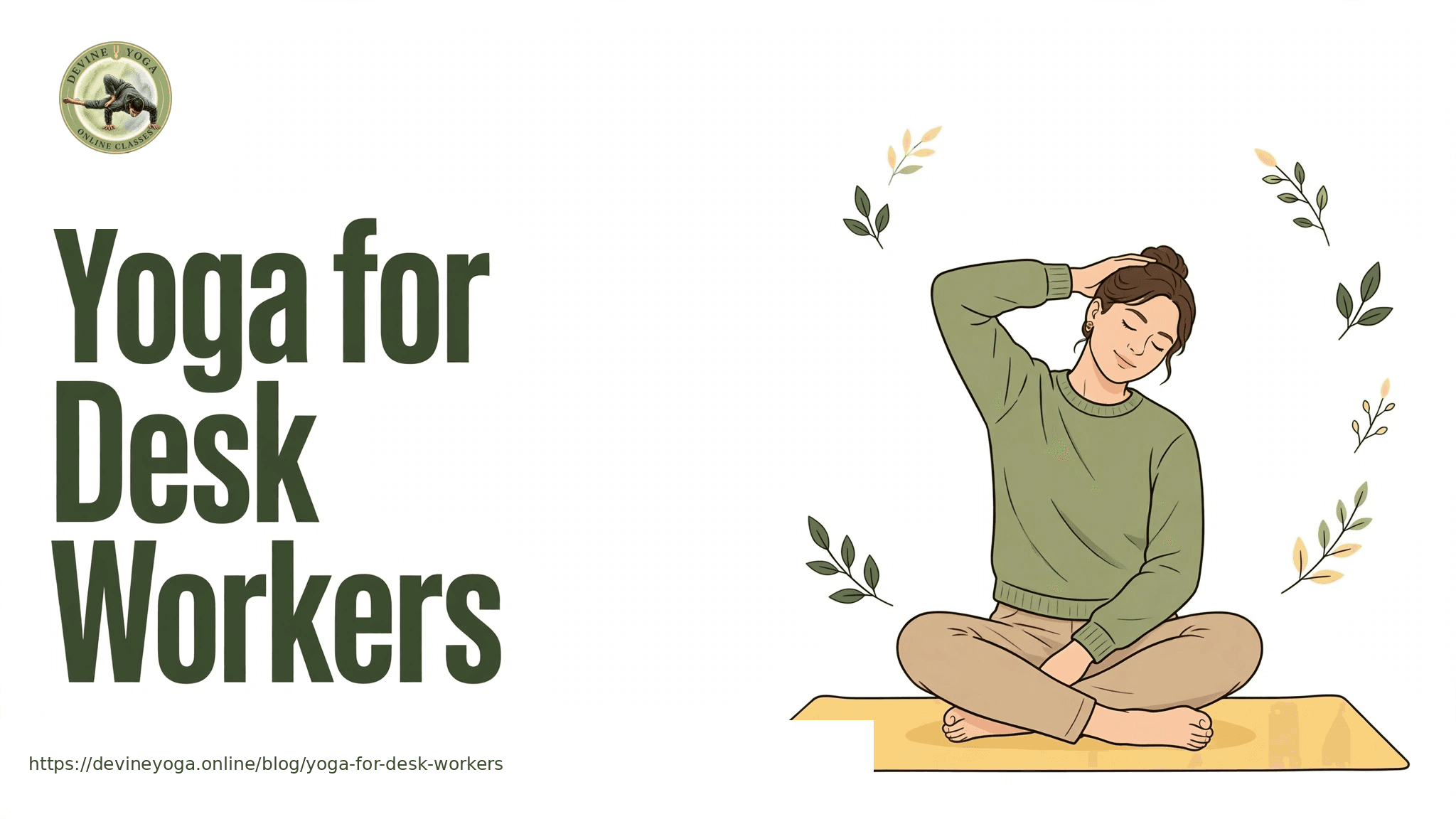
When you concentrate on a screen, you may hold your head forward or raise your shoulders without noticing. Gentle neck movements encourage comfortable mobility, while shoulder relaxation helps you become aware of unnecessary tension.
How to do it:
- Sit upright with both feet supported and your shoulders relaxed.
- Slowly tilt your right ear towards your right shoulder without lifting the shoulder. Return to the centre and repeat on the left.
- Gently roll your shoulders backwards a few times without forcing the movement.
Modification: Keep the neck movement small, or skip the tilts if they cause discomfort. Never pull your head down with your hand.
2. Upper-Back Stiffness: Seated Cat-Cow
A rounded upper back is common when you lean towards a laptop. Seated Cat-Cow gently moves the spine between rounding and extending, helping you explore a more comfortable range of motion.
How to do it:
- Sit towards the front of a stable chair with your feet flat on the floor and hands on your thighs.
- As you breathe in, gently lift your chest and lengthen your spine. As you breathe out, round your upper back slightly.
- Repeat slowly for five to eight comfortable rounds.
Modification: Make the movement smaller and focus on the upper back rather than forcing a deep arch or bend.
3. Lower-Back Stiffness: Gentle Seated Forward Hinge
After a long meeting, your lower back may feel stiff when you stand. A small hip hinge gives you an opportunity to move away from your usual seated position without forcing a deep forward fold.
How to do it:
- Sit with your feet hip-width apart and place your hands on your thighs.
- Keeping your back comfortably long, lean forward slightly from your hips.
- Pause for one or two natural breaths, then return upright slowly.
Modification: Keep your hands on your thighs and move only a few centimetres. Skip the movement if bending forward aggravates your symptoms.
4. Tight Hips: Seated Hip Marches
Sitting keeps your hips bent for long periods. Gentle marching activates the muscles around your hips and legs while giving your body a break from remaining still.
How to do it:
- Sit tall on a stable chair with both feet flat.
- Lift one foot a few centimetres off the floor, lower it, and repeat on the other side.
- Alternate slowly for 30–60 seconds.
Modification: Lift only your heel or slide one foot forward and back if lifting your knees feels uncomfortable.
5. Wrist Stiffness: Wrist Circles and Finger Spreads
Typing and using a mouse involve repeated hand and wrist movements. Gentle wrist circles and finger movements offer a simple break, although they should not be used to push through persistent symptoms.
How to do it:
- Extend your hands comfortably in front of you, keeping your elbows relaxed.
- Slowly circle your wrists in each direction a few times.
- Spread your fingers gently, then relax them.
Modification: Keep your elbows bent and your wrists close to a neutral position. Avoid aggressive stretching or putting weight through your hands.
6. Tired Eyes and Shallow Breathing: Soft Gaze and Slow Breathing
Screen use can leave your eyes feeling tired, while workplace stress can make your breathing feel hurried. A short visual break and unforced breathing can help you pause and reset.
How to do it:
- Look away from your screen and focus on a distant object for around 20 seconds.
- Relax your jaw and shoulders, then breathe in gently through your nose if comfortable.
- Let your exhalation be slow and easy without holding your breath or forcing a deep inhale.
Modification: If breath counting feels uncomfortable, breathe naturally and simply notice the movement of your abdomen or chest. Follow any eye-care guidance provided by your clinician.
A 5–10-Minute Desk Yoga Routine
Try this chair yoga sequence between meetings or after a long stretch of laptop work. You do not need to change clothes or roll out a mat.
| Time | Movement | Purpose |
|---|---|---|
| 1 minute | Comfortable, natural breathing | Pause and settle |
| 1 minute | Shoulder rolls | Move the shoulders |
| 1 minute | Seated neck tilts | Explore gentle neck mobility |
| 2 minutes | Seated Cat-Cow | Move the upper back and spine |
| 1 minute | Wrist circles and finger spreads | Break up repetitive hand activity |
| 1–2 minutes | Seated hip marches | Move the hips and legs |
| 1 minute | Relaxed breathing | Finish calmly |
Start with the shorter version if you are new to yoga. You can repeat the sequence later if it feels comfortable, but do not treat the timings as targets you must complete regardless of how your body feels.
A practical office tip: Set a reminder after every 45–60 minutes of concentrated work. Use it to stand, walk briefly, or perform one or two gentle movements. You can adjust the interval to suit your workload and comfort.
A 20-Minute After-Work Yoga Routine
When the workday ends, your body may need movement while your mind needs a transition away from deadlines. This routine offers both without requiring advanced poses.
| Time | Practice | What to focus on |
|---|---|---|
| 2 minutes | Comfortable breathing | Allow your breathing to settle |
| 3 minutes | Shoulder rolls and gentle neck movements | Release unnecessary effort |
| 4 minutes | Cat-Cow and comfortable seated twists | Move your spine gently |
| 4 minutes | Hip marches and a supported hip stretch | Explore comfortable hip movement |
| 3 minutes | Gentle standing side stretches | Lengthen your sides without forcing |
| 4 minutes | Relaxation or guided meditation | Finish without rushing |
For seated twists, turn only as far as feels comfortable and avoid pulling yourself deeper with your arms. For standing stretches, use a wall or chair for support if needed.
On particularly stressful evenings, you may not feel motivated to complete 20 minutes. Do five minutes instead. A shorter, comfortable session is a reasonable alternative to skipping movement entirely.
Frequently asked questions
Is yoga good for people who sit all day?
Yoga can help desk workers add gentle movement, mobility exercises, and relaxation to their routine. Start with comfortable chair-based movements and short sessions, then progress gradually if they suit you. Yoga should complement regular walking and position changes, not replace them. Persistent or severe symptoms need appropriate professional assessment.
Which yoga poses are best for a desk job?
Seated Cat-Cow, gentle shoulder rolls, comfortable neck tilts, seated hip marches, and wrist circles are practical starting points. They allow you to move areas that often remain relatively still during desk work. Choose movements that feel comfortable, avoid forcing your range, and stop if symptoms worsen.
Can I do chair yoga during office hours?
Yes. Chair yoga can fit into a five- to ten-minute break without requiring a mat or a change of clothes. Use a stable chair, keep your feet supported, and choose gentle movements that do not interfere with your work. For more options, explore Surya Namaskar steps and poses when you have space and time for a fuller practice.
How long should a beginner practise yoga after work?
Start with five to ten minutes if you are new to yoga or tired after work. If that feels comfortable, build towards a 15- or 20-minute session as your schedule allows. Regular, manageable practice is more realistic than setting an ambitious target you struggle to maintain.
What is the best time for office workers to practice yoga?
The best time depends on your personal energy levels. Morning practice helps energize the body and set a calm mindset for the workday, while an evening practice is excellent for releasing built-up physical tension and mental stress before sleep.
Reading is a start. A live teacher is the shortcut.
In a Devine Yoga Online class your trainer sees you, corrects you by name and adapts every pose to your body - beginners included.