Yoga to Avoid During Periods: A Complete Guide
Learn which yoga poses to avoid during periods, why some are discouraged, gentle alternatives, and a beginner-friendly menstrual yoga routine.
Summarize this blog with:
If you practice yoga regularly, getting your period can bring up a lot of questions. You might step onto your mat on day one of your cycle, feel a familiar cramp, and wonder if you should just roll the mat right back up.
Knowing exactly what yoga to avoid during periods is a common source of confusion for many beginners. Teachers often give conflicting advice. Some instructors tell you to skip class entirely, while others say you should push through. The truth lies somewhere in the middle, and it depends heavily on your own body.
When you are dealing with cramps, bloating, and fatigue, your practice should support you, not drain you. You do not have to stop moving, but you might want to change how you move.
Let's look at what poses to skip, why they might feel uncomfortable, and how to build a nourishing routine for the days you are bleeding.
Can You Do Yoga During Periods?
Yes. For most healthy people, gentle yoga during menstruation is generally fine if it feels comfortable. You do not need to stop exercising simply because your period has started.
Gentle movement, stretching, and relaxation may help some people manage menstrual discomfort and stress. However, yoga is not a guaranteed treatment for period pain, and the available evidence varies depending on the type of practice and symptom being studied.
Your menstrual cycle is not the same every month. You might feel energetic enough for a regular class one month and need extra rest the next.
A simple rule to follow: If a pose causes pain, increases discomfort, makes you feel dizzy, or feels exhausting, stop or choose an easier alternative.
For example, if you wake up on day one with cramps, bloating, and heavy bleeding, a short session of breathing exercises and supported stretches may feel better than a demanding power yoga class. If your flow is lighter and your energy has returned, you may be comfortable with more movement.
You do not need to push through discomfort to maintain a yoga habit.
Yoga Poses to Avoid During Periods
If you decide to practice, here is a detailed breakdown of the yoga to avoid during periods. For each type of pose, we will look at why it is commonly skipped and what you can do instead to get a similar benefit without the discomfort.
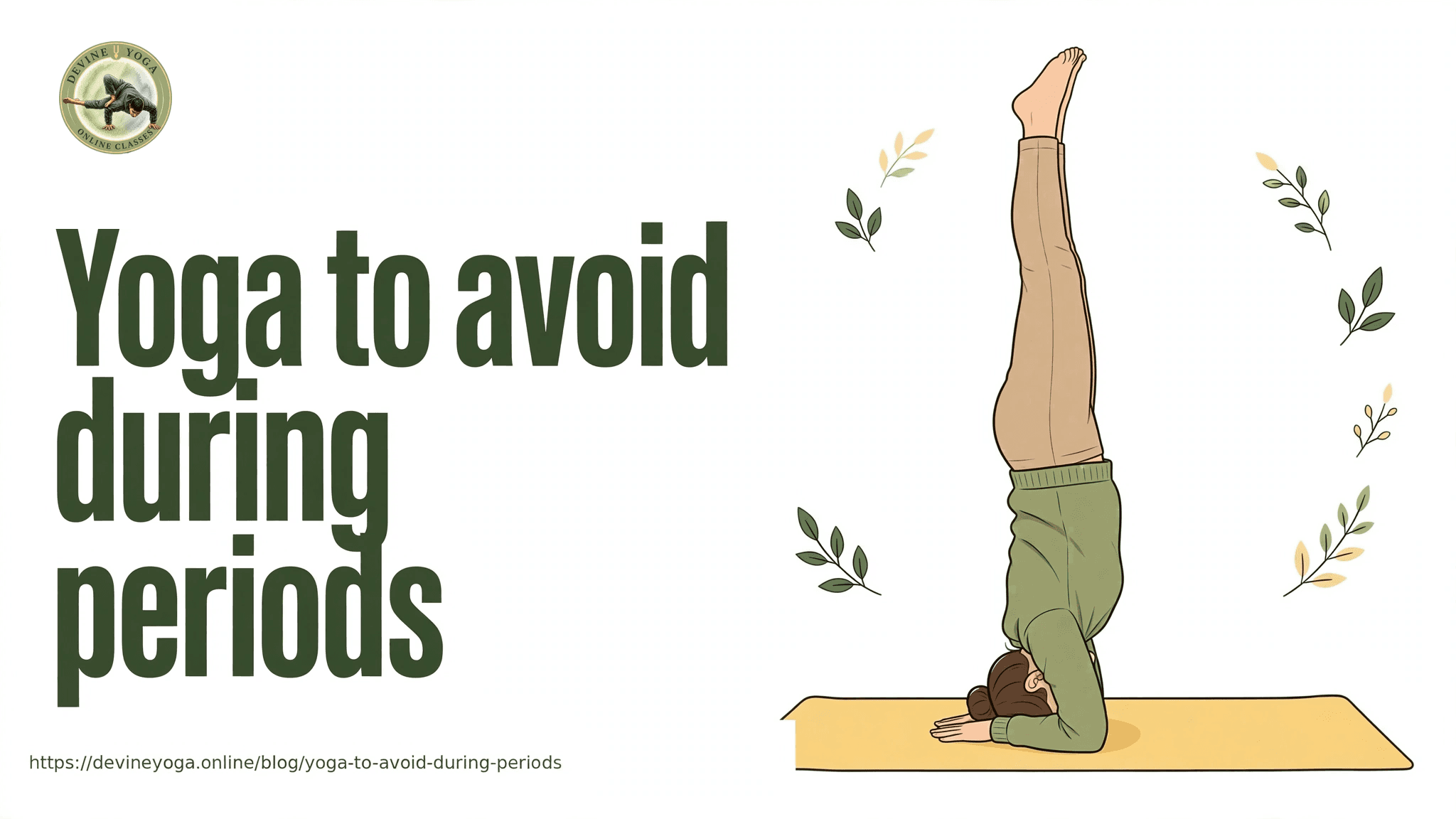
1. Inversions (Headstands, Shoulder Stands, Handstands)
What they are: Any pose where your hips and heart are elevated above your head.
Why people avoid them: Inversions during periods are the most fiercely debated topic in yoga. Traditionally, they are avoided to respect the downward flow of apana vayu. Physically, holding a headstand requires intense core stabilization. When your pelvic region is heavy and cramping, tightening your core to stay balanced upside down can cause immediate discomfort and increased cramping.
A gentler alternative: Try Supported Bridge Pose. Place a block under your sacrum (the flat bone at the base of your spine) and rest your weight on it. This gives you a mild, comforting elevation of the hips without straining your core. Legs Up The Wall is also an option, though traditionalists avoid this too. If it feels good for your lower back, do it for a few minutes; if it feels heavy or wrong, skip it entirely.
2. Intense Core Work (Boat Pose, Plank, Bicycle Crunches)
What they are: Postures designed to build heat and strengthen the abdominal muscles, often found in power yoga or Pilates-fusion classes.
Why people avoid them: Your uterus is a muscle, and during menstruation, it is working hard. Adding extra strain by crunching or holding a trembling Boat Pose can make period cramps feel sharper and more intense. Core work also creates a lot of internal heat, which can exacerbate the hot flashes or nausea some people experience on their heaviest days.
A gentler alternative: Cat-Cow stretches. Moving smoothly between a gently arched back and a rounded spine stimulates the core muscles in a soothing, massaging way. It relieves lower back tension without requiring tight, forceful contractions.
3. Deep Closed Twists
What they are: Poses like Revolved Chair Pose or Half Lord of the Fishes, where you actively compress your belly against your thighs.
Why people avoid them: Deep closed twists act like a tourniquet for your digestive organs. While this can be great for digestion on a normal day, doing it when you are experiencing period bloating is highly uncomfortable. Compressing an already swollen and tender abdomen can lead to nausea and sharp pains.
A gentler alternative: Open twists. Instead of twisting toward your inner thigh and squishing your belly, twist away from your legs. This creates space in the torso. A simple Supine Twist (lying on your back and dropping your knees to one side) is also incredibly relieving for lower back cramps, as long as you do not force the stretch.
4. Strong Backbends (Wheel Pose, Camel Pose)
What they are: Deep extensions of the spine that intensely stretch the entire front of the body, including the abdominal wall and pelvic region.
Why people avoid them: Backbends require a massive amount of energy. More importantly, they stretch the abdominal tissue to its maximum capacity. When your uterine area is sensitive and cramping, pulling it tight like a drum in Wheel Pose can feel very jarring and aggravating.
A gentler alternative: Sphinx Pose. Lie on your stomach and prop yourself up on your forearms. This provides a very mild, restorative backbend that opens the chest and stretches the belly without any aggressive pulling.
5. Hot Yoga and Intense Vinyasa Flows
What they are: Fast-paced classes linking breath to rapid movement, often practiced in a room heated to over 90 degrees Fahrenheit.
Why people avoid them: Your body temperature naturally fluctuates during your menstrual cycle, and many people feel easily overheated or fatigued during their period. Sweating profusely in a hot room while moving quickly can lead to dizziness, dehydration, and lightheadedness, especially if you have a very heavy flow.
A gentler alternative: Hatha, Yin, or Restorative yoga in a normal temperature room. These styles focus on slower movements, longer holds, and calming the nervous system, which is exactly what a tired body needs.
6. Jump-Throughs and High-Intensity Transitions
What they are: Jumping from Downward Dog to the top of the mat, or floating back into Chaturanga.
Why people avoid them: The forceful impact of landing can be jarring to your pelvic floor and lower back. When you are menstruating, your pelvic organs often feel heavier. Jumping creates a bouncing sensation that can translate into sudden, sharp cramps.
A gentler alternative: Simply step. Walk your feet slowly to your hands. Move mindfully through transitions, keeping your movements fluid and grounded rather than explosive.
7. Forceful Breathing (Kapalabhati / Breath of Fire)
What they are: Pranayama (breathing) techniques that involve rapid, forceful pumping of the stomach muscles to expel air.
Why people avoid them: Just like Boat Pose, these breathing exercises require sharp, repetitive contractions of the abdominal wall. This can easily trigger or worsen menstrual cramps and create an uncomfortable sense of pressure in the pelvis.
A gentler alternative: Diaphragmatic breathing (deep belly breathing). Place one hand on your heart and one on your belly. Breathe in slowly, letting your belly inflate like a soft balloon. Exhale smoothly. This actually helps relax the uterine muscles and signals to your brain that you are safe and at rest.
Best Yoga During Periods: Poses That May Feel Better
Gentle yoga can provide a comfortable way to move when you are menstruating. The following poses are options to explore, not a list of movements you must perform. Comfort varies from person to person and from one cycle to the next.
1. Child's Pose (Balasana)
Kneel on your mat, bring your big toes together, and gently fold forward. Rest your forehead on a cushion or folded blanket if needed. Keep your knees comfortably apart to make room for your abdomen.
This supported position may feel relaxing when your back is tired or your energy is low.
2. Cat-Cow Pose (Marjaryasana-Bitilasana)
Start on your hands and knees. Inhale as you gently lift your chest and tailbone, then exhale as you round your back.
Move slowly without forcing your spine. Cat-Cow offers gentle spinal movement that may feel pleasant if you experience lower-back stiffness.
3. Supported Bridge Pose (Setu Bandha Sarvangasana)
Lie on your back with your knees bent and feet flat on the mat. If comfortable, lift your hips slightly and place a yoga block at a suitable low height beneath your pelvis.
Relax over the support without straining. Skip the pose if it increases pressure or discomfort.
4. Reclined Bound Angle Pose (Supta Baddha Konasana)
Lie on your back, bring the soles of your feet together, and let your knees open gently. Support your thighs with cushions if they feel stretched.
This restorative position allows you to rest without actively holding your legs in place.
5. Gentle Supine Twist
Lie on your back with your knees bent. Let both knees move a small distance to one side while keeping your shoulders relaxed.
Keep the movement small and comfortable. There is no need to push into a deep twist.
6. Easy Seated Breathing
Sit on a cushion or lie down with your knees supported. Breathe naturally, allowing your abdomen to move without forcing it.
Spend two to three minutes noticing your breath. Relaxation may help you feel calmer, even though it does not guarantee relief from menstrual symptoms.
Frequently asked questions
Can I do yoga on my period?
Yes, most people can practice gentle yoga during menstruation if they feel comfortable. Choose movements based on your energy and symptoms, and rest when needed. If a pose increases pain, dizziness, or discomfort, stop and try a gentler alternative.
Which yoga poses should I avoid during periods?
You may want to modify intense core exercises, deep twists, strong backbends, forceful breathing, or vigorous flows if they feel uncomfortable. Some traditions also recommend avoiding inversions. There is no universal medical rule requiring everyone to avoid these poses during menstruation.
Can I do Surya Namaskar (Sun Salutations) during my period?
Yes, you can do Surya Namaskar, but it is best to move slowly and modify it. On heavy flow days, jumping back and forth can aggravate cramps. Step your feet instead of jumping, and skip the intense backbends by replacing Upward Dog with a gentle Cobra pose.
Which yoga is best during periods?
Gentle practices such as Child's Pose, Cat-Cow, supported restorative poses, and relaxed breathing may feel comfortable during menstruation. The best choice depends on your symptoms and preferences. No particular yoga sequence is guaranteed to relieve cramps or other menstrual symptoms.
Can yoga help with period cramps?
Gentle yoga may help some people feel more relaxed and comfortable, but research on its effects on menstrual pain is variable. It is not a guaranteed treatment. If cramps are severe, persistent, or interfere with daily life, consult a healthcare professional.
Should I stop yoga on the first day of my period?
No, you do not automatically need to stop yoga on day one. If you feel well, gentle movement may be fine. If you have heavy bleeding, cramps, or fatigue, choose a shorter restorative session or rest completely until you feel ready.
Reading is a start. A live teacher is the shortcut.
In a Devine Yoga Online class your trainer sees you, corrects you by name and adapts every pose to your body - beginners included.