Pranayama: Types, Benefits and How to Do Them
What is Pranayama? Learn 8 types of pranayama, benefits, correct steps, ratios & precautions. Complete beginner guide from Devine Yoga.
Summarize this blog with:
What is pranayama?
Pranayama is the yogic science of breath regulation, using controlled breathing patterns to calm the mind and build awareness of the breath. The word combines two Sanskrit terms: prana (vital energy or life force, often linked with breath) and ayama (extension or regulation). Some teachers read the second part as yama (control), which is why you may see both explanations.
In plain terms, pranayama means changing how you breathe, whether by slowing it, lengthening it, humming on the exhale or breathing through one nostril at a time, and paying close attention while you do it.
Pranayama is not the same as "deep breathing" in general. It is a set of specific, traditional techniques, each with its own method and effect.
Where does pranayama come from?
Pranayama comes from ancient India and is the fourth of the eight limbs of yoga described in the Yoga Sutras of Patanjali. The Sutras (2.49) describe it as the regulation of inhalation and exhalation, usually after a steady seated posture has been established. Scholars date the Sutras roughly between the 2nd century BCE and the 4th century CE, though exact dates are debated.
The Hatha Yoga Pradipika (15th century, Svatmarama) gives pranayama a full chapter. It names eight breath practices, called kumbhakas: Surya Bhedana, Ujjayi, Sitkari, Sheetali, Bhastrika, Bhramari, Murccha and Plavini. It treats Kapalabhati separately, as one of six cleansing practices (shatkarmas).
Earlier Upanishadic and Vedic texts also discuss breath and prana as central to life and meditation.
What are the four parts of a breath cycle in pranayama?
Traditional pranayama breaks the breath into four parts: inhalation, retention after the inhale, exhalation and retention after the exhale.
| Sanskrit term | Meaning | What it is |
|---|---|---|
| Puraka | Inhalation | Slow, steady breath in |
| Antara kumbhaka | Inner retention | Holding after the inhale |
| Rechaka | Exhalation | Slow, steady breath out |
| Bahya kumbhaka | Outer retention | Holding after the exhale |
Beginners work only with puraka and rechaka. Retention (kumbhaka) is an advanced element that should be added only under a qualified teacher.
You will also see ratios such as 1:1 (equal inhale and exhale) or 1:2 (exhale twice as long as inhale). A 1:2 ratio, such as 4 counts in and 8 out, is a common step toward a calmer, longer exhale.
What are the main types of pranayama?
The most common types of pranayama are Dirga, Ujjayi, Anulom Vilom (Nadi Shodhana), Bhramari, Sheetali, Sitkari, Kapalabhati, Bhastrika and Surya Bhedana. They range from gentle and cooling to energizing and heating.
| Type | Also called | Effect | Level |
|---|---|---|---|
| Dirga | Three-part breath | Relaxing, builds breath awareness | Beginner |
| Ujjayi | Ocean breath, victorious breath | Calming, steady, focused | Beginner |
| Anulom Vilom | Nadi Shodhana, alternate nostril breathing | Calming, balancing | Beginner |
| Bhramari | Humming bee breath | Soothing, quiets the mind | Beginner |
| Sama Vritti | Equal breathing, box-style breathing | Steadying, focusing | Beginner |
| Sheetali / Sitkari | Cooling breath | Cooling, relaxing | Beginner to intermediate |
| Kapalabhati | Skull-shining breath | Energizing, warming | Intermediate |
| Bhastrika | Bellows breath | Strongly energizing, heating | Intermediate to advanced |
| Surya Bhedana | Right-nostril (sun) breath | Warming, activating | Intermediate to advanced |
A useful way to choose: calming practices (Dirga, Ujjayi, Anulom Vilom, Bhramari, Sheetali) suit most beginners. Energizing practices (Kapalabhati, Bhastrika) are best learned in person or live online with a teacher.
How do you do each type of pranayama?
Every practice starts the same way: sit tall, relax the face and shoulders, and breathe through the nose unless the technique says otherwise. Here are the beginner-friendly types step by step.
Preparation for all practices
- Sit in Sukhasana (Easy Pose), Vajrasana (Thunderbolt Pose) or on a chair with your feet flat.
- Sit on a folded blanket if your knees are higher than your hips.
- Keep the spine long and the chin level, and rest your hands on your knees.
- Practice on an empty stomach (3 to 4 hours after a heavy meal, 1 to 2 hours after a light snack).
1. Dirga Pranayama (three-part breath)
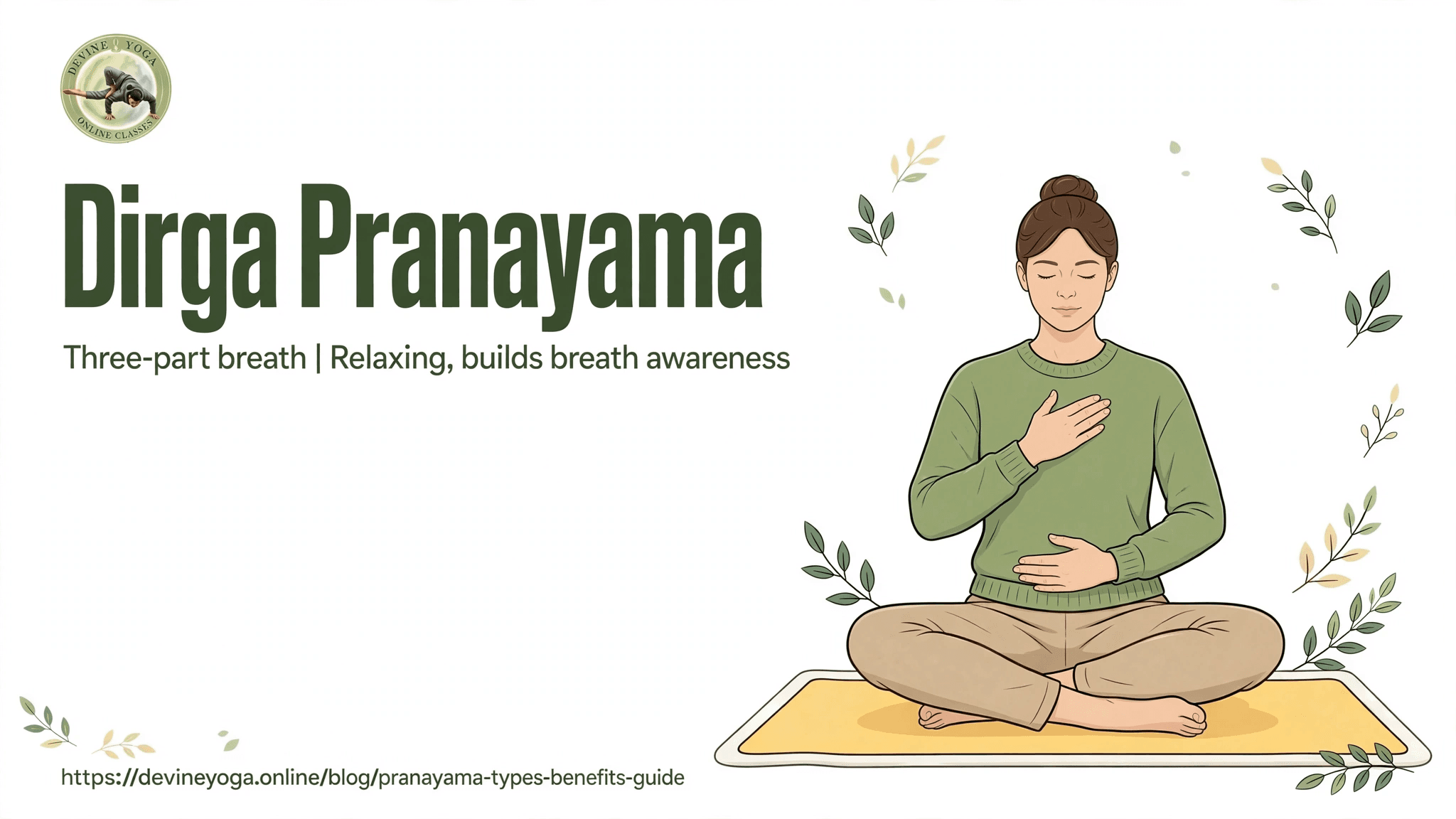
What it does: teaches full, relaxed breathing using the belly, ribs and chest.
- Place one hand on the belly and one on the chest.
- Inhale slowly, filling the belly first, then the ribs, then the upper chest.
- Exhale slowly, emptying chest, ribs, then belly.
- Repeat for 5 to 10 breaths, then rest.
2. Ujjayi Pranayama (ocean breath)
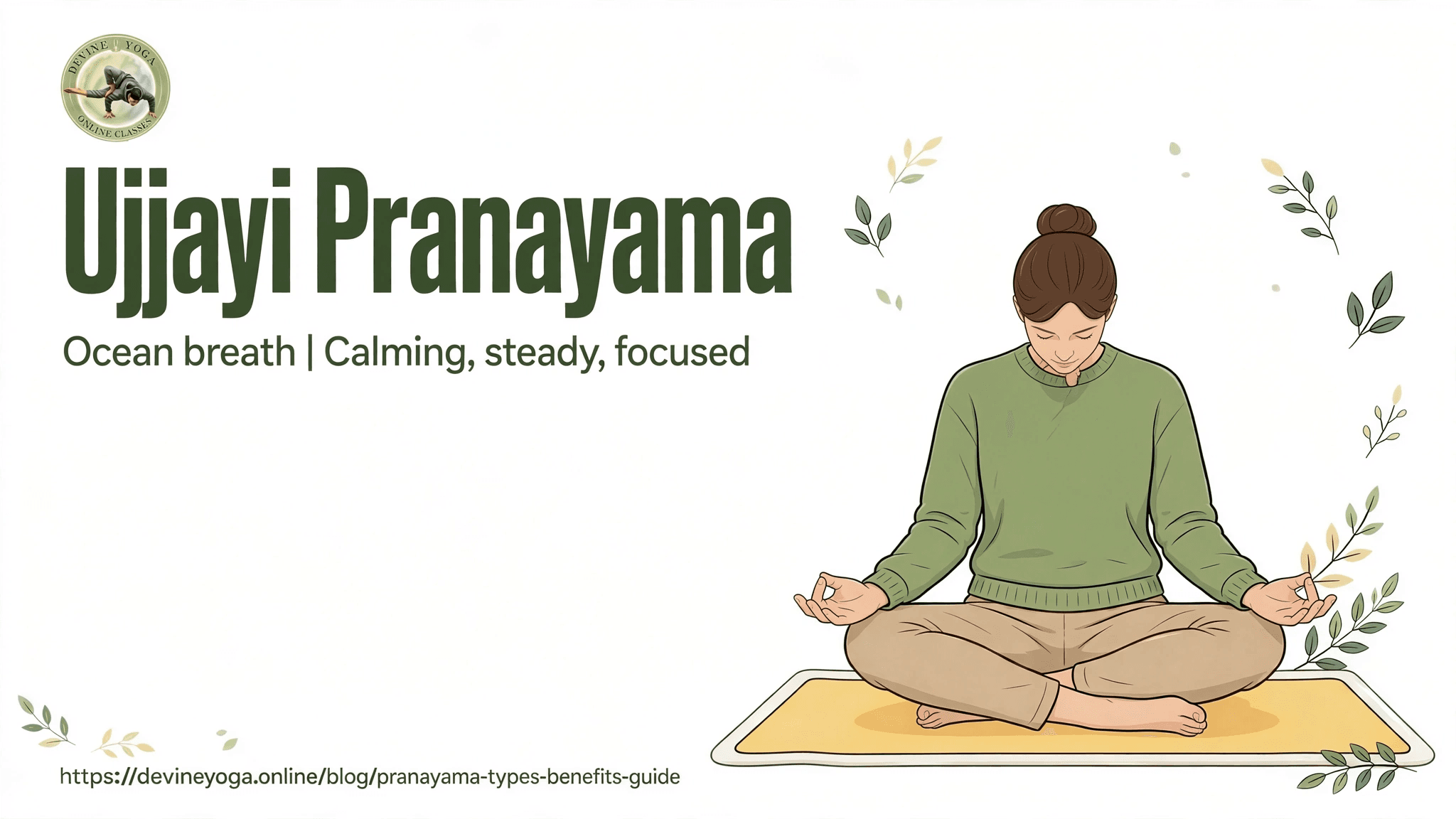
What it does: a soft throat constriction creates a gentle sound, like distant waves, which helps focus.
- Inhale through the nose.
- Slightly narrow the back of the throat, as if fogging a mirror, and exhale with a soft "ha" sound with your mouth closed.
- Keep the sound soft and even, on both inhale and exhale.
- Practice for 3 to 5 minutes. If the throat feels tight or scratchy, you're doing it too hard.
3. Anulom Vilom (alternate nostril breathing)
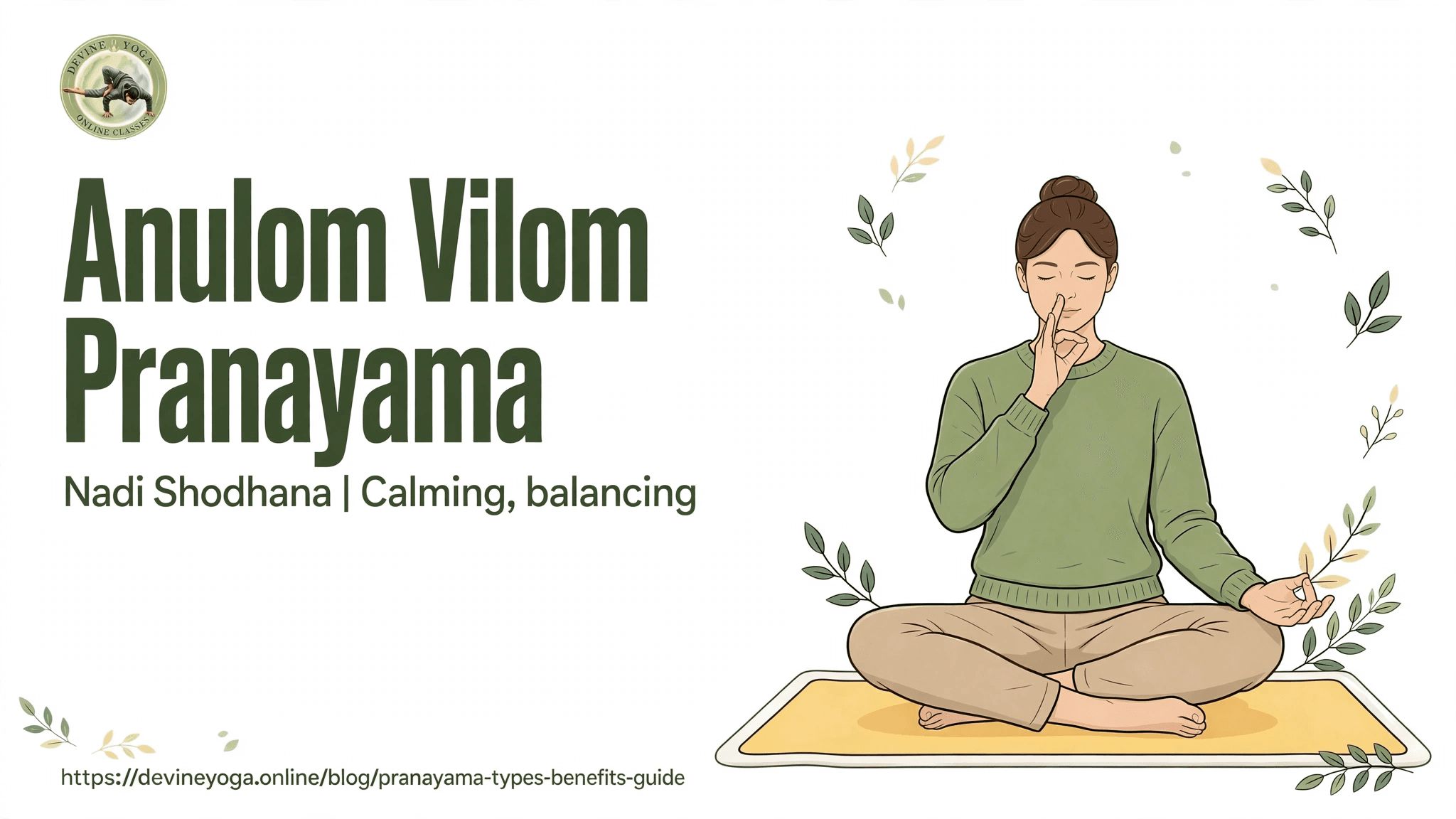
What it does: calming, balancing, and a good lead-in to meditation.
- Use Vishnu mudra: fold your index and middle fingers, with the thumb on the right nostril and ring finger on the left.
- Exhale fully. Close the right nostril and inhale through the left for 4 counts.
- Close the left, open the right, and exhale through the right for 4 counts.
- Inhale through the right, then switch and exhale through the left. That's one round.
- Do 5 rounds and build to 5 to 10 minutes. Skip holds as a beginner.
See our full guide on Anulom Vilom.
4. Bhramari Pranayama (humming bee breath)
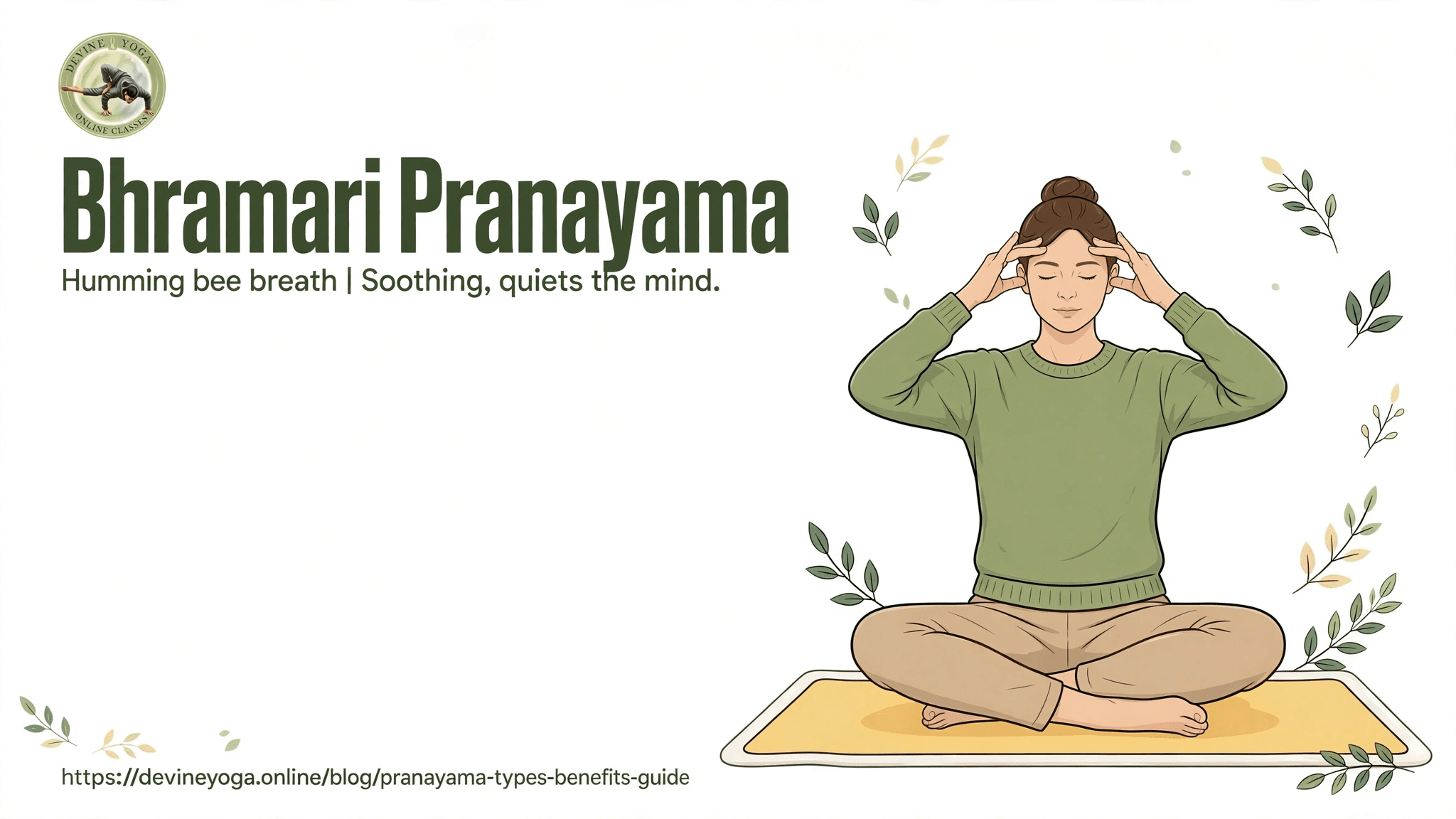
What it does: the vibration of the hum gives the mind a single sound to follow, and many people find it very soothing.
- Sit tall, close your eyes and inhale through the nose.
- Exhale slowly while making a steady, low humming sound with lips closed.
- You may gently rest your fingers over your closed eyes and your thumbs on the ear flaps (traditional form), without pressing hard.
- Repeat for 5 to 7 rounds, then sit quietly and notice the stillness.
5. Sama Vritti (equal breathing)
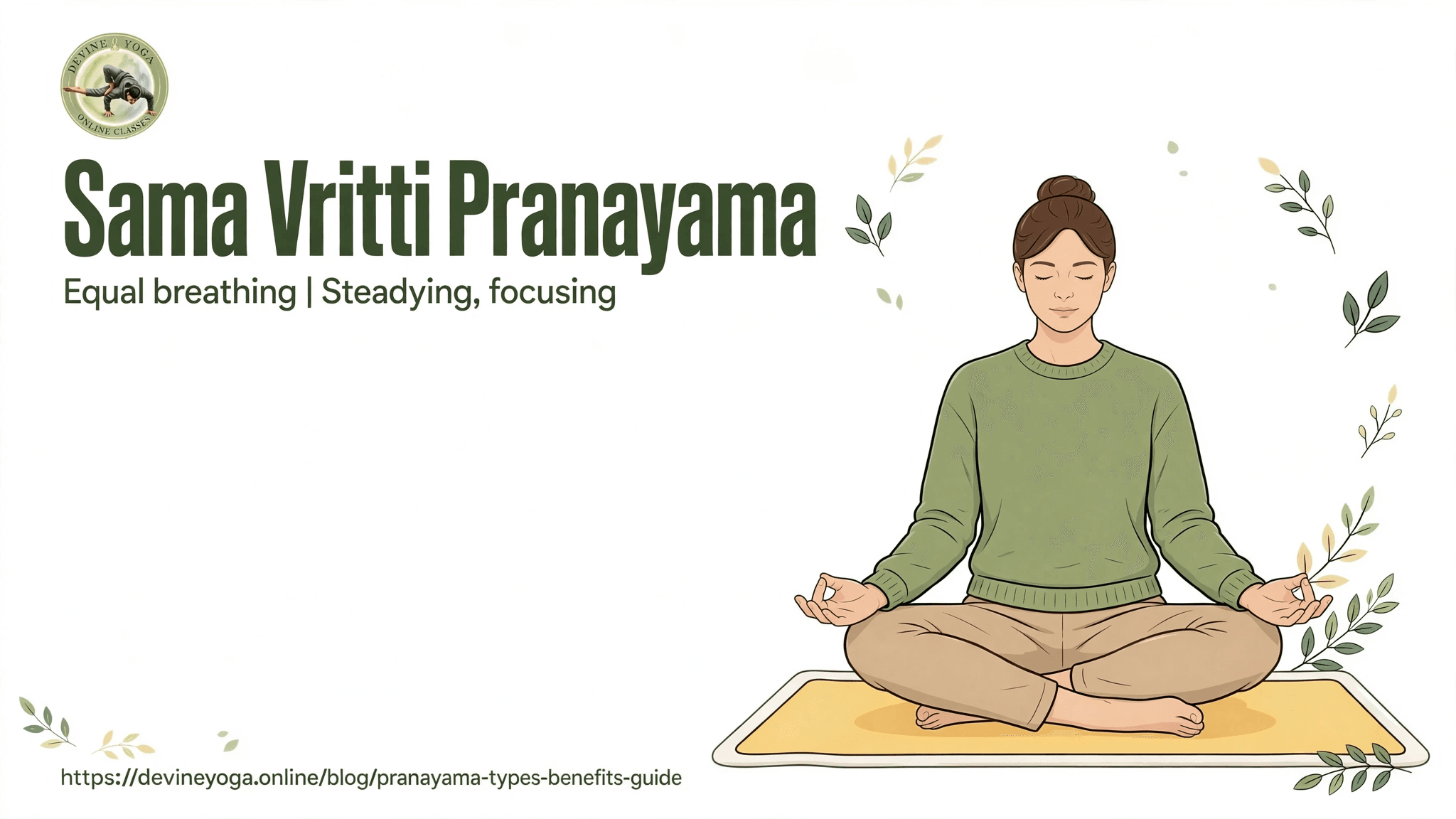
What it does: builds an even rhythm and steadies the mind.
- Inhale through the nose for a count of 4.
- Exhale through the nose for a count of 4.
- Continue for 2 to 5 minutes. Once easy, extend both to 5 or 6 counts. Skip pauses between breaths until guided by a teacher.
6. Sheetali Pranayama (cooling breath)
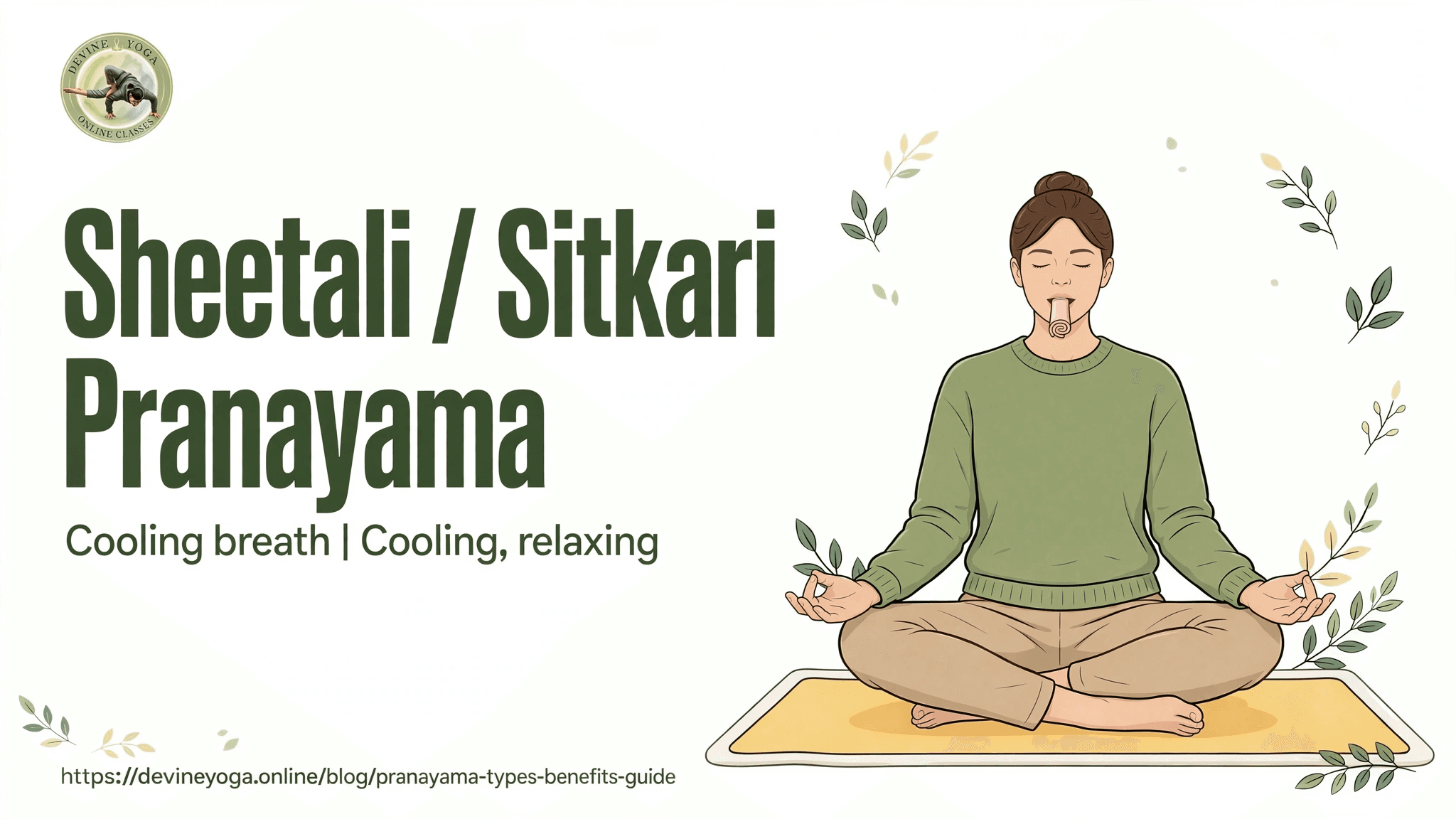
What it does: traditionally used to cool the body and settle irritability.
- Roll the sides of your tongue into a tube and stick the tip out slightly.
- Inhale slowly through the tube, as if sipping through a straw.
- Close the mouth and exhale through the nose.
- Do 5 to 8 rounds. If you can't curl your tongue (many people can't), use Sitkari: teeth gently together, lips apart, inhale with a soft hissing sound.
- Avoid in very cold weather or if you have a cold or sore throat.
7. Kapalabhati (skull-shining breath), for later
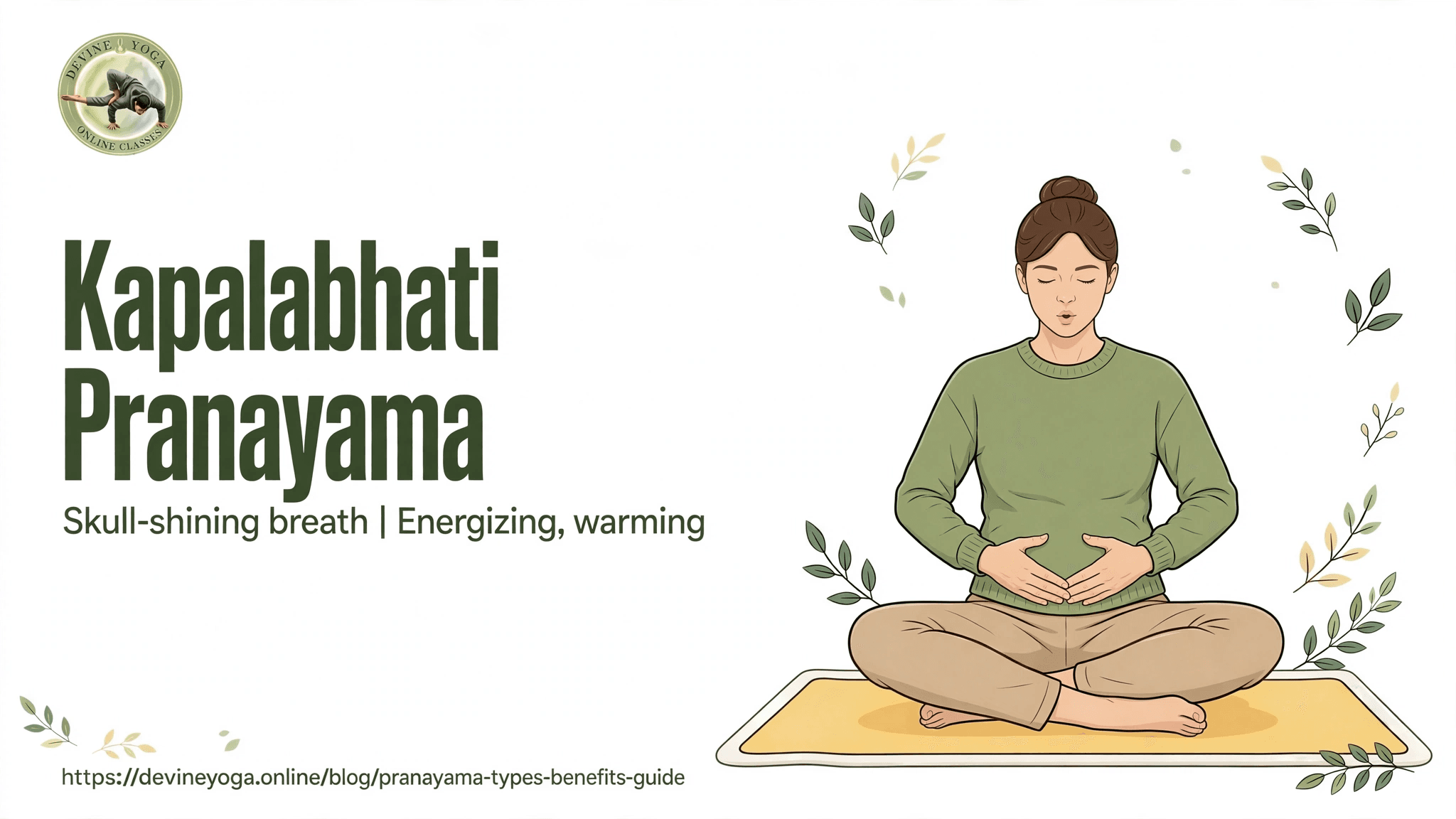
What it does: short, forceful exhales with passive inhales; energizing and warming.
- Typically done in rounds of 20 to 30 quick exhales, with rest between rounds.
- Not recommended for beginners without a teacher, and not for pregnancy, high blood pressure, heart conditions, hernia, epilepsy or recent abdominal surgery.
- Learn it in person or live with an experienced teacher.
8. Bhastrika (bellows breath), for later
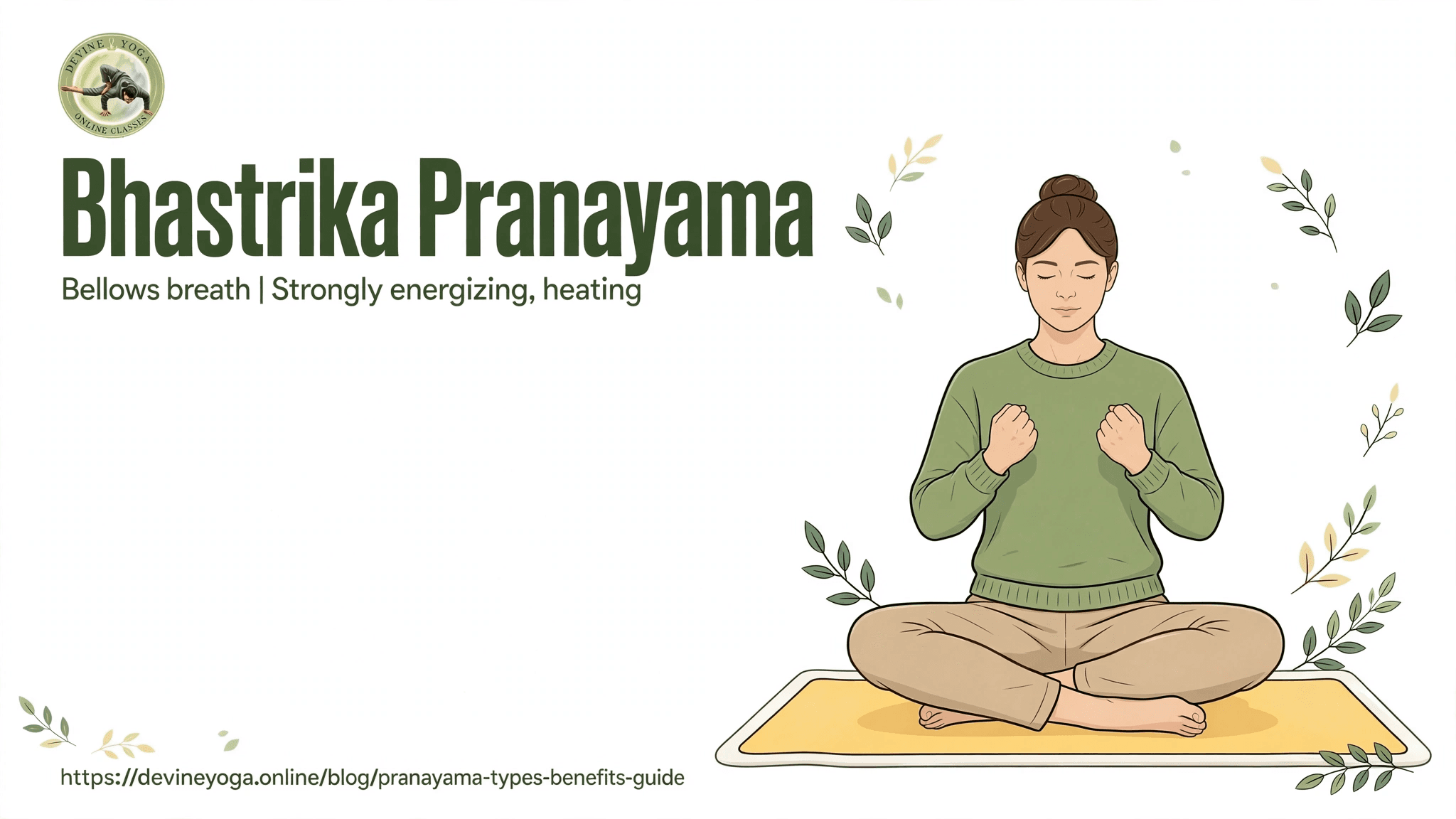
What it does: rapid, forceful breaths that are strongly energizing and heating.
- An intermediate to advanced practice. Learn it in person or live with an experienced teacher.
- Not recommended for pregnancy, high blood pressure, heart conditions, hernia, epilepsy or recent abdominal surgery.
9. Surya Bhedana (right-nostril sun breath), for later
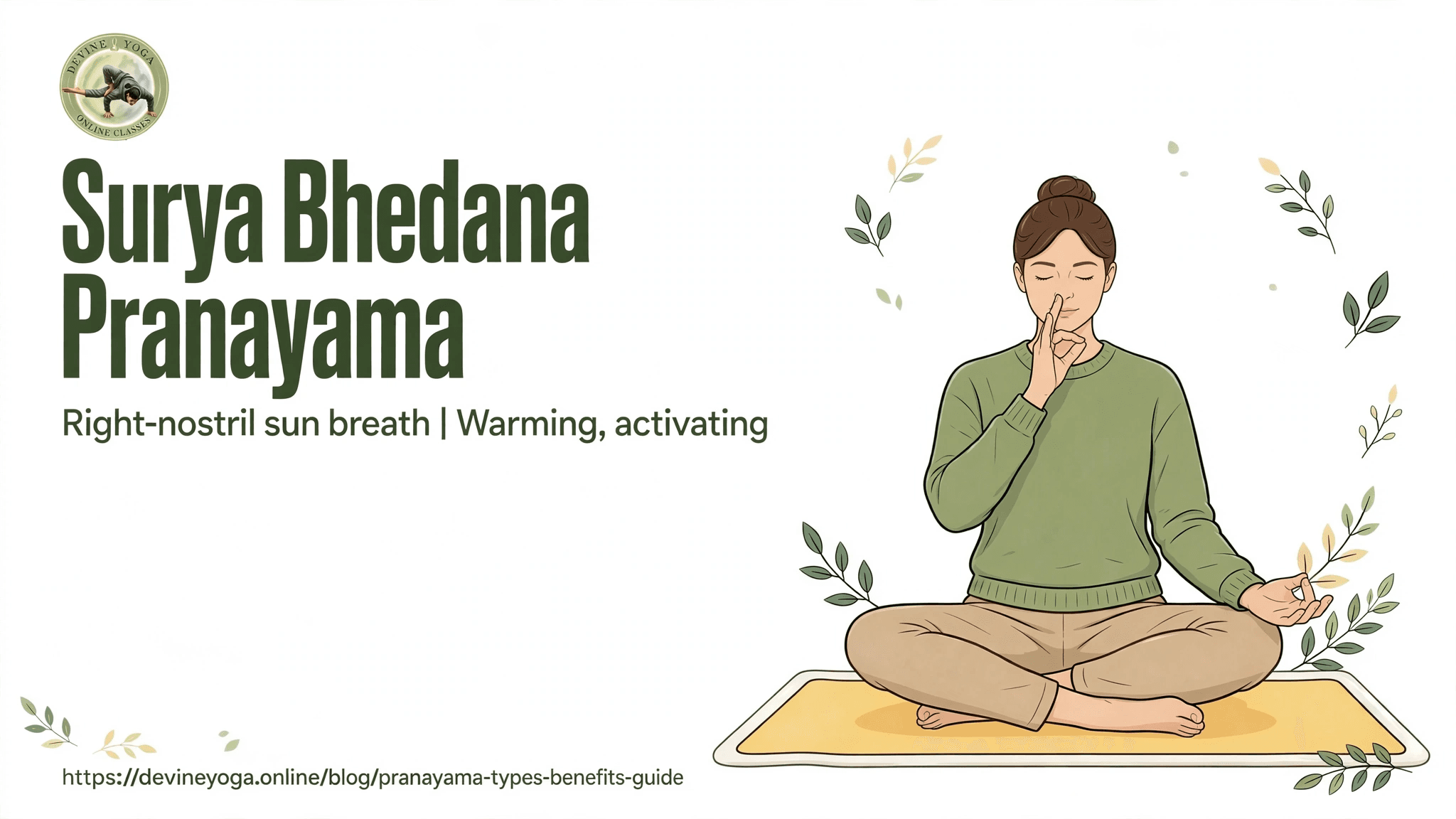
What it does: traditionally used to warm and activate the body, with the breath drawn in through the right nostril.
- An intermediate to advanced practice. Learn it with a teacher before practicing alone.
- Avoid it if you feel hot or irritable, and if you have high blood pressure or a heart condition.
What are the benefits of pranayama?
Research suggests that slow, controlled breathing may support relaxation, stress management and attention, though study quality varies and results differ between people.
A 2018 systematic review of slow breathing (Zaccaro et al., Frontiers in Human Neuroscience) found that slow breathing, often around 6 breaths per minute, was associated with changes in heart rate variability and with increased feelings of relaxation, comfort and alertness, while noting that many studies were small.
Commonly reported benefits include:
- A calmer mind: slow exhalation is linked with a sense of relaxation.
- Better focus: pranayama is widely used before study, work or meditation.
- Greater breath awareness: you notice how you breathe when stressed.
- Easier winding down: gentle evening practice may help you relax before sleep.
- Support for meditation: a settled breath makes sitting still easier.
Some practices have specific research interest. For example, a 2002 study (Weitzberg and Lundberg, American Journal of Respiratory and Critical Care Medicine) reported that humming greatly increases nasal nitric oxide, a gas involved in airflow and defense in the nose and sinuses. This is an interesting finding about humming, not proof that Bhramari treats any condition.
What pranayama cannot do: it is not a cure for diabetes, thyroid disease, heart disease, cancer or any other illness. Claims like these are not supported by solid evidence. Use pranayama as a complement to medical care, never a replacement.
Which pranayama is best for which goal?
Choose calming practices for stress and sleep, and energizing practices only with guidance for alertness.
| Goal | Try | Avoid or be careful with |
|---|---|---|
| Stress and busy mind | Anulom Vilom, Bhramari, Dirga | Fast, forceful breathing |
| Better focus before work or study | Anulom Vilom, Sama Vritti, Ujjayi | Long breath holds |
| Winding down at night | Bhramari, long-exhale breathing | Kapalabhati, Bhastrika |
| Feeling hot or irritable | Sheetali, Sitkari | Surya Bhedana |
| Feeling sluggish in the morning | Gentle Ujjayi, (with a teacher) Kapalabhati | Overdoing it |
| Preparing for meditation | Anulom Vilom, Bhramari | Anything stimulating |
When and how often should you practice pranayama?
Early morning on an empty stomach is traditional, but any calm time works if you haven't recently eaten. Practice in a quiet, ventilated space.
- Beginners: 5 to 10 minutes a day.
- After a few weeks: 10 to 20 minutes.
- Order within a yoga session: postures first, then pranayama, then meditation and rest.
- Consistency beats duration. Five minutes daily is better than 40 minutes once a week.
A simple 10-minute beginner routine
- Dirga breathing: 2 minutes
- Ujjayi: 2 minutes
- Anulom Vilom: 4 minutes (about 8 to 10 rounds)
- Bhramari: 5 rounds
- Quiet sitting: 1 minute, observing the natural breath
What are the common pranayama mistakes?
The most common mistakes are forcing the breath, holding it too early, slouching and ignoring warning signs. For the wider picture, read the yoga mistakes beginners make.
- Forcing a big breath. Pranayama should feel smooth. If you're gasping or straining, ease off.
- Adding breath holds too soon. Retention needs preparation and supervision.
- Slouching. A collapsed chest limits the breath. Sit on a cushion or chair.
- Tensing the face, neck and shoulders. Check in every few rounds.
- Practicing when unwell or full. A blocked nose or a full stomach makes breathing uncomfortable.
- Chasing dramatic results. Calm builds gradually.
- Pushing through dizziness. Stop, breathe normally and rest.
Frequently asked questions
What is the difference between pranayama and normal breathing?
Normal breathing is automatic and shallow. Pranayama is conscious, slow, deep breathing with specific ratios, hand mudras, and awareness that trains your nervous system and mind.
What are the types of pranayama?
Common types include Dirga, Ujjayi, Anulom Vilom (Nadi Shodhana), Bhramari, Sama Vritti, Sheetali, Sitkari, Kapalabhati, Bhastrika and Surya Bhedana. They range from calming to energizing. Beginners should start with the calming ones and learn the forceful types with a teacher.
Which pranayama is best for beginners?
Dirga, Ujjayi, Anulom Vilom, Bhramari and Sama Vritti are good beginner choices because they are gentle and need no breath holding. Start with 5 to 10 minutes a day and build gradually. Learn forceful practices only with an experienced teacher.
How long should I practice pranayama each day?
Beginners can begin with 5 to 10 minutes daily and build to 10 to 20 minutes over several weeks. Regular short practice works better than occasional long sessions. Stop if you feel dizzy, tense or short of breath, and increase time slowly.
Can pranayama be done on a full stomach?
It is best done on an empty stomach. Wait 3 to 4 hours after a heavy meal and 1 to 2 hours after a light snack. A full stomach presses on the diaphragm and makes deep, comfortable breathing difficult.
Is pranayama safe for everyone?
Gentle pranayama is safe for most healthy adults, but not everyone. People with heart conditions, blood pressure problems, respiratory illness, epilepsy, pregnancy or recent surgery should consult a doctor first. Avoid breath holding and forceful practices unless taught by a qualified teacher.
Can I do pranayama during periods?
Avoid Kapalabhati, Bhastrika, and long retention during heavy flow days. Gentle Anulom Vilom, Bhramari, and Ujjayi without retention are generally safe and can help with cramps and mood, but listen to your body.
Do I need to do asana before pranayama?
Yes, classical texts recommend 2-3 gentle asanas like Cat-Cow, Tadasana, and Sukhasana twist to release stiffness before pranayama. This allows breath to flow freely without body distraction.
Reading is a start. A live teacher is the shortcut.
In a Devine Yoga Online class your trainer sees you, corrects you by name and adapts every pose to your body - beginners included.
Related blogs
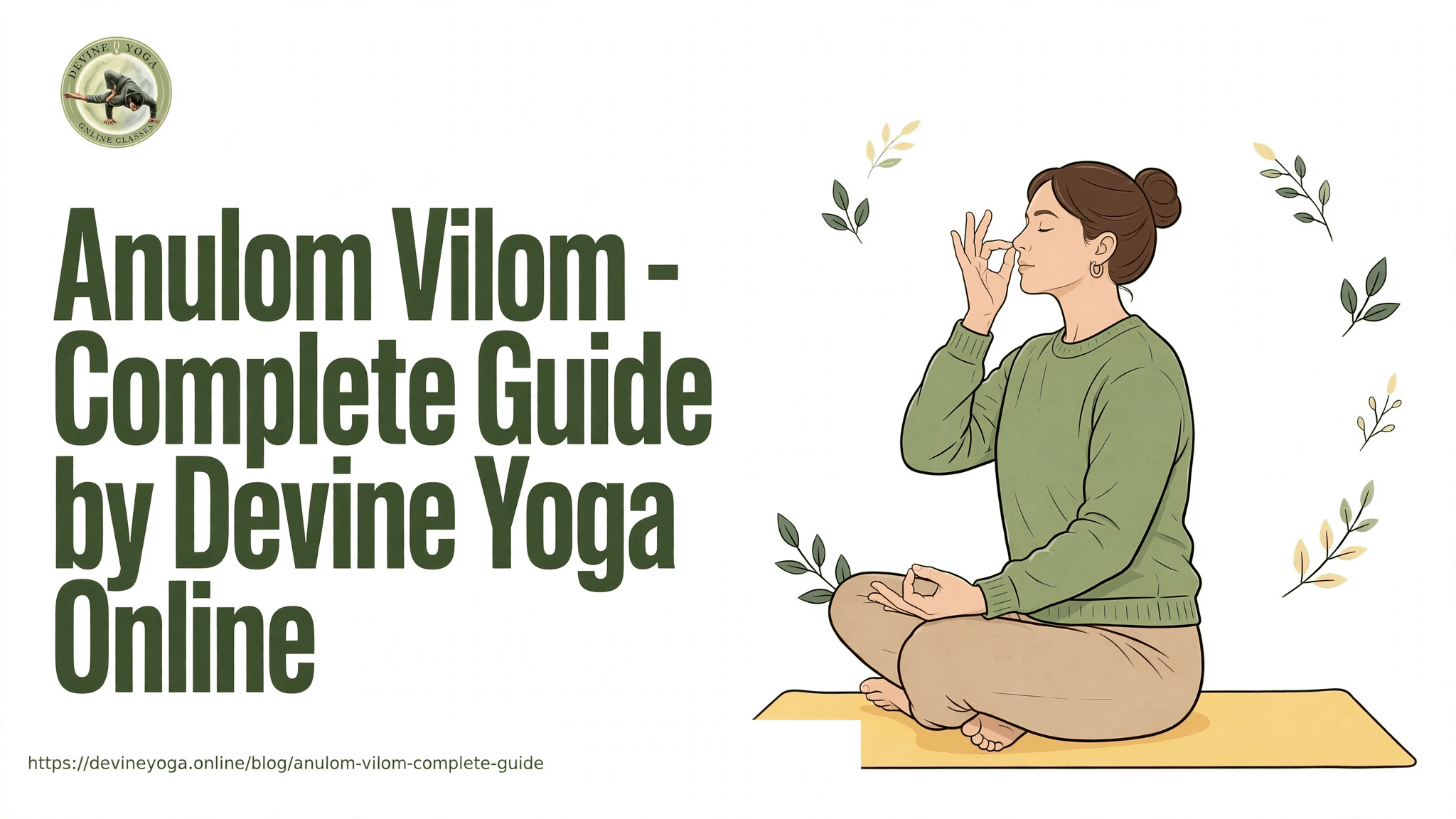
Anulom Vilom: Complete Guide by Devine Yoga Online
Master Anulom Vilom. Learn correct steps, proven scientific benefits, mistakes to avoid, and safe daily practices.
11 min read
What Is Yoga?
Curious about yoga? Explore its meaning, history, different practices, benefits, and beginner-friendly ways to start practicing safely.
6 min read
Group vs Personal Online Yoga
Group or personal online yoga? Compare cost, attention, safety and flexibility to choose the right fit for your goals.
11 min read