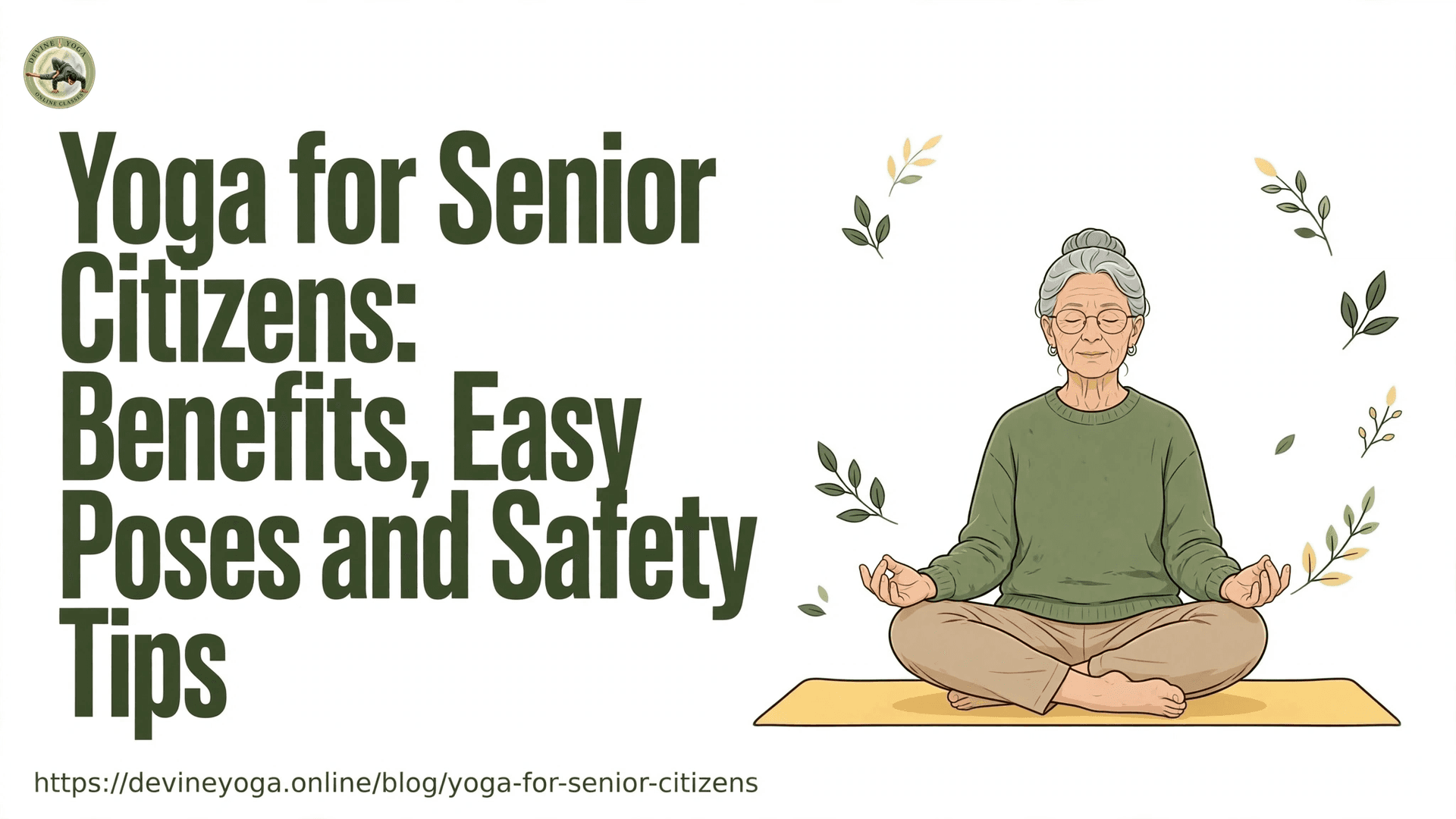
Yoga for Senior Citizens: Benefits, Easy Poses and Safety Tips
Explore gentle yoga for senior citizens, including chair yoga, beginner-friendly poses, benefits, safety tips and a simple daily routine for healthy ageing.
Summarize this blog with:
Ageing is a natural part of life. As the years pass, you may notice that your body does not move quite as easily as it once did. Getting out of bed, climbing stairs, bending down to pick something up or sitting on the floor may require a little more effort.
You might also experience stiffness in your back, reduced flexibility, weaker muscles or difficulty maintaining balance. These changes can affect everyday activities, but staying physically active can help you maintain mobility and independence as you grow older.
One gentle way to stay active is yoga.
Yoga for senior citizens combines comfortable physical movements, breathing exercises and relaxation. It can be adapted to different fitness levels and physical abilities. You do not need to touch your toes, perform complicated poses or sit on the floor to begin. Many movements can be practised with the support of a chair or wall.
For older adults, the goal is not to achieve perfect yoga poses. It is to move comfortably, maintain strength and flexibility, improve body awareness and enjoy a calmer daily routine.
In this guide, we will explore the benefits of yoga for seniors, easy yoga poses for older adults, chair yoga exercises, safety precautions and a simple routine that beginners can gradually introduce into their day.
What Is Yoga for Senior Citizens?
Yoga for senior citizens is a gentle form of yoga adapted to the needs, comfort and physical abilities of older adults.
Traditional yoga includes physical postures (asanas), breathing techniques (pranayama) and meditation. A senior-friendly yoga practice uses suitable versions of these techniques without placing unnecessary pressure on the body.
For example, instead of performing a standing balance pose without support, an older adult may practise it while holding a sturdy chair. Instead of sitting on the floor, they may perform a breathing exercise or gentle stretch while sitting comfortably.
Why Is Yoga Important for Older Adults?
As people grow older, maintaining movement becomes increasingly important.
Some older adults spend much of their day sitting, watching television, reading or using a mobile phone. Others may reduce their physical activity because of stiffness, discomfort or fear of falling.
Over time, reduced activity can affect muscle strength, flexibility and everyday mobility.
Think about ordinary activities such as:
- Getting up from a chair.
- Reaching for an object on a shelf.
- Turning your head while walking.
- Bending down to put on footwear.
- Walking comfortably around the house.
- Maintaining balance while changing direction.
These movements involve different muscles, joints and coordination skills.
A suitable yoga routine can help older adults practise comfortable movement and become more aware of their bodies. It also provides time for breathing and relaxation.
However, yoga should be considered one part of an active lifestyle. Walking, appropriate strength exercises and other activities may also be important for healthy ageing.
The right combination depends on a person's abilities and medical needs.
Benefits of Yoga for Senior Citizens
Regular, appropriately modified yoga may support several aspects of physical and mental well-being. Research involving older adults has found encouraging results for certain physical outcomes, although the benefits vary between individuals and yoga programmes.
Here are some potential benefits.
1. Supports Flexibility and Joint Movement
Stiffness can make everyday movements uncomfortable. Older adults may notice reduced movement in areas such as the shoulders, hips, ankles and back.
Gentle yoga movements take the body through comfortable ranges of motion. Simple shoulder rolls, ankle movements, seated twists and gentle stretches can help maintain movement.
For example, a person who spends a long time sitting may enjoy gentle seated movements that encourage comfortable movement in the upper back and shoulders.
The aim is not to force a stretch. Move slowly and stay within a comfortable range.
2. Helps Maintain Balance and Body Awareness
Balance plays an important role in everyday independence.
Walking, turning, standing up and stepping over small obstacles all require coordination and body awareness.
Some yoga practices include supported standing movements that encourage people to notice how they distribute their weight and position their feet.
Research reviews have reported improvements in balance among some older adults who participated in yoga programmes. However, the evidence does not establish that yoga alone prevents falls. For a broader overview, read the yoga research and safety guidance from NCCIH.
Older adults with a history of falls or significant balance difficulties should seek professional guidance before attempting standing balance exercises.
3. Supports Muscle Strength
Muscle strength is important for everyday activities such as standing up, climbing stairs and carrying light household items.
Some gentle yoga postures involve supporting the body's weight or maintaining a comfortable position for a short period. These movements may provide a form of muscular activity.
For example, a supported chair squat or a gentle standing posture may involve the muscles around the legs and hips.
The exercise should match the person's current strength. If standing from a chair is difficult, a qualified instructor or physiotherapist can suggest an appropriate starting variation.
Yoga can complement strength training, but it should not automatically replace a structured strength programme.
4. Encourages Better Postural Awareness
Many people spend several hours sitting, sometimes with their shoulders rounded and head leaning forward.
Over time, these habits can contribute to discomfort and reduced awareness of body position.
Gentle yoga movements encourage people to notice how they sit, stand and move.
Simple practices such as comfortable shoulder movements, supported mountain pose and gentle upper-back stretches can help develop awareness of posture.
Rather than trying to maintain a rigid, perfectly straight position, aim for a comfortable posture that allows you to breathe naturally.
5. Supports Relaxation and Stress Management
Retirement, changes in daily routine, family responsibilities, loneliness and health concerns can affect emotional well-being.
Yoga creates an opportunity to pause and focus on the present moment.
Slow breathing, gentle movement and relaxation may help some older adults feel calmer after a session.
A simple practice is to sit comfortably, relax the shoulders and observe the natural rhythm of breathing for a few minutes.
Do not force deep breathing or hold your breath. Keep the practice comfortable.
6. May Support Sleep Quality
Some older adults experience changes in sleeping patterns as they age.
A relaxing evening routine may help create a calmer transition towards bedtime.
Gentle seated stretches, comfortable breathing and a short relaxation practice can become part of that routine.
Research on yoga and sleep among older adults is encouraging in some areas, but results are not consistent enough to treat yoga as a guaranteed solution for sleep problems.
If sleep difficulties are persistent, discuss them with a healthcare professional.
7. Encourages Mindfulness and Concentration
Yoga is not only about physical movement. It also involves paying attention to the breath and noticing how the body feels.
During a gentle session, participants can practise focusing on one movement at a time.
For example, while slowly raising the arms, notice the movement of the shoulders and the rhythm of breathing.
This simple awareness can make the practice feel more focused and less rushed.
8. Creates an Opportunity for Social Connection
For older adults, participating in a group activity can provide an opportunity to interact with other people.
A yoga class may offer a shared routine, a sense of participation and a chance to meet people with similar interests.
Group classes are not essential, though. Some people prefer practising at home with an instructor.
Choose the format that feels comfortable and accessible.
10 Easy Yoga Poses for Senior Citizens
Beginners should start with simple movements and suitable support. The following poses and exercises are examples that may be adapted for older adults.
Not every pose is appropriate for everyone. People with medical conditions, injuries, balance difficulties or movement restrictions should get individual guidance before practising.
1. Tadasana (Mountain Pose)
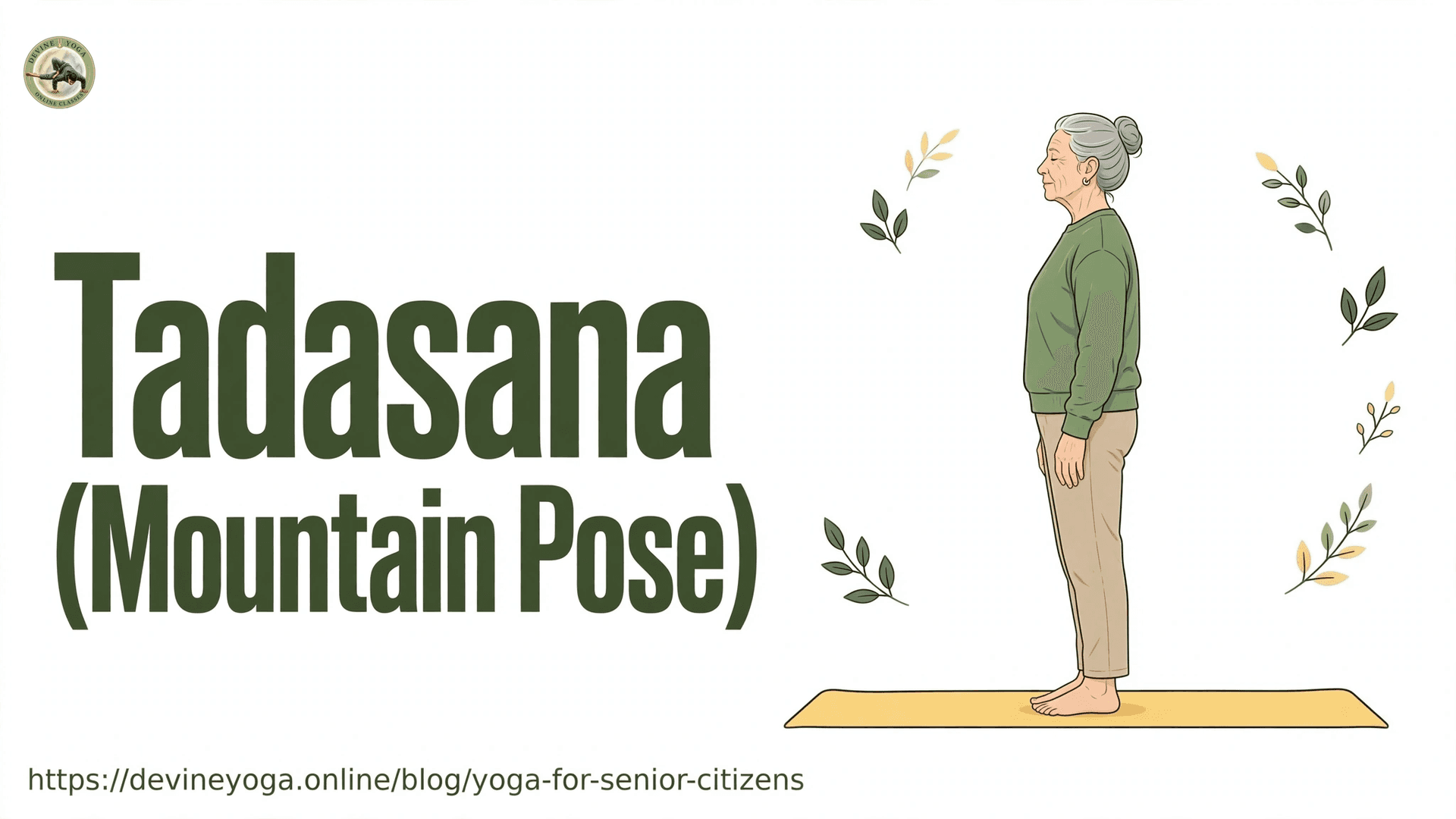
Tadasana, also called Mountain Pose, is a basic standing posture that encourages awareness of body alignment.
How to practise:
- Stand near a sturdy chair or wall for support.
- Keep your feet comfortably apart.
- Distribute your weight evenly across both feet.
- Relax your shoulders and keep your head in a comfortable position.
- Breathe naturally while standing for a few seconds.
- Hold the chair if you feel unsteady.
Potential benefits:
- Encourages awareness of standing posture.
- Helps practise comfortable weight distribution.
- Develops awareness of the feet and legs.
Beginner modification: Practise while holding a sturdy chair with both hands. If standing is uncomfortable, skip this pose and practise a seated posture instead.
2. Vrikshasana (Tree Pose)
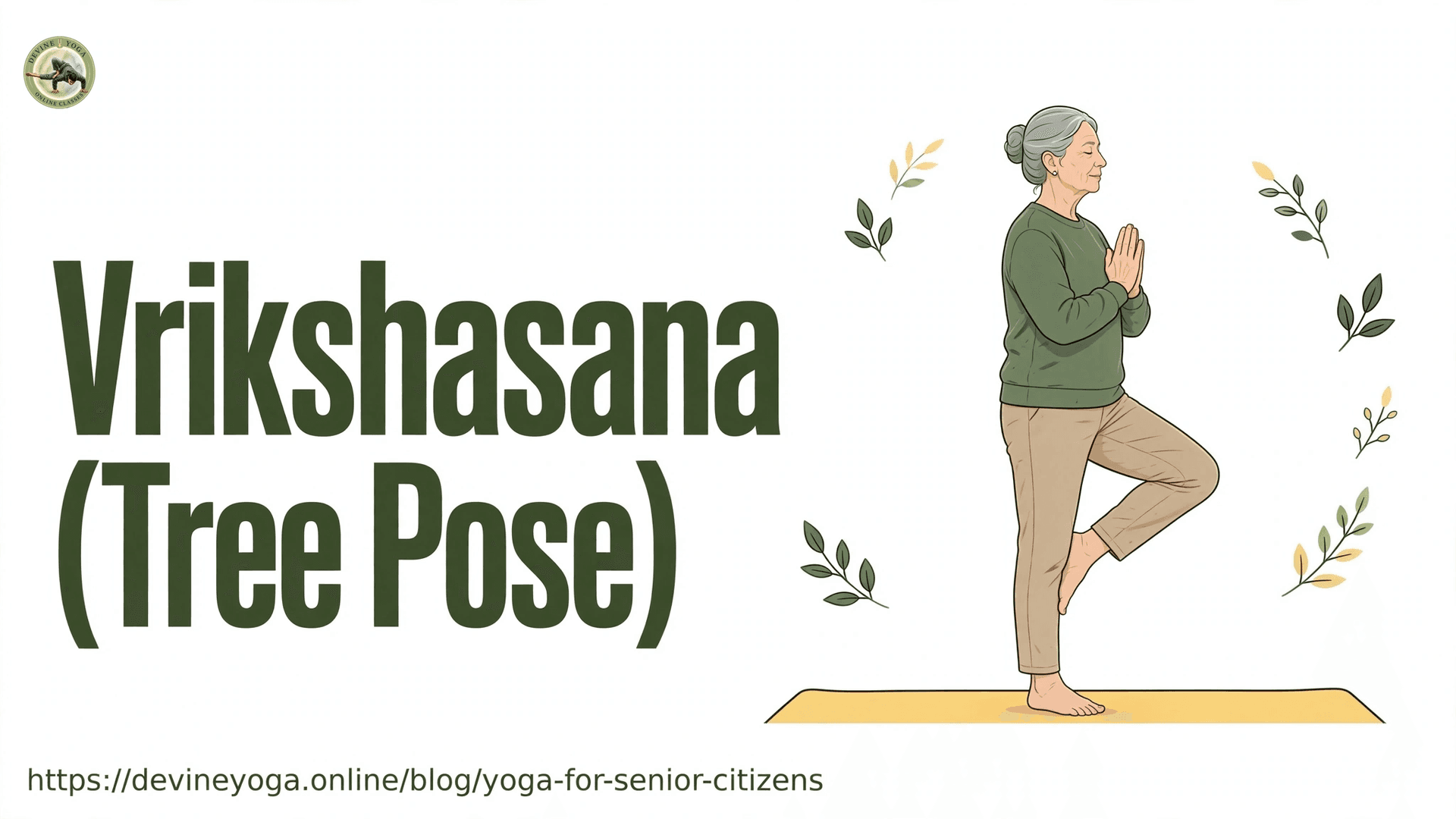
Vrikshasana is a standing balance posture. Older adults should only attempt a supported version if they can stand safely.
How to practise:
- Stand beside a stable chair or wall.
- Hold the support with one hand or both hands.
- Keep one foot firmly on the floor.
- If comfortable, place the heel of the other foot beside the ankle of the standing leg.
- Keep the toes of the raised foot on the floor.
- Maintain natural breathing.
- Return the foot to the floor and repeat on the other side.
Potential benefits:
- Encourages balance awareness.
- Helps practise controlled standing.
- Involves the muscles around the legs and hips.
Beginner modification: Keep both feet on the floor and simply shift a small amount of weight from one foot to the other while holding a stable support.
Do not attempt this exercise without support if you have a history of falls or feel unsteady.
3. Marjaryasana-Bitilasana (Cat-Cow Pose)
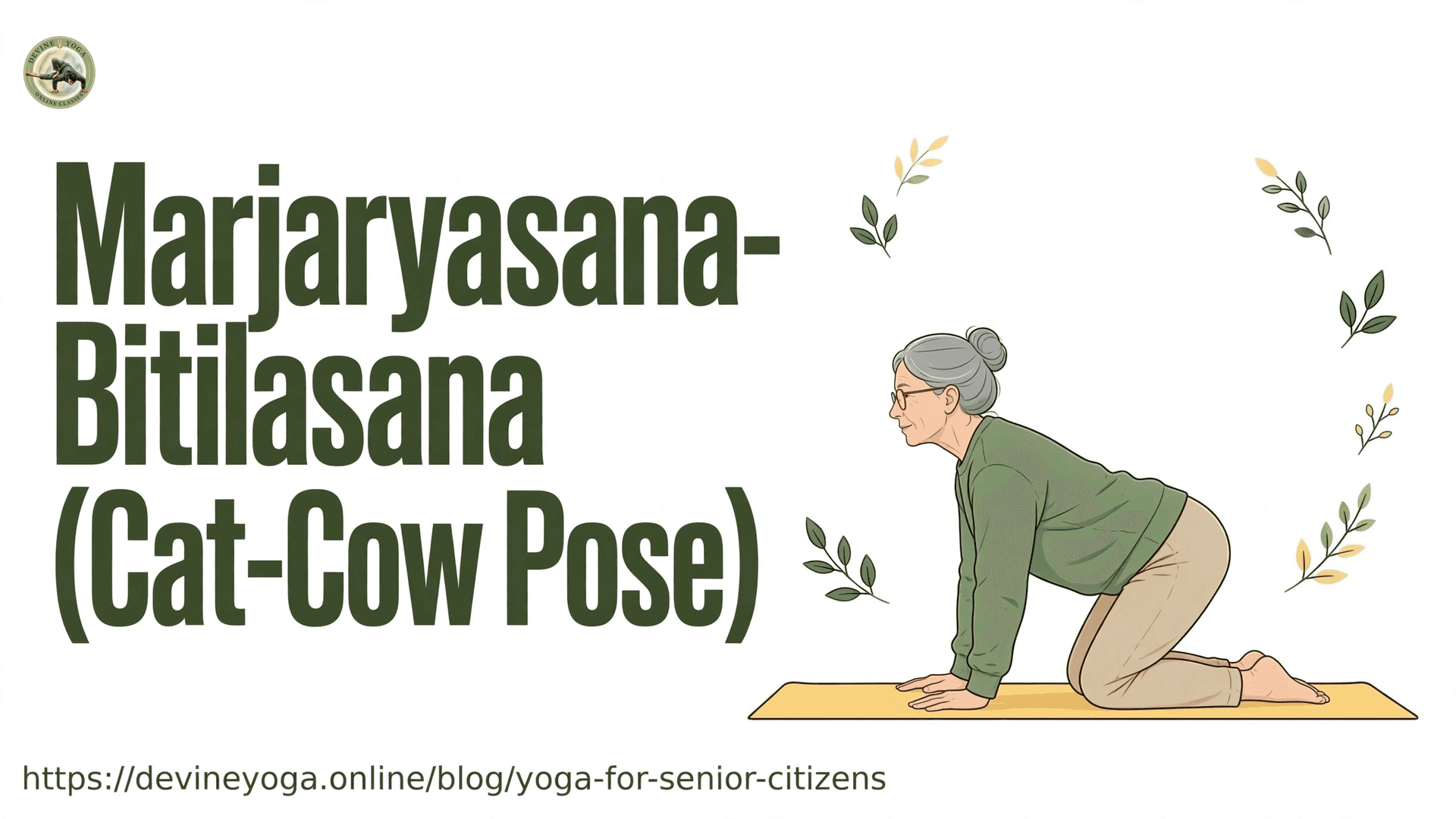
Cat-Cow is a gentle movement that alternates between rounding and extending the spine.
Older adults who find floor-based positions uncomfortable can try a seated variation.
How to practise:
- Sit near the front of a stable chair with both feet on the floor.
- Place your hands gently on your thighs.
- As you inhale, gently lift your chest and allow your back to move into a comfortable arch.
- As you exhale, gently round your upper back and allow your chin to move slightly towards your chest.
- Repeat slowly for four to six comfortable rounds.
Potential benefits:
- Encourages gentle spinal movement.
- Develops awareness of posture.
- Connects movement with breathing.
Beginner modification: Keep the movement small. Avoid forcing the neck backwards or rounding the spine beyond a comfortable range.
4. Baddha Konasana (Bound Angle Pose)
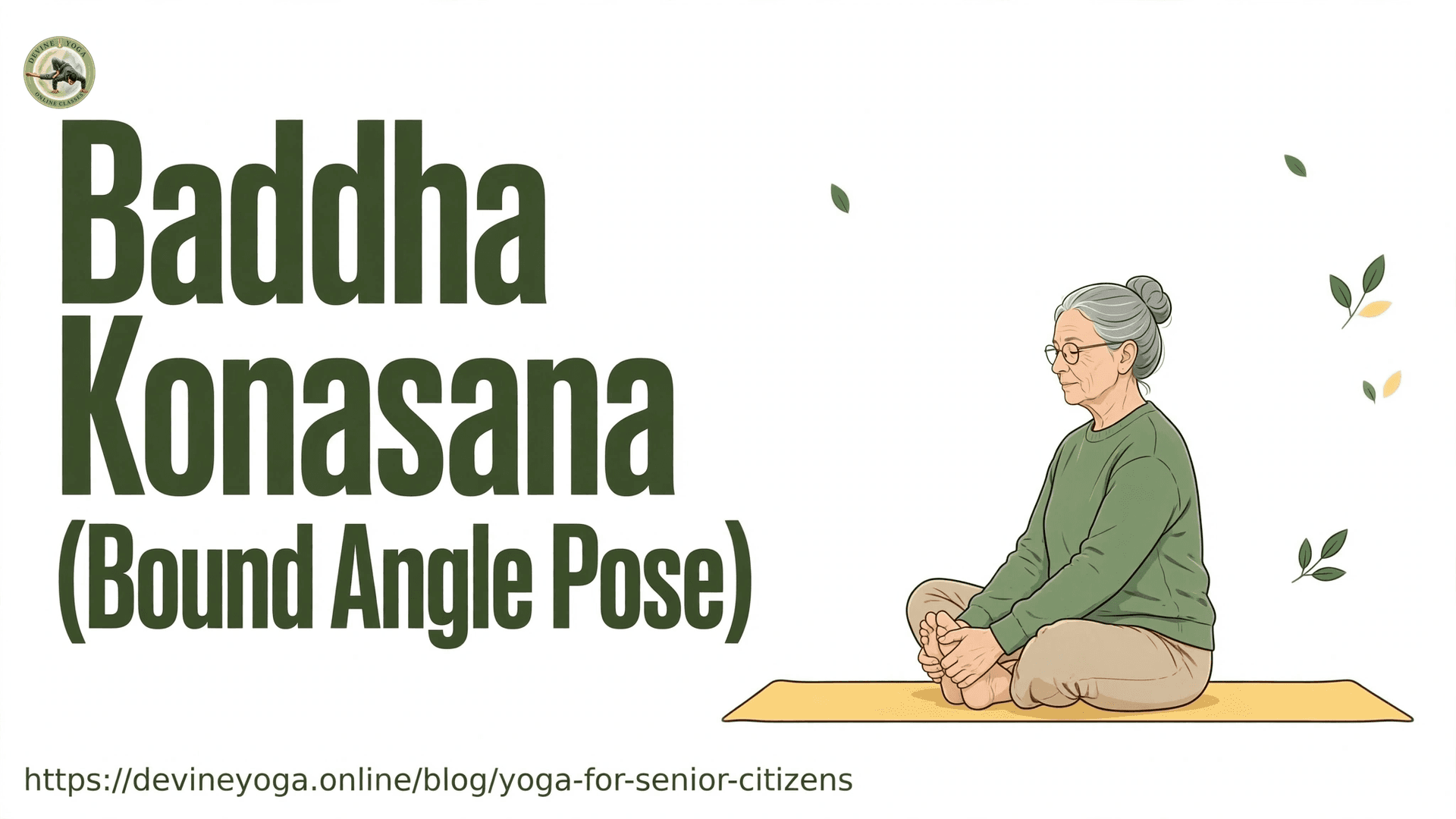
Bound Angle Pose is commonly practised while sitting on the floor with the soles of the feet together. A simpler seated version can be used by older adults.
How to practise:
- Sit comfortably on a stable chair.
- Keep both feet on the floor.
- Allow your knees to remain comfortably apart.
- Sit with your back supported if needed.
- Relax your shoulders and breathe naturally.
- Stay in the position for a few breaths.
Potential benefits:
- Encourages awareness of the hips and inner thighs.
- Provides a comfortable seated position.
- Can be included in a gentle mobility routine.
Beginner modification: Do not force the knees apart or press them down. Keep the legs in a natural, comfortable position.
5. Seated Forward Bend
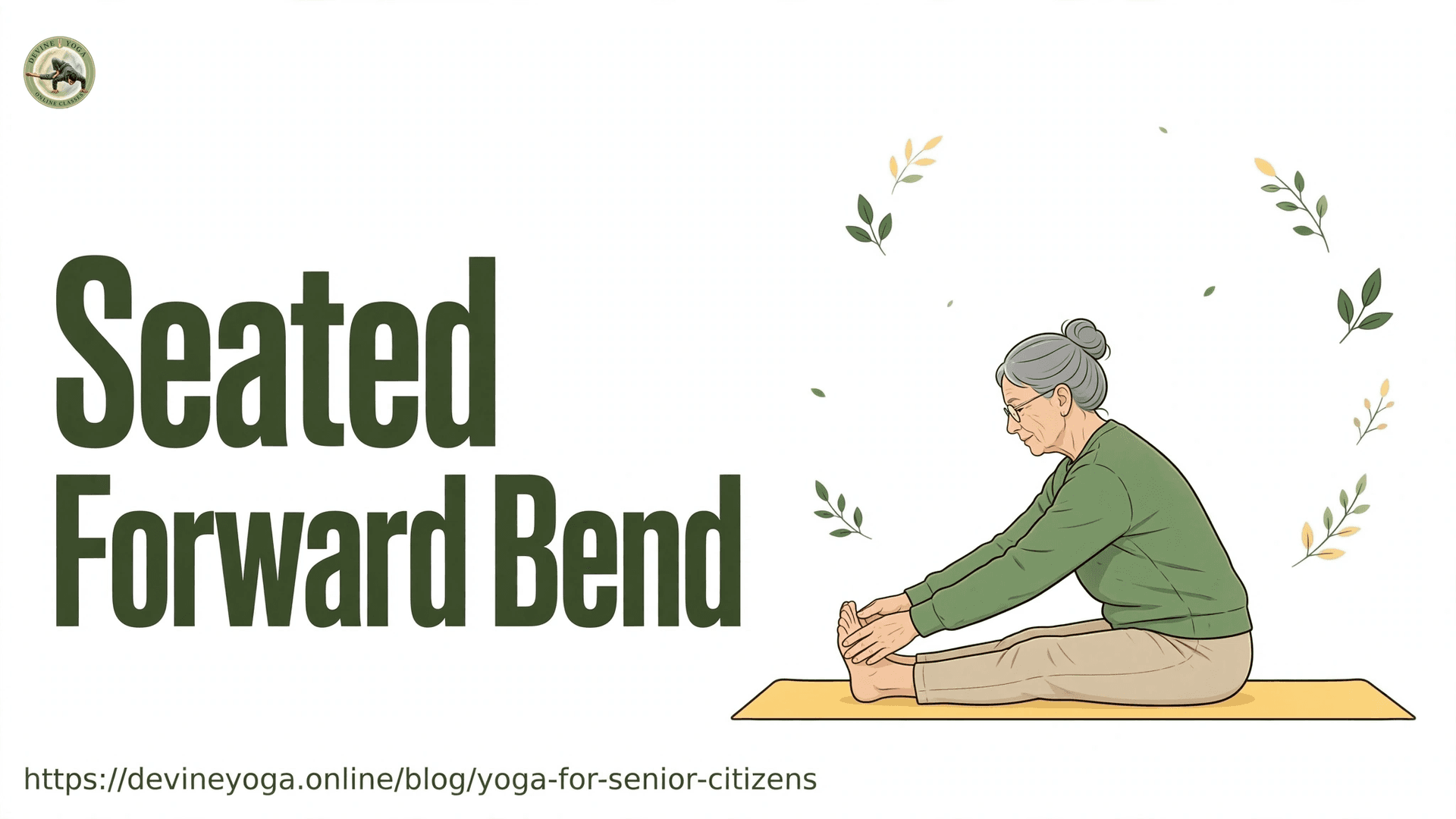
A seated forward bend can be modified to avoid excessive stretching.
How to practise:
- Sit towards the front of a stable chair.
- Place both feet flat on the floor.
- Keep your hands on your thighs.
- Gently lean forward from the hips, only as far as comfortable.
- Keep your neck relaxed and avoid dropping your head suddenly.
- Return slowly to an upright position.
Potential benefits:
- Encourages comfortable movement around the hips.
- Helps practise controlled bending.
- Can reduce the feeling of stiffness after prolonged sitting.
Beginner modification: Make the movement very small. Skip it if bending causes back pain, dizziness or discomfort.
6. Seated Side Stretch
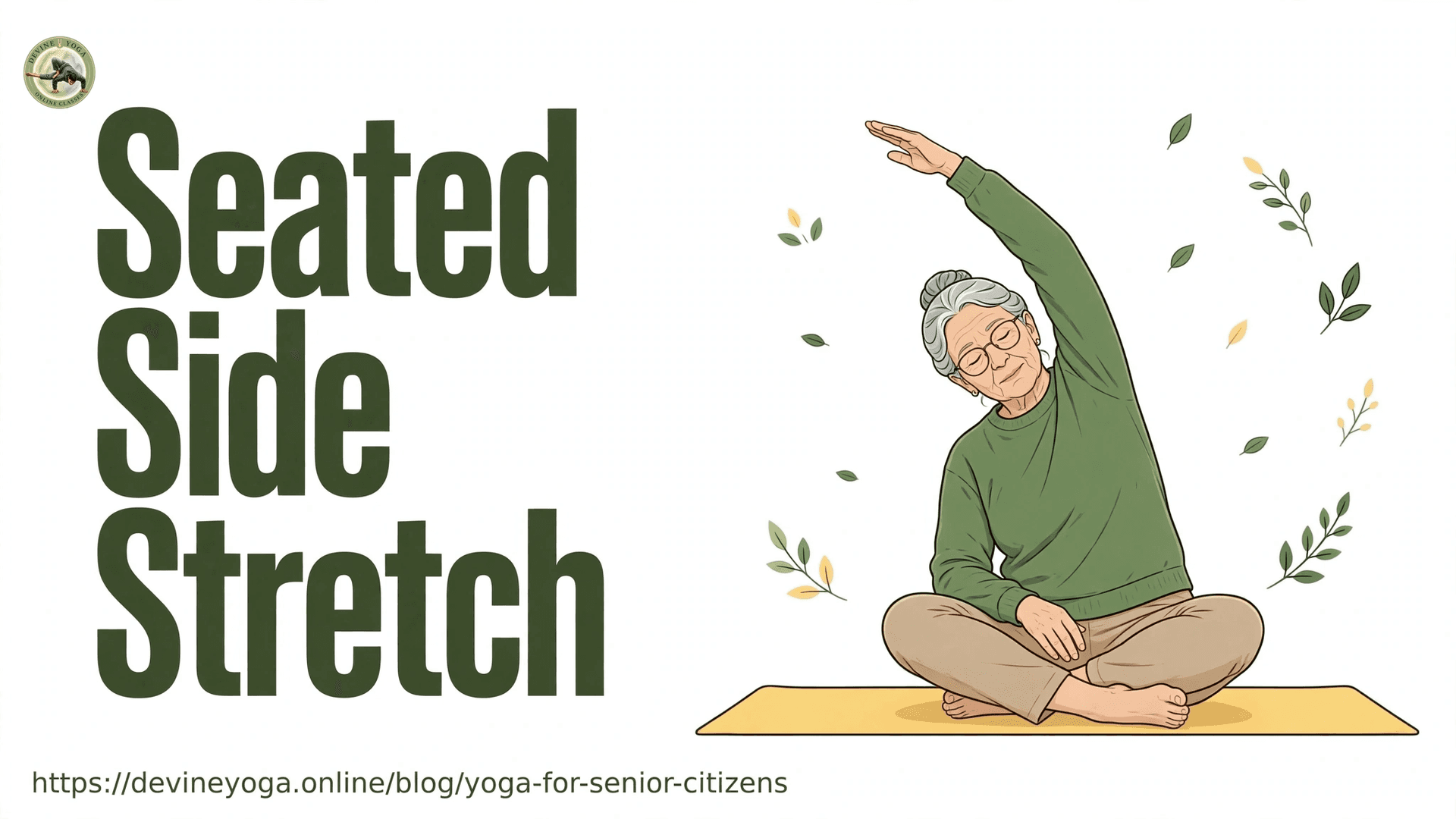
This simple movement encourages gentle stretching along the sides of the torso.
How to practise:
- Sit upright on a stable chair.
- Place your left hand on your left thigh.
- Slowly raise your right arm if your shoulder allows.
- Gently lean towards the left without twisting your body.
- Take two or three natural breaths.
- Return to the centre and repeat on the other side.
Potential benefits:
- Encourages comfortable side-body movement.
- Promotes awareness of the torso.
- Helps break up long periods of sitting.
Beginner modification: Keep the raised arm lower or place your hand on your waist if lifting the shoulder is uncomfortable.
7. Seated Shoulder Rolls
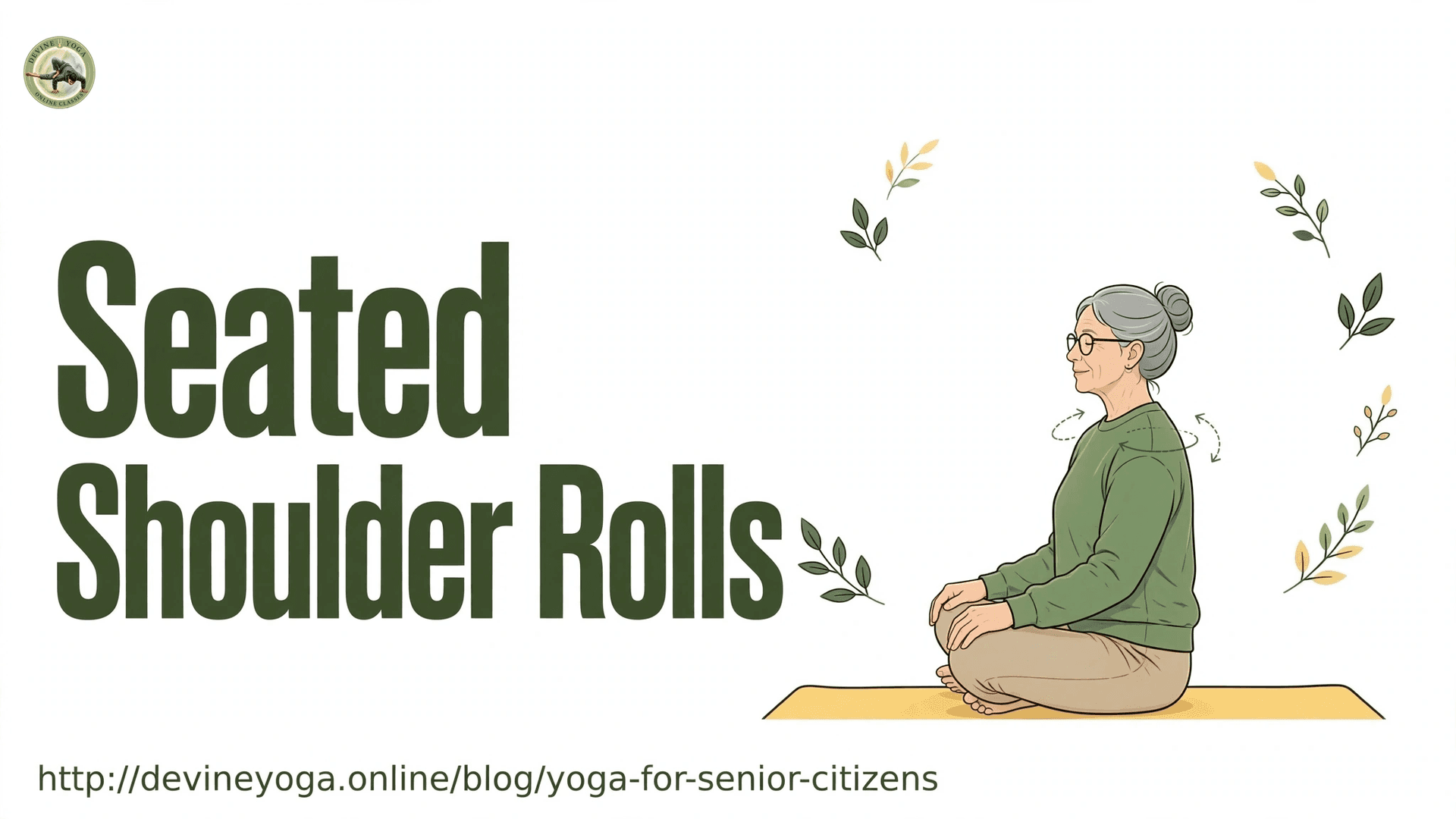
Shoulder rolls are a simple movement for people who spend a lot of time sitting.
How to practise:
- Sit comfortably with your feet flat on the floor.
- Relax your arms beside your body.
- Slowly raise your shoulders towards your ears.
- Gently move them backwards and downwards.
- Repeat four to six times.
- Reverse the direction if comfortable.
Potential benefits:
- Encourages gentle shoulder movement.
- Helps release the feeling of tension after sitting.
- Develops awareness of shoulder position.
Avoid large or forceful movements, especially if you have shoulder pain or a previous injury.
8. Ankle Rotations
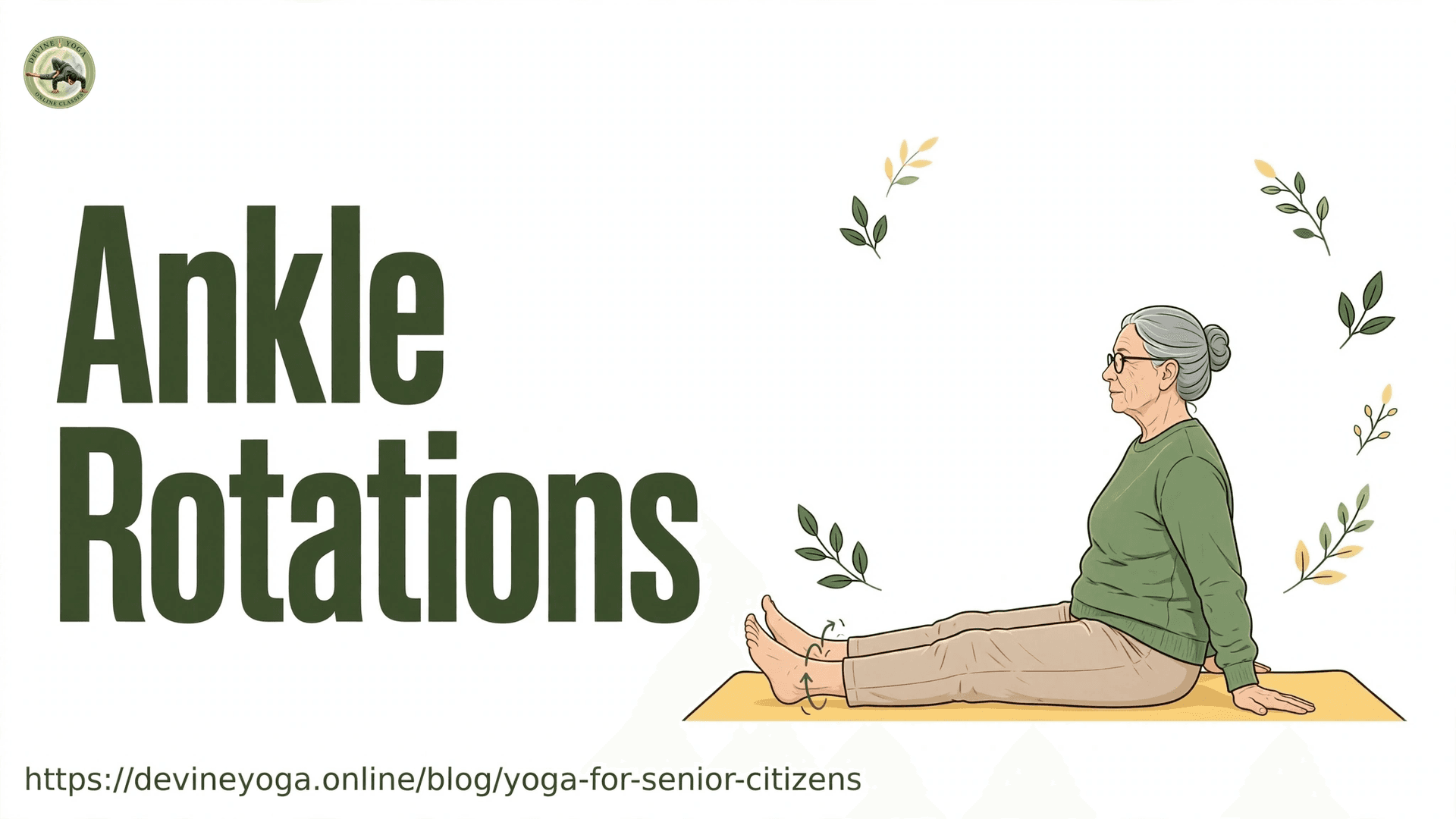
Ankle movements are useful for introducing gentle mobility while seated.
How to practise:
- Sit on a stable chair.
- Keep one foot slightly lifted if comfortable, or leave the heel on the floor.
- Slowly rotate the ankle in one direction.
- Complete a few small circles.
- Change direction.
- Repeat with the other ankle.
Potential benefits:
- Encourages ankle movement.
- Helps practise controlled lower-leg movement.
- Can be included in a gentle warm-up.
Do not force the movement if you have ankle pain, swelling or a recent injury.
9. Supported Standing Leg Movement
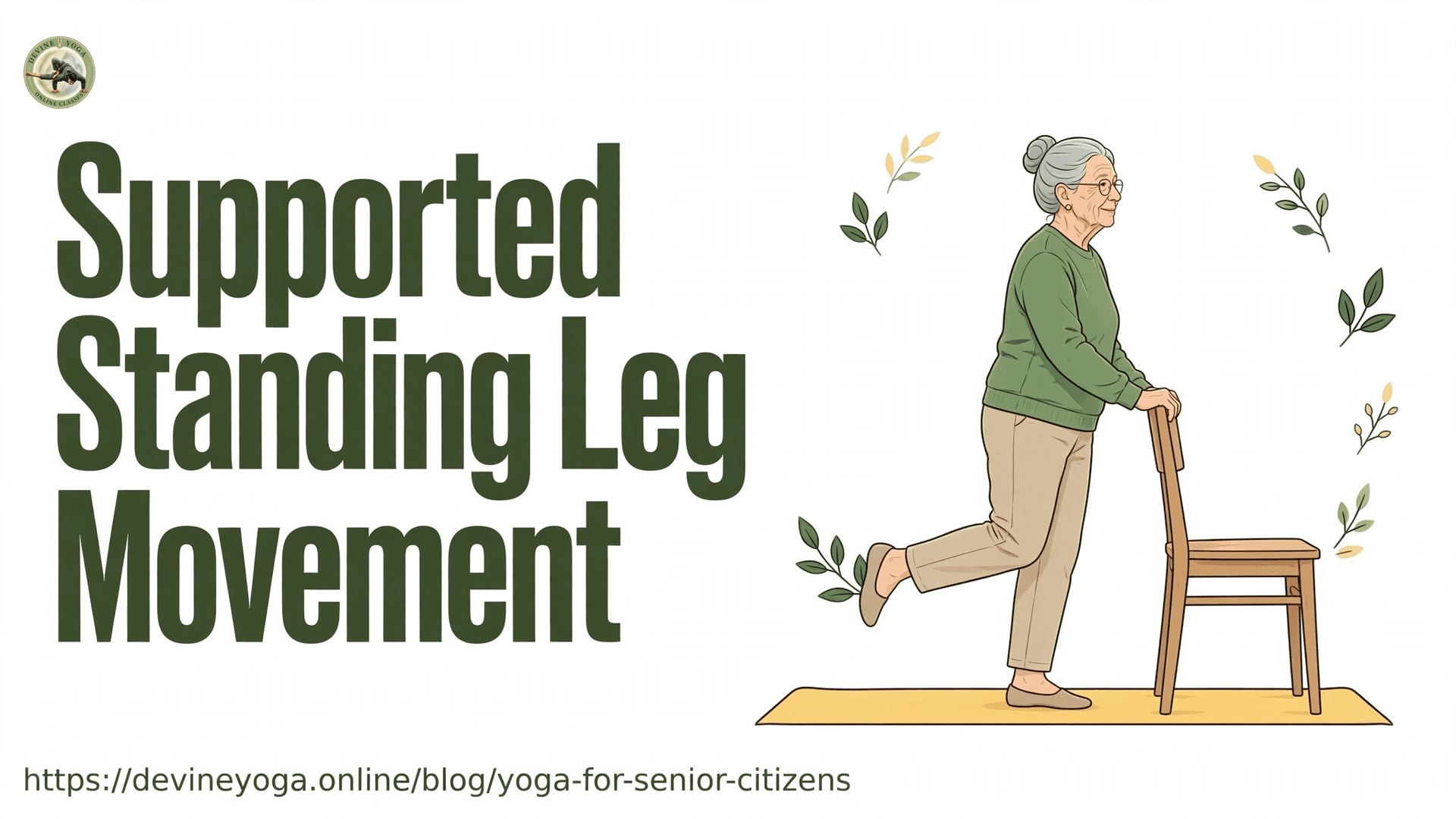
This is a gentle standing exercise for people who can stand safely with support.
How to practise:
- Stand behind a sturdy chair and hold its backrest.
- Keep your feet comfortably apart.
- Slowly move one leg a short distance backwards without leaning your upper body forward.
- Return the foot to its starting position.
- Repeat a few times and change legs.
- Keep breathing naturally.
Potential benefits:
- Encourages controlled leg movement.
- Involves the muscles around the hips.
- Provides an opportunity to practise standing with support.
Beginner modification: Keep the movement very small. Do not perform it if you feel unsteady or cannot safely support yourself.
10. Shavasana (Corpse Pose)
Shavasana is traditionally practised lying on the back. However, lying on the floor may not be suitable for every older adult.
A seated relaxation variation is an accessible alternative.
How to practise:
- Sit comfortably in a chair with your back supported.
- Place both feet on the floor.
- Rest your hands on your thighs or armrests.
- Relax your shoulders and facial muscles.
- Close your eyes if comfortable.
- Observe your natural breathing for two to five minutes.
Potential benefits:
- Encourages relaxation.
- Provides time to rest after movement.
- Helps develop awareness of breathing.
Never force yourself to lie on the floor or get up without assistance if doing so is difficult.
Chair Yoga for Senior Citizens
Chair yoga is a modified form of yoga that uses a chair for sitting, support or balance.
It can be useful for older adults who:
- Find getting down to the floor difficult.
- Have limited mobility.
- Feel uncomfortable standing for long periods.
- Prefer a supported exercise routine.
- Are new to yoga and want to begin with simple movements.
A chair can make certain yoga movements more accessible, but it does not automatically make every exercise safe.
Choose a sturdy chair without wheels. Place it on a level, non-slip surface. Avoid using a folding chair or a chair that moves easily.
Simple Chair Yoga Exercises
Here are five movements that may be included in a beginner-friendly chair yoga session.
| Exercise | How to practise | Focus |
|---|---|---|
| Seated breathing | Sit comfortably and observe natural breathing | Relaxation |
| Seated Cat-Cow | Gently round and extend the back | Spinal movement |
| Shoulder rolls | Move the shoulders slowly backwards and forwards | Shoulder mobility |
| Seated leg extension | Straighten one knee gently and return the foot to the floor | Leg movement |
| Seated side stretch | Gently lean to one side while sitting | Side-body movement |
Start with a few repetitions and rest whenever needed.
If a movement causes pain, dizziness or unusual discomfort, stop. A qualified instructor can help identify a more suitable variation.
A Simple Daily Yoga Routine for Seniors
A short and comfortable routine can be easier to maintain than a long session.
The following is an example of a gentle 15-minute routine for an older adult who has been cleared for light exercise and can perform the movements comfortably.
| Time | Practice | What to focus on |
|---|---|---|
| 2 minutes | Seated breathing | Let your breathing settle naturally |
| 2 minutes | Seated shoulder rolls | Move slowly, then reverse the direction |
| 2 minutes | Ankle rotations | Small, comfortable circles with each ankle |
| 2 minutes | Seated Cat-Cow | Keep the movement small and match it to your breath |
| 2 minutes | Seated side stretch | Lean gently to each side without twisting |
| 2 minutes | Tadasana or supported standing leg movement | Hold a sturdy chair, or stay seated if standing feels unsteady |
| 3 minutes | Seated relaxation | Rest and observe your natural breathing |
Rest between movements whenever you need to, and skip any exercise that does not feel comfortable.
Common Yoga Mistakes Seniors Should Avoid
Yoga should feel comfortable and controlled. Certain habits can make practice unnecessarily difficult or increase the risk of injury.
1. Comparing Yourself With Younger Practitioners
Every person's body has different abilities.
An older adult may need more support, a smaller range of motion or additional rest. That does not make the practice less valuable.
Focus on your own comfort and progress.
2. Holding the Breath
Some beginners unknowingly hold their breath while stretching or trying to maintain a pose.
Continue breathing naturally. If you cannot breathe comfortably during a movement, reduce the effort or stop.
3. Attempting Difficult Poses Without Support
Standing balance poses can be challenging, particularly for people who feel unsteady.
Use a sturdy support and seek instruction before attempting them. Skip unsupported balance poses if you have a history of falls or significant balance difficulties.
4. Stretching Beyond a Comfortable Range
Trying to bend further or reach lower does not necessarily improve the quality of a yoga session.
Move gently. Avoid forcing the knees, hips, shoulders or spine.
5. Ignoring Existing Health Conditions
A pose that feels comfortable for one person may not be suitable for someone with osteoporosis, glaucoma, joint replacement or a spinal condition.
Tell your yoga instructor about relevant health concerns so the practice can be modified appropriately.
6. Starting With a Long Session
A long session may leave a beginner tired or uncomfortable.
Start with a short routine and increase the duration only when it feels manageable and appropriate.
7. Skipping Rest
Rest is part of a sensible yoga practice.
Take breaks between movements and allow enough time to recover. There is no need to complete every exercise in one session.
Conclusion
Yoga for senior citizens is not about performing complicated poses or trying to move like a younger person. It is about maintaining comfortable movement, developing body awareness and making time for physical and mental well-being.
Gentle stretching, chair yoga, supported standing movements and simple breathing practices can help older adults build a manageable routine.
Start slowly, use support when needed and choose exercises that suit your physical abilities. Most importantly, remember that consistency and comfort matter more than flexibility or the number of poses you complete.
If you are considering starting yoga, take the first step by understanding what your body needs and choosing an appropriate class.
Explore a suitable yoga practice with Devine Yoga Online and make gentle movement part of your everyday routine.
Start slowly, breathe naturally and allow your body to move at its own pace.
Frequently asked questions
Is yoga good for senior citizens?
Yoga may help older adults maintain flexibility, balance, muscle strength and general physical function. Some people also find breathing and relaxation practices helpful for managing stress. The results vary, and the routine should be adapted to the individual's health and mobility.
Which is the best yoga for senior citizen beginners?
Chair yoga is the best place to start. It provides support and improves strength and balance without the need to get down to the floor. Combine it with gentle breathing and guided relaxation for a complete practice.
Is chair yoga good for elderly people?
Chair yoga can make certain yoga movements more accessible to older adults who find floor-based exercises or prolonged standing difficult. It offers supported ways to practise gentle movement, but exercises should still be selected according to individual needs.
Do I need to be flexible to start yoga at 60+?
Not at all. Flexibility is a result, not a requirement. Yoga helps you become more mobile gradually. We work with your body as it is today, using props.
How many minutes should seniors do yoga daily?
Start with 15–20 minutes a day, five days a week. This can include 8 minutes of movement, 5 minutes of breathing and 5 minutes of relaxation. Consistency matters more than long duration.
Reading is a start. A live teacher is the shortcut.
In a Devine Yoga Online class your trainer sees you, corrects you by name and adapts every pose to your body - beginners included.
Related blogs
What Is Aerial Yoga? Meaning, Benefits, and Basics
What is aerial yoga? Learn its meaning, how aerial hammock yoga works, benefits, safety tips, basics for beginners & who should avoid it.
12 min read
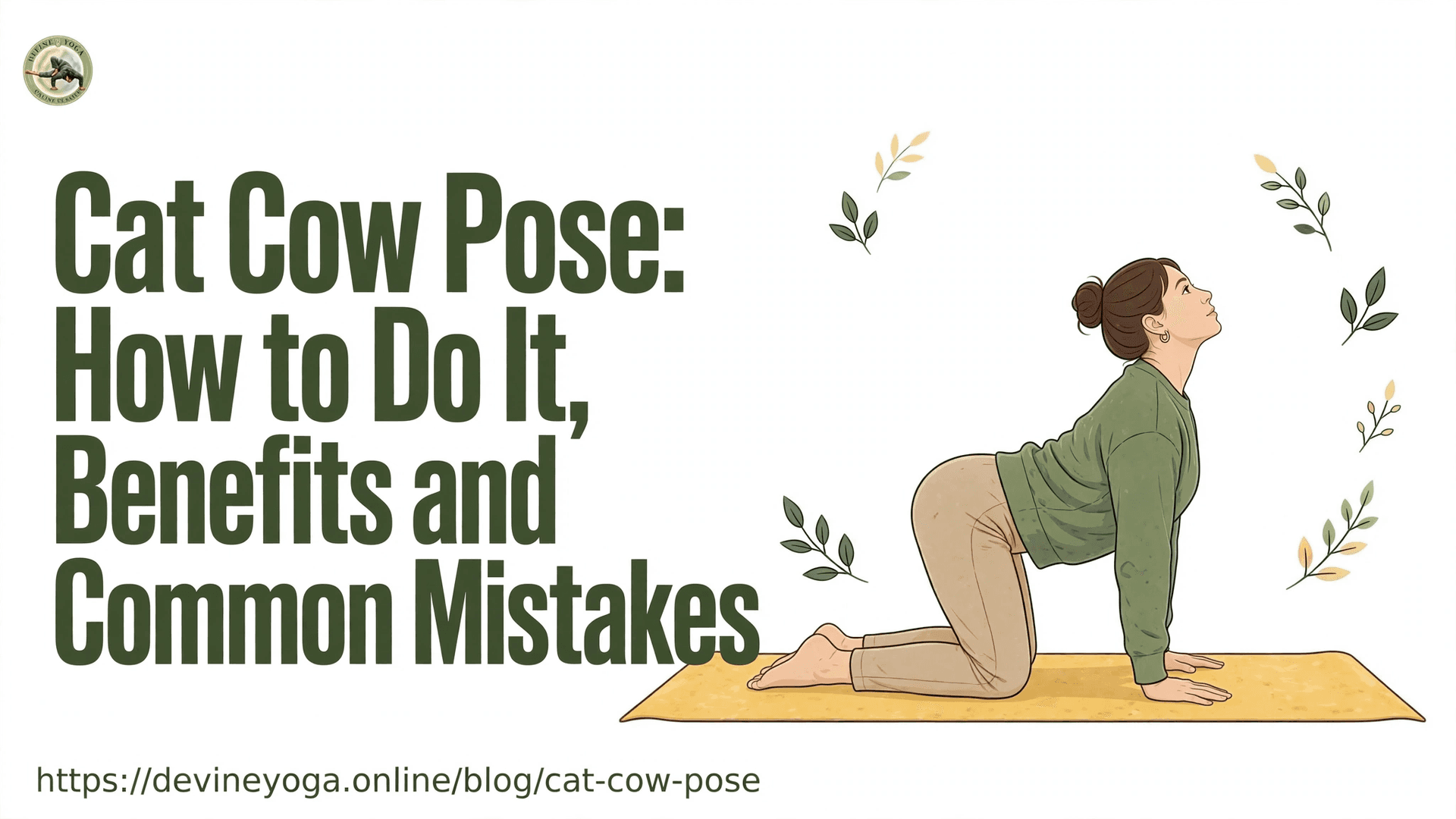
Cat Cow Pose: How to Do It, Benefits and Common Mistakes
Learn Cat Cow Pose step by step, its benefits, correct breathing, beginner modifications and common mistakes.
14 min read
What Is Ashtanga Yoga? A Complete Beginner’s Guide
What is Ashtanga Yoga? Learn history, 8 limbs, Primary Series, science-backed benefits and how to start this powerful practice safely today.
9 min read