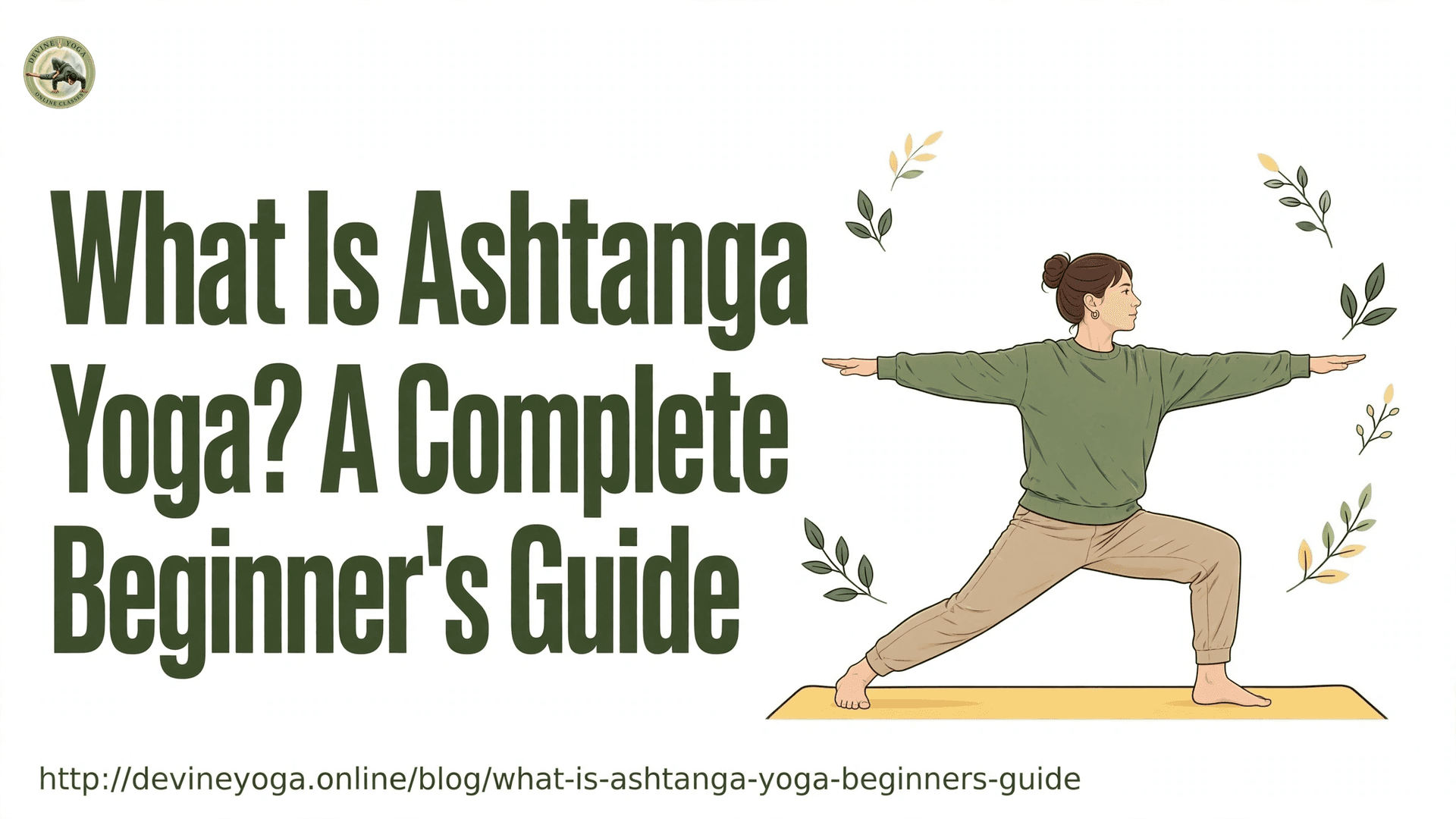
What Is Ashtanga Yoga? A Complete Beginner’s Guide
What is Ashtanga Yoga? Learn history, 8 limbs, Primary Series, science-backed benefits and how to start this powerful practice safely today.
Summarize this blog with:
What Is Ashtanga Yoga?
The word Ashtanga comes from Sanskrit: ashta = eight, anga = limb. So Ashtanga Yoga means the eight-limbed path. Ashtanga Yoga is a structured style of yoga that combines postures (asanas), breath, movement, concentration, and discipline into a consistent practice.
When most people today say "Ashtanga yoga", though, they mean Ashtanga Vinyasa yoga, a particular style of physical practice. It was developed and taught by K. Pattabhi Jois in Mysore in southern India, who learned it from his own teacher, Tirumalai Krishnamacharya, often called the father of modern yoga. Jois began teaching in the 1930s, and the style reached the West in the 1970s through students who travelled to Mysore. It takes its name from the eight limbs of yoga described by the sage Patanjali in the Yoga Sutras, because Jois taught that the postures are a way into the other limbs, but in practice the style concentrates on the body and the breath. What makes this style distinctive is that it follows a fixed sequence. There are six series, each a set order of postures that never changes. The Primary Series, called Yoga Chikitsa or "yoga therapy", is where almost everyone starts and spends years. It builds strength and flexibility, especially in the hips and hamstrings, and it is meant to purify the body. The Intermediate Series, Nadi Shodhana or "nerve cleansing", works on the nervous system with deeper backbends. The four Advanced series are demanding and are practised by only a small number of people. Because the order is always the same, you stop thinking about what comes next and your attention can go to the quality of the breath and the movement. This is why practitioners often describe the style as a moving meditation.
Compared with other styles, Ashtanga sits at the disciplined, athletic end. Hatha yoga is slower and more varied, with longer holds, which makes it a good choice for beginners and for building flexibility. Vinyasa flow also links movement to breath, but each class is different, so it offers more variety and less structure. Power yoga borrows the pace and intensity of Ashtanga without the fixed sequence or the traditional framework. If you like routine, measurable progress and a practice that rewards patience, Ashtanga suits you well. If you prefer variety or gentler movement, another style will probably fit better.
The 8 Limbs of Yoga: The Real Meaning of Ashtanga
If Ashtanga were only physical exercise, it would burn you out. The eight limbs give it context.
1. Yama (Restraints): How you relate to others. Ahimsa (non-harming), satya (truthfulness), asteya (non-stealing), brahmacharya (wise use of energy), aparigraha (non-grasping).
2. Niyama (Observances): How you relate to yourself. Saucha (cleanliness), santosha (contentment), tapas (discipline), svadhyaya (self-study), ishvara pranidhana (surrender to something larger).
3. Asana (Posture): The physical seat. In Patanjali, this originally meant a steady, comfortable sitting posture for meditation. Jois expanded it into the sequences we know.
4. Pranayama (Breath Regulation): Not just deep breathing, but directing life force. In Ashtanga Vinyasa, we use Ujjayi breath throughout. Our pranayama guide covers the main breathing techniques in more detail.
5. Pratyahara (Withdrawal of Senses): Pulling attention inward, not reacting to every external cue.
6. Dharana (Concentration): Holding focus on one point.
7. Dhyana (Meditation): Sustained, effortless focus.
8. Samadhi (Absorption): The state where observer and observed feel less separate.
What Are the Benefits of Ashtanga Yoga?
Benefits come from consistency, not perfection. Here is what both practitioners and early research point to.
1. Physical Benefits
Ashtanga is strength and flexibility together. A University of London pilot with 22 complete beginners practicing the Primary Series for 8 weeks found improvements in upper body and core endurance, trunk and hamstring flexibility, shoulder mobility, and reduction in body fat percentage. Other controlled studies note improved leg strength in premenopausal women after 8 months of twice-weekly practice, and improved bone formation markers.
Why? Sun Salutations alone involve push-pull mechanics, and standing poses load legs eccentrically. You are holding your own weight.
2. Mental Benefits
The fixed sequence reduces performance anxiety. You know what comes next, so you can focus on how you are breathing inside it. A small 2017 study found practitioners twice a week for nine weeks reported improved self-esteem and reduced depression and anxiety symptoms. In practice, students often say their mind is quieter not because thoughts stop, but because they have a clear task.
3. Breath and Nervous System
Ujjayi with extended exhale promotes parasympathetic dominance. Yoga practices in general have been linked to lower cortisol. The tristhana method trains sustained attention, similar to focused-attention meditation.
4. Discipline and Daily Life Benefits
Because Ashtanga is traditionally practiced six days a week, with Saturdays and moon days off, it builds routine. Many beginners find it spills into sleep, food, and screen time choices.
No exaggerated claims: Ashtanga does not cure disease, and it can be demanding on joints if practiced aggressively without guidance. Benefits depend on proper pacing.
How to Start Ashtanga Yoga: Beginner's Step-by-Step
You do not need to be flexible, strong, or calm to start. You need willingness to learn a little at a time.
Step 1: Learn the Breath First
Sit cross-legged, practice Ujjayi for 2 minutes. Inhale 4 counts with slight throat sound, exhale 4-5 counts. Hands on ribs to feel expansion.
Step 2: Memorize Surya Namaskar A
This is 9 vinyasas. Practice 3-5 rounds daily for your first few days. Focus on breath matching movement, not depth of forward fold. New to Sun Salutations in general? Our Surya Namaskar guide explains the classic 12-pose version.
Step 3: Add Surya Namaskar B
Adds Warrior I and Chair pose. Do 3x A + 3x B for the next few days.
Step 4: Add Standing Poses Gradually
Begin with Padangusthasana, Padahastasana, Utthita Trikonasana, Parshvakonasana. Stop when breath becomes ragged. In traditional Mysore, teacher adds one pose at a time.
Step 5: Understand Short Form
A beginner Mysore session is 30-45 minutes, not 90. A full Primary Series is not the goal on day one. Consistency beats duration.
Step 6: Get Support
A rug or mat with grip, a towel, and a teacher who can show modifications. If knees hurt in Lotus, do not do Lotus. Use Half Lotus or cross-legged.
Step 7: Close Properly
Always do at least 3-5 minutes of Savasana plus Finishing Sequence if you know it. Do not skip rest.
Sample First 2-Week Plan:
- Days 1-4: 5x Surya Namaskar A + 3 min breathing + Savasana
- Days 5-9: Add 3x Surya Namaskar B
- Days 10-14: Add the 4 standing poses from Step 4, stay 5 breaths each
Want to see each pose? Our Ashtanga yoga style guide has an illustrated beginner sequence you can follow.
Common Mistakes Beginners Make in Ashtanga Yoga
Many of these apply to every style, so it is worth reading our wider list of yoga mistakes beginners make too.
1. Trying to Achieve the Final Pose Shape on Day One
Forcing Marichyasana D before hips are ready stresses knees. Fix: Take the variation your teacher gives, breathe there. Progress in Ashtanga is measured by breath steadiness, not depth.
2. Holding Breath in Difficult Poses
You stop Ujjayi when struggling. Fix: If you cannot breathe smoothly, come out slightly. Breath is more important than pose.
3. Practicing Every Day Without Rest
Doing full Primary 7 days from week one leads to burnout. Fix: 3-4 days for first month, build to 5-6.
4. Comparing in a Mysore Room
Looking at who is doing Advanced Series. Fix: Use drishti. Your mat is your lab.
5. Skipping the Finishing Sequence
Jumping from backbends to day. Fix: Even 5 minutes of shoulderstand, headstand prep, and Savasana help nervous system rebalance.
6. Learning from Fast Videos Only
YouTube led full Primary in 60 minutes is not a beginner tool. Fix: Learn Sun Salutations from a certified teacher or a beginner-focused course that breaks down vinyasa count.
What Is Mysore Style Ashtanga Yoga?
Mysore style is the traditional way of learning and practising Ashtanga yoga. It's named after the city of Mysore in Karnataka, southern India, where K. Pattabhi Jois taught the method for decades. It isn't a different kind of yoga. It's a different way of running the class. The postures, the breathing and the sequences are the same as in any Ashtanga Vinyasa class, but nobody leads the room. Everyone practises their own sequence silently, at their own pace and in their own breath, while the teacher walks around and helps individuals.
In a led class the teacher counts every movement aloud, and the whole group moves together. A Mysore class works the other way. You arrive during an open window, often two or three hours long, early in the morning. You roll out your mat, begin with the opening chant (or silently, in many studios), and start your Sun Salutations. You then move through the sequence you have been given, and when you finish you rest, close your practice and leave. People arrive and leave at different times, so the room is full of people at different points in the series. Some are doing standing postures, others are halfway through the seated sequence, and others are in the finishing postures. The room is quiet except for the sound of ujjayi breathing, which many people find unusually calming.
The most important idea in Mysore style is that you learn the sequence a little at a time. A new student is not taught the whole Primary Series at once. At the first session you might learn only the Sun Salutations and a few standing postures. The teacher watches, corrects, and tells you to do the same short sequence the next day. When the teacher sees that you can do it with steady breathing and reasonable alignment, they add one new posture. This can take weeks or months, and many students stay on the same sequence for long periods. The point is that you memorise the sequence in your body, so that you no longer need anyone to tell you what comes next. Because of this, the practice becomes yours, and it stops depending on the teacher.
The teacher's role is therefore quite different from that of a typical instructor. They don't demonstrate or count. They watch each student, give verbal cues, and use hands-on adjustments to deepen or correct a pose, for instance by pressing gently on the back in a forward fold, or by guiding the hips in a twist. A skilled teacher sets each student's pace individually, deciding when to hold you back as much as when to move you forward. They also decide when a student should stop at a certain pose for a while, rather than force a more advanced one. Since the teacher sees every student almost every day, they know each person's body, injuries and habits in a way that is hard to achieve in a large led class.
Frequently asked questions
Is Ashtanga Yoga hard for beginners?
It is physically demanding but structurally simple. You repeat the same sequence, so the learning curve is shorter than with constantly changing flows. Start with Sun Salutations and a few standing poses, and build from there.
What is the difference between Ashtanga and Vinyasa Yoga?
Vinyasa is a general term for breath-linked flow that varies. Ashtanga Vinyasa is a specific, fixed Vinyasa system with six series, set drishti, and the traditional Mysore method.
Do I need to be flexible to start Ashtanga?
No. Flexibility is a result, not a requirement. Many stiff runners and lifters start and benefit. Modifications like bending the knees in forward folds are normal.
How long is the Ashtanga Primary Series?
The full Primary Series takes 60-90 minutes once memorized. Beginners do 30-45 minute short forms until stamina builds.
Can I practice Ashtanga at home?
Yes, after learning the fundamentals from a teacher. Start with Sun Salutations and standing poses. Use a timer for 5 breaths per pose to avoid rushing.
What are the 8 limbs in simple terms?
They are ethical guidelines, personal discipline, posture, breath control, inward withdrawal, concentration, meditation, and absorption: steps from outer behavior to inner steadiness.
Is Ashtanga Yoga spiritual?
Its roots are spiritual, but you can practice for physical and mental benefits. Chanting and philosophy are offered, not forced, in most studios.
Why do we practice on an empty stomach?
Twists, forward folds, and bandhas are uncomfortable and less effective after eating. Morning practice also supports consistency.
Reading is a start. A live teacher is the shortcut.
In a Devine Yoga Online class your trainer sees you, corrects you by name and adapts every pose to your body - beginners included.
Related blogs
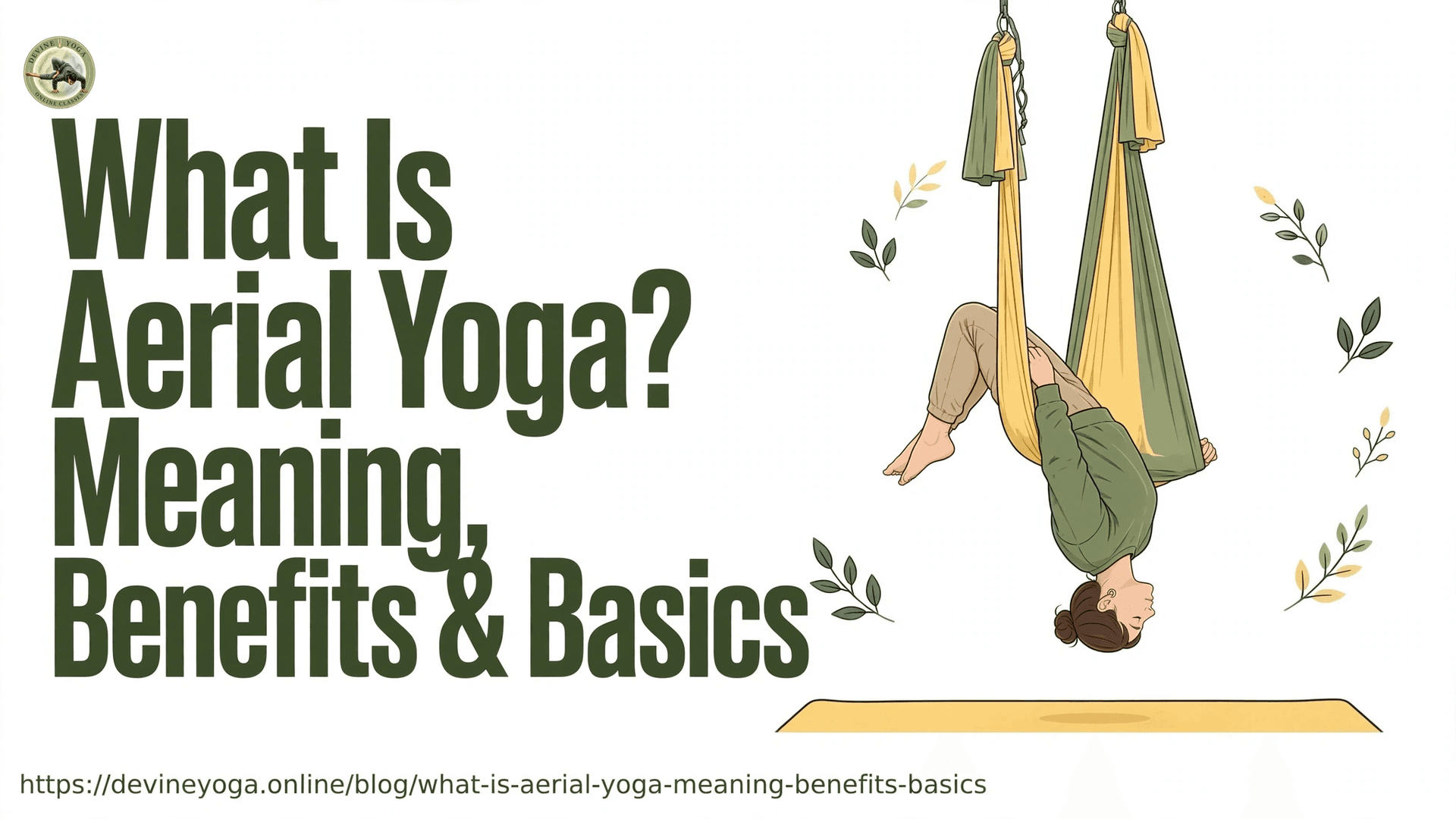
What Is Aerial Yoga? Meaning, Benefits, and Basics
What is aerial yoga? Learn its meaning, how aerial hammock yoga works, benefits, safety tips, basics for beginners & who should avoid it.
12 min read
Yoga for Senior Citizens: Benefits, Easy Poses and Safety Tips
Explore gentle yoga for senior citizens, including chair yoga, beginner-friendly poses, benefits, safety tips and a simple daily routine for healthy ageing.
18 min read
Cat Cow Pose: How to Do It, Benefits and Common Mistakes
Learn Cat Cow Pose step by step, its benefits, correct breathing, beginner modifications and common mistakes.
14 min read