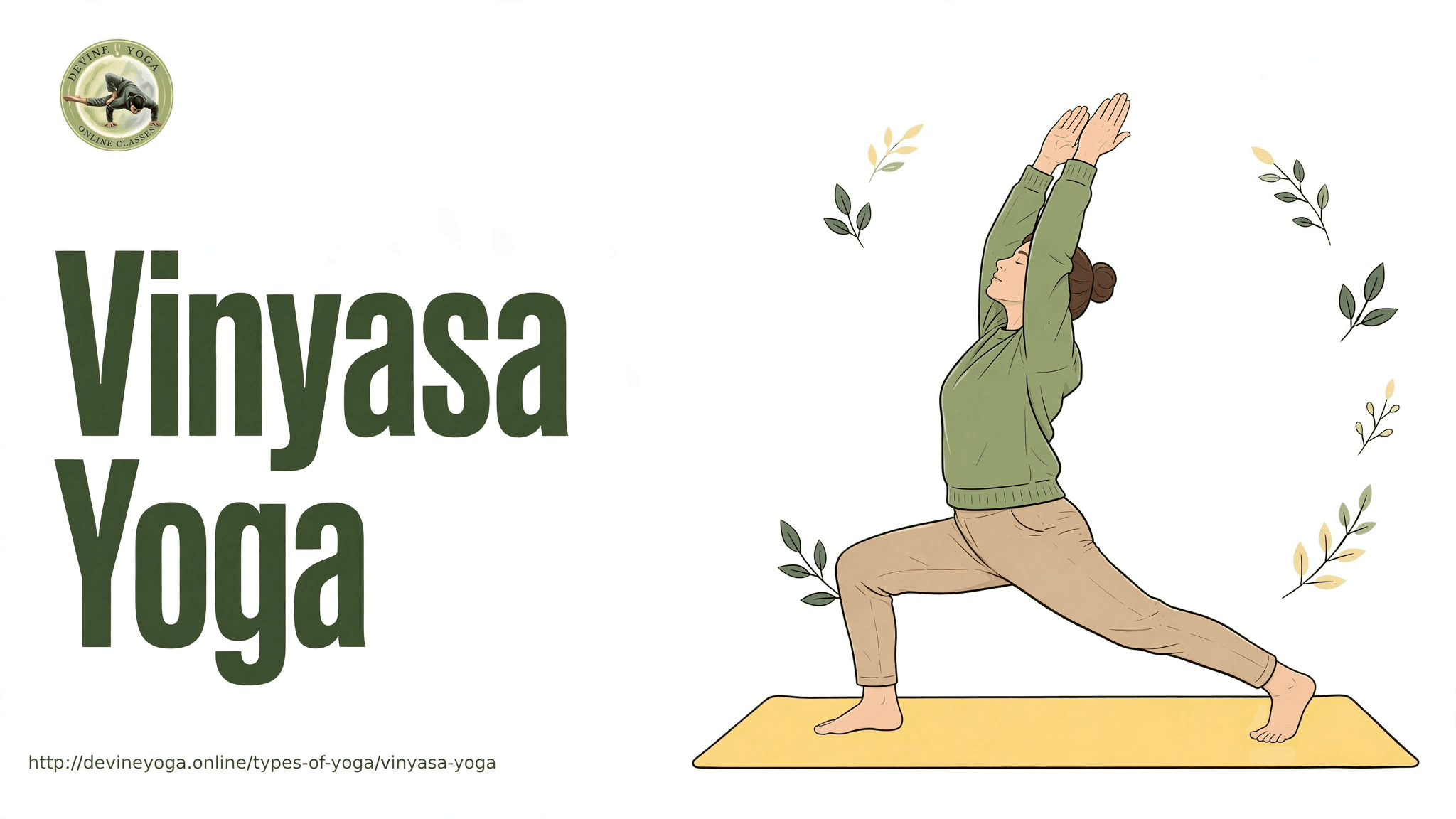
Vinyasa Yoga
Find out what Vinyasa yoga is, how it differs from Ashtanga and Hatha, its benefits and how beginners can start safely with modifications.
Summarize this blog with:
What is Vinyasa yoga?
Vinyasa is a Sanskrit word often explained as “to place in a special way.” In class, it means poses are arranged in a deliberate order and joined by flowing transitions. You breathe in as you open or lift, and breathe out as you fold or lower.
It is often confused with Ashtanga. The difference is that Ashtanga repeats the same fixed sequence, while Vinyasa classes change every time.
Where does it come from?
Vinyasa grew from the breath-linked teaching of T. Krishnamacharya in India in the early 20th century. His students, including K. Pattabhi Jois and B.K.S. Iyengar, carried his ideas forward, and Vinyasa became popular in the West from the 1980s onward.
What happens in a class?
A typical 45 to 60 minute class includes breath awareness, a warm-up, sun salutations, standing poses, floor poses and a final rest in Savasana. The chaturanga to upward dog to downward dog sequence is a classic transition between poses.
Benefits
- Strength: Works the legs, core, arms and shoulders.
- Flexibility: Repeated movement gradually improves range of motion.
- Stamina: A steady pace raises the heart rate.
- Focus: Matching movement to breath gives the mind one thing to follow.
- Stress relief: Many people find rhythmic movement with slow breathing calming.
Research on yoga overall suggests modest benefits for stress, wellbeing and low back pain. Studies on Vinyasa specifically are limited, and it is not a medical treatment.
Is it good for beginners?
Yes, if you pick a beginner-level class that explains transitions and offers modifications. Lower your knees in plank, skip jumping and rest in Child’s pose whenever you need to.
If you are very stiff, injured or want slow relaxation, try Hatha, Iyengar or Restorative yoga first.
Who should be careful?
Talk to your doctor and tell your teacher if you are pregnant, have wrist, shoulder, knee or spine problems, high blood pressure, a heart or breathing condition, or osteoporosis. Stop if you feel dizzy, breathless or sharp pain.
Medical disclaimer: This article is for general education and is not medical advice. Consult a qualified healthcare professional before starting yoga.
Vinyasa vs similar styles
| Vinyasa | Ashtanga | Hatha | |
|---|---|---|---|
| Sequence | Changes each class | Fixed | Varies, often basic |
| Pace | Moderate to fast | Fast | Slow |
| Best for | People who like variety | Disciplined, active students | Beginners |
Frequently asked questions
What is Vinyasa yoga in simple words?
A flowing style where poses are linked together with your breath, in a sequence that changes from class to class.
Is Vinyasa good for beginners?
Yes, in a beginner-level class with modifications. Slow down if you can’t breathe smoothly.
Is Vinyasa the same as flow yoga?
Mostly yes. The terms overlap, though some studios use “flow” for a gentler class.
How often should I practice?
Two to three sessions a week of 30 to 45 minutes is a good start.
Try Vinyasa Yoga live. Your first 3 days are free.
Join a live Devine Yoga Online class: a real trainer watches you over video, corrects your poses by name and adapts every move to your body, beginners included.
More types of yoga
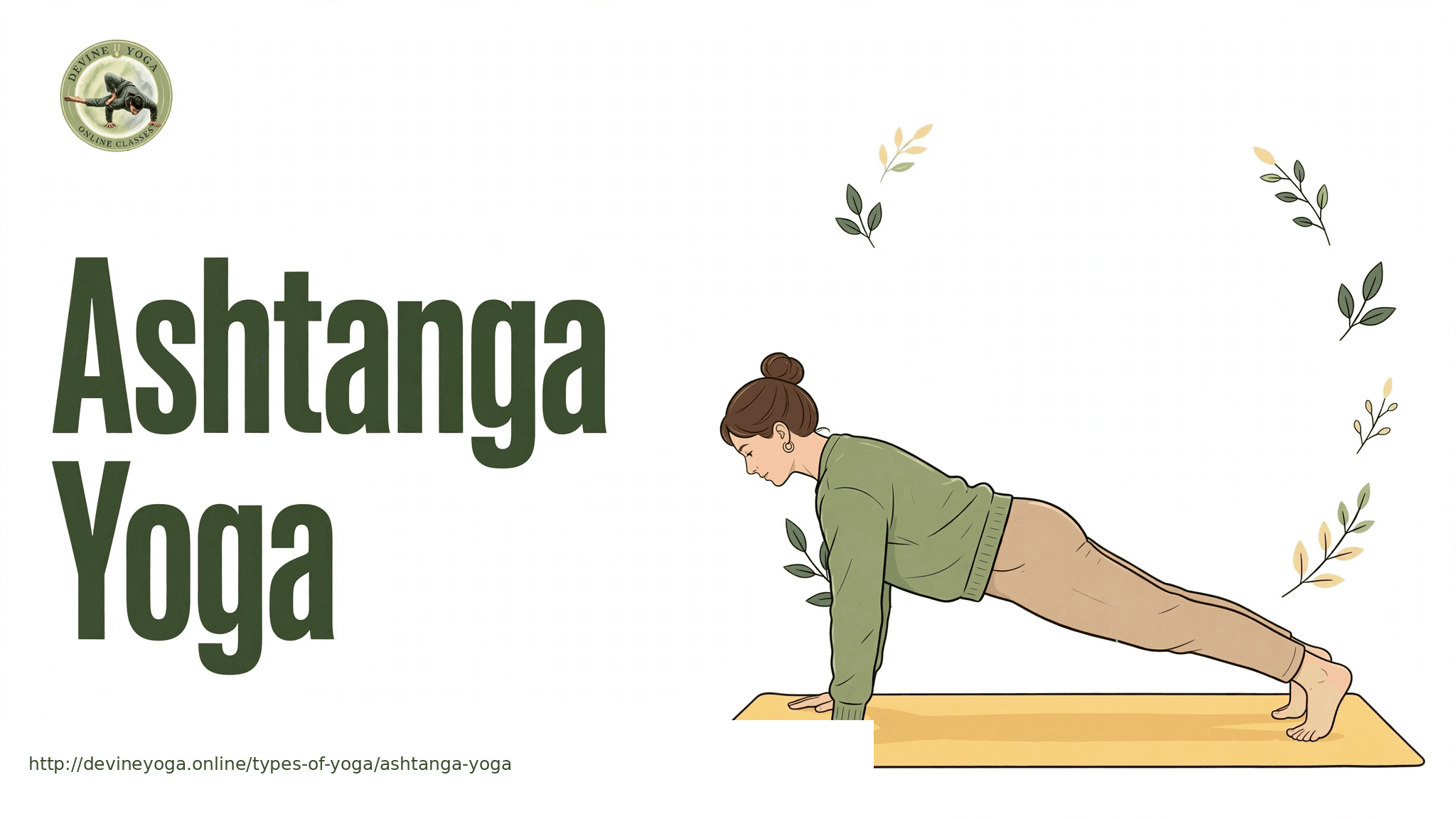
Ashtanga Yoga
Ashtanga yoga is a style in which you move through a set series of poses in a fixed order.
Explore More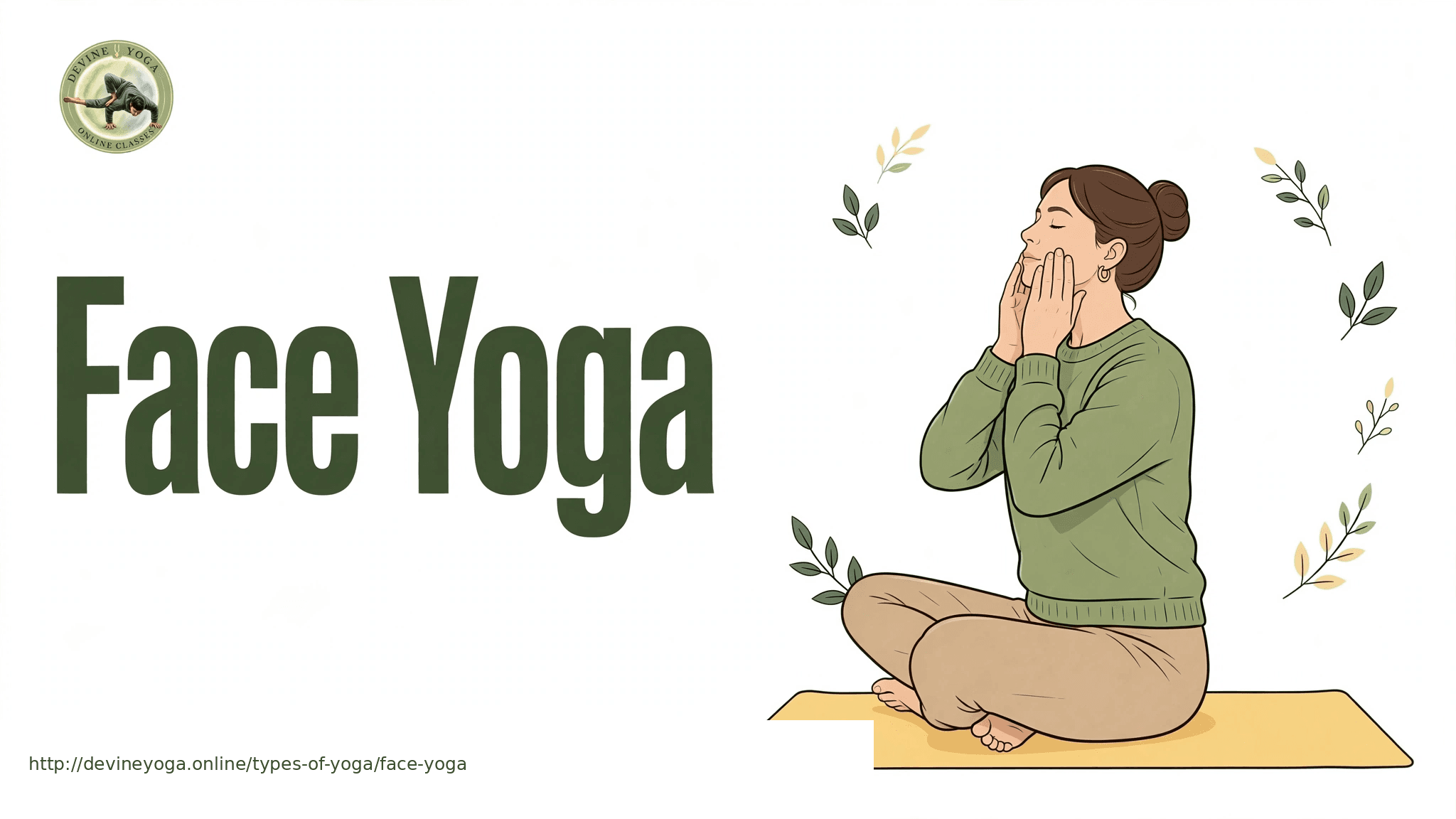
Face Yoga
Face yoga combines facial exercises, gentle self-massage, breathing and relaxation.
Explore More
Flow Yoga
Flow yoga, also called vinyasa flow, is a style in which poses are linked together in a continuous sequence.
Explore More