Best Yoga Mat in India: How to Choose the Right One
Searching for the Best Yoga Mat in India? This practical guide shows you how to choose the right mat for comfort, grip and tradition.

Summarize this blog with:
Why Choosing the Best Yoga Mat Matters
Yoga is not simply about performing different physical postures. It involves developing awareness of your body, controlling your breathing and finding balance between physical movement and mental concentration.
Your yoga mat becomes the space where you practise these things. From standing in Tadasana (Mountain Pose) to moving through Surya Namaskar, your mat provides the surface on which your hands, feet, knees and body make contact with the floor.
Imagine practising Vrikshasana (Tree Pose) on a slippery surface. You may find it difficult to maintain balance because your feet keep moving. Similarly, practising Balasana (Child's Pose) on a very thin mat over hard tiles may create discomfort around your knees.
The right yoga mat helps by providing:
- Stability: A suitable grip helps your hands and feet stay in position.
- Comfort: Adequate cushioning reduces direct pressure from hard flooring.
- Balance: A firm surface makes standing and balancing postures easier to manage.
- Hygiene: A personal mat provides a dedicated practice surface.
- Consistency: A comfortable mat can make regular home practice more inviting.
A yoga mat does not automatically improve your flexibility or make difficult postures easier. However, it can create a more supportive environment for learning and practising safely.
What Makes a Yoga Mat Good?
A good yoga mat is one that offers the right combination of grip, cushioning, stability, durability and comfort for your individual practice.
There is no single mat that is perfect for everyone. Someone practising gentle yoga may prefer a softer surface, while someone practising Ashtanga Yoga may need stronger grip and a firm foundation.
Before buying, understand these five important qualities.
1. Good Grip
Grip is one of the most important features of a yoga mat.
During poses such as Adho Mukha Svanasana (Downward-Facing Dog), your hands and feet need to remain stable. If the mat is slippery, you may constantly adjust your position instead of focusing on the posture.
Look for a mat with a textured or naturally grippy surface. If you sweat heavily, pay particular attention to how its surface performs when damp.
2. Comfortable Cushioning
Your yoga mat should provide enough cushioning for your knees, elbows, hips and spine.
For example, poses such as Bhujangasana (Cobra Pose), Vajrasana (Thunderbolt Pose) and Balasana involve contact with the floor.
A mat that is too thin may feel uncomfortable on hard flooring. On the other hand, an extremely soft mat can make standing balance poses less stable.
3. Durability
A yoga mat is something you may use several times a week. Therefore, it should maintain its shape and surface quality with regular practice.
Check the material, thickness, construction and manufacturer's care instructions before purchasing.
4. Easy Maintenance
Sweat, dust and skin oils can accumulate on your yoga mat.
Choose a mat that you can clean according to its manufacturer's instructions. A mat that is difficult to maintain may become unpleasant to use regularly.
5. Suitable Weight
If you practise yoga at home, carrying weight may not be a major concern.
However, if you travel to a yoga studio, workplace or outdoor location, a lightweight mat may be more convenient.
The best choice depends on where and how frequently you practise.
Different Types of Yoga Mats Based on Material
Yoga mats are manufactured using different materials, and each material offers a different experience.
Understanding these differences will help you choose a mat according to your comfort, budget and yoga routine.
1. PVC Yoga Mat
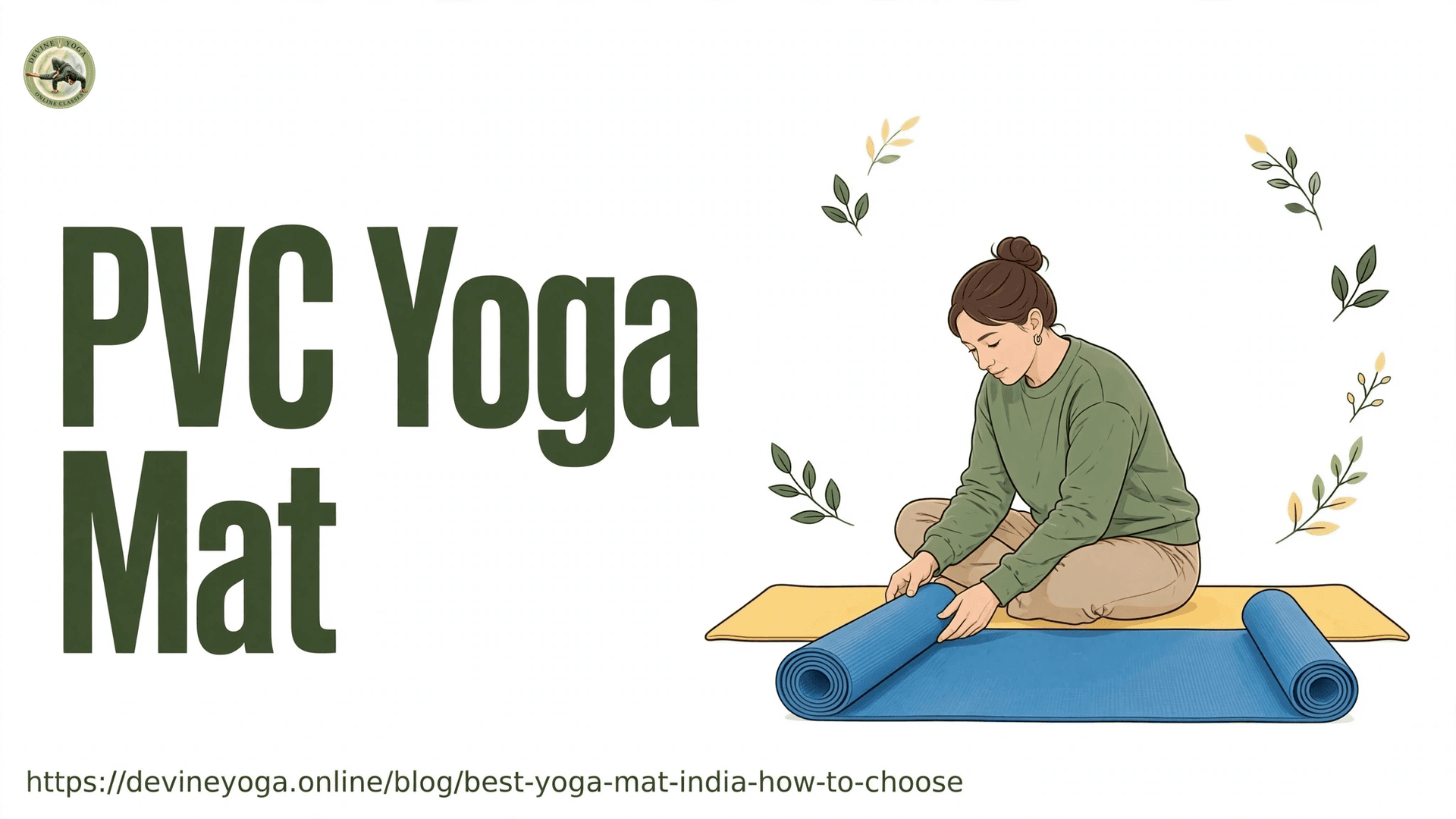
PVC stands for Polyvinyl Chloride. It is a commonly used material in yoga mats because it is available in different thicknesses, textures and price ranges.
Advantages:
- Generally affordable.
- Available in many colours and designs.
- Can provide good cushioning.
- Some high-quality versions are quite durable.
- Widely available in the Indian market.
Disadvantages:
- Environmental concerns associated with PVC production and disposal.
- Quality and grip vary considerably.
- Some mats have a noticeable plastic smell when new.
- Certain surfaces can become slippery with sweat.
Who should choose it?
PVC can be an option for beginners looking for an affordable mat for regular home practice. However, check the quality and grip rather than choosing solely by price.
2. TPE Yoga Mat
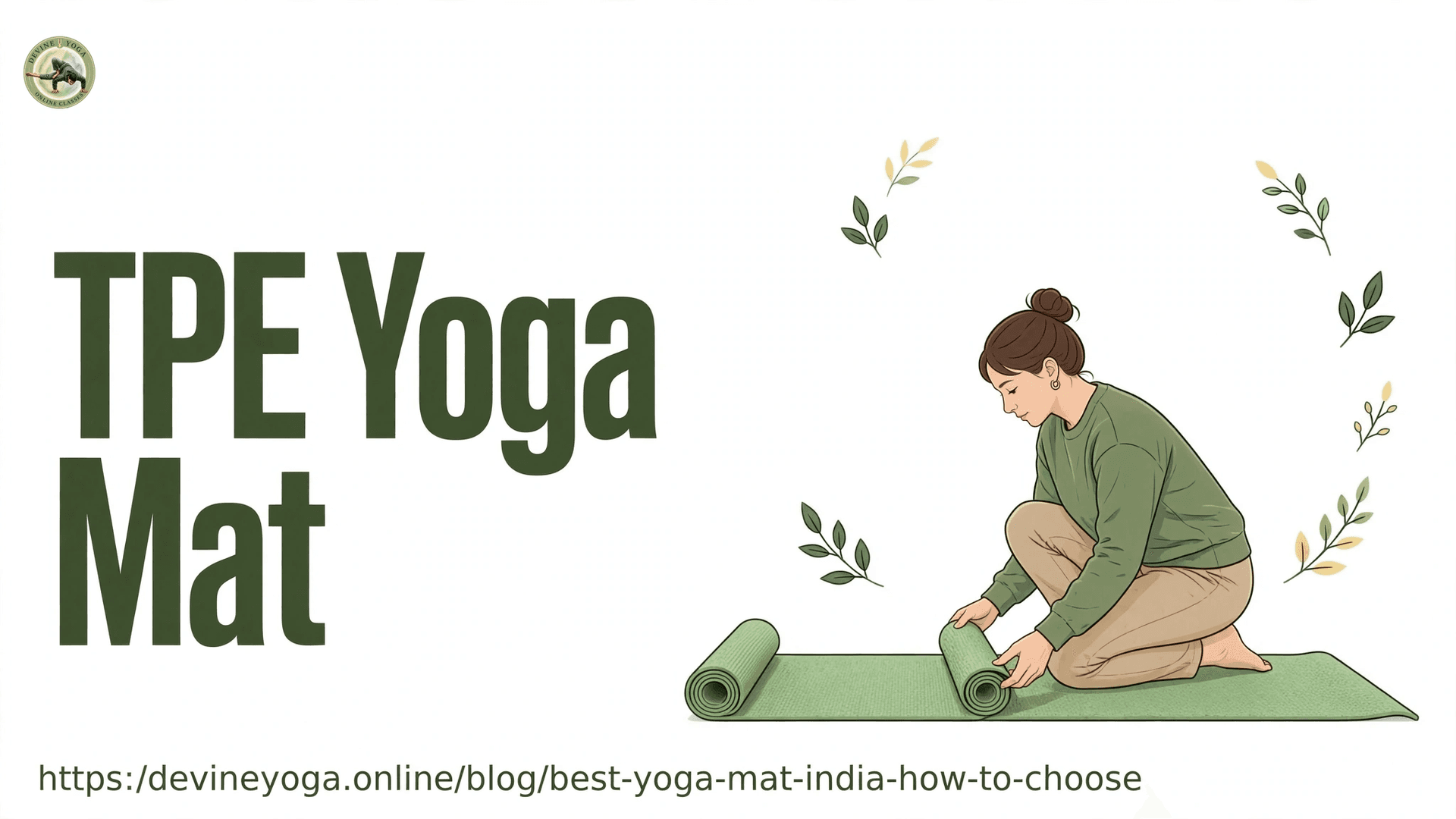
TPE stands for Thermoplastic Elastomer. TPE mats are popular among people looking for a lightweight alternative to traditional PVC mats.
They are often designed with textured surfaces and cushioning that can make them comfortable for everyday practice.
Advantages:
- Lightweight and easy to carry.
- Generally comfortable under the knees.
- Available in different thicknesses.
- Often has less noticeable odour than some new PVC mats.
- Convenient for home and studio practice.
Disadvantages:
- Durability varies between manufacturers.
- Some lower-quality mats lose their shape with repeated use.
- Grip differs depending on the surface design and manufacturing quality.
- Environmental benefits should not be assumed without checking the actual material composition.
Who should choose it?
TPE is worth considering for beginners, students and people who want a lightweight yoga mat for daily practice.
3. Natural Rubber Yoga Mat
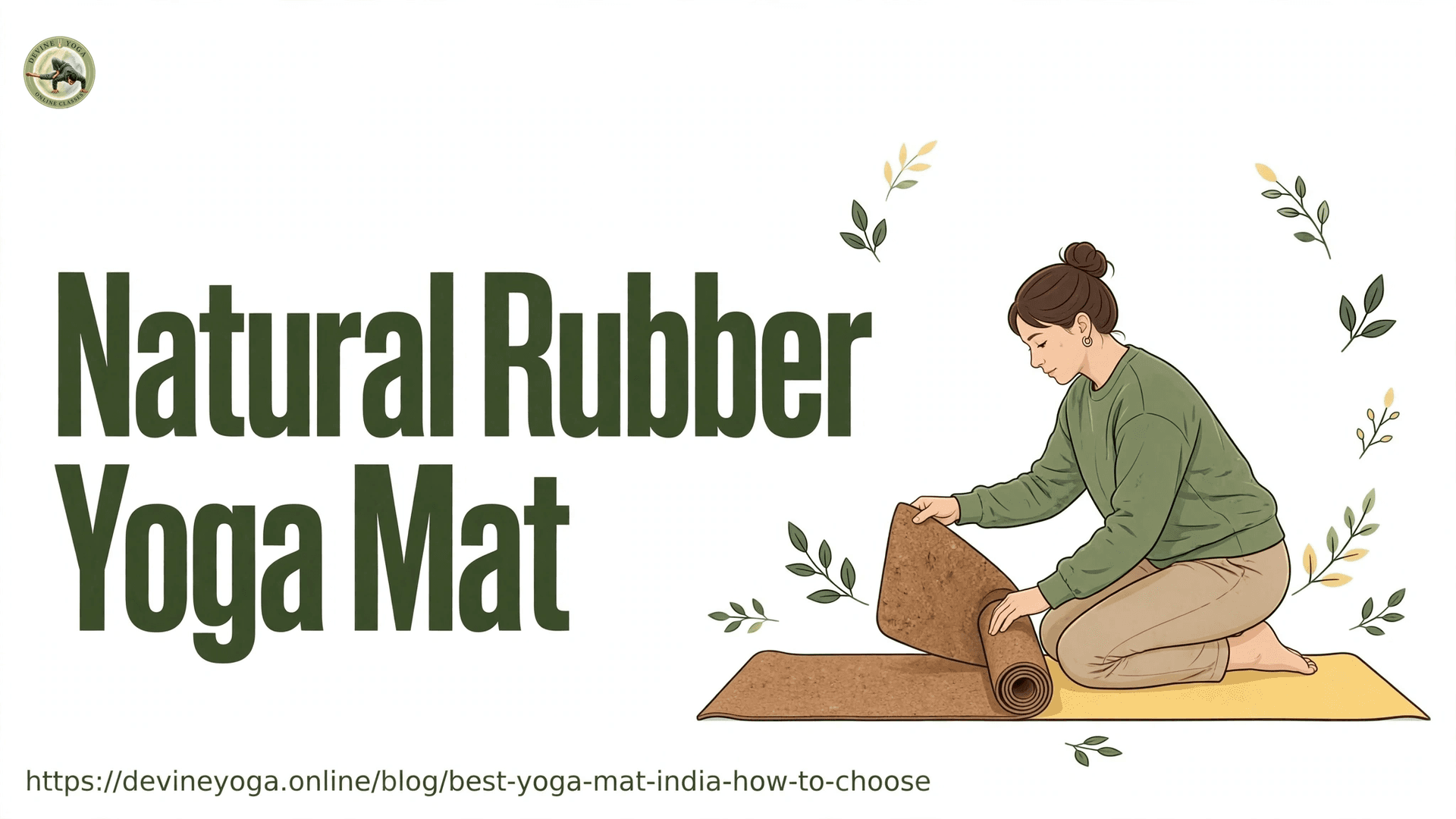
Natural rubber mats are made using rubber obtained from rubber trees. They are appreciated for their grip and supportive feel.
They can be particularly useful during flowing yoga sequences where stable hand and foot placement matters.
Advantages:
- Generally offers strong grip.
- Provides a firm and supportive surface.
- Suitable for many dynamic yoga practices.
- Uses a renewable natural material as a primary component.
Disadvantages:
- Usually heavier than TPE mats.
- Can have a noticeable rubber smell initially.
- May be more expensive.
- Not suitable for people with natural rubber latex allergies unless confirmed safe by the manufacturer.
Who should choose it?
Natural rubber can be a good option for experienced practitioners and people who prioritise grip during dynamic yoga sessions.
4. Cork Yoga Mat
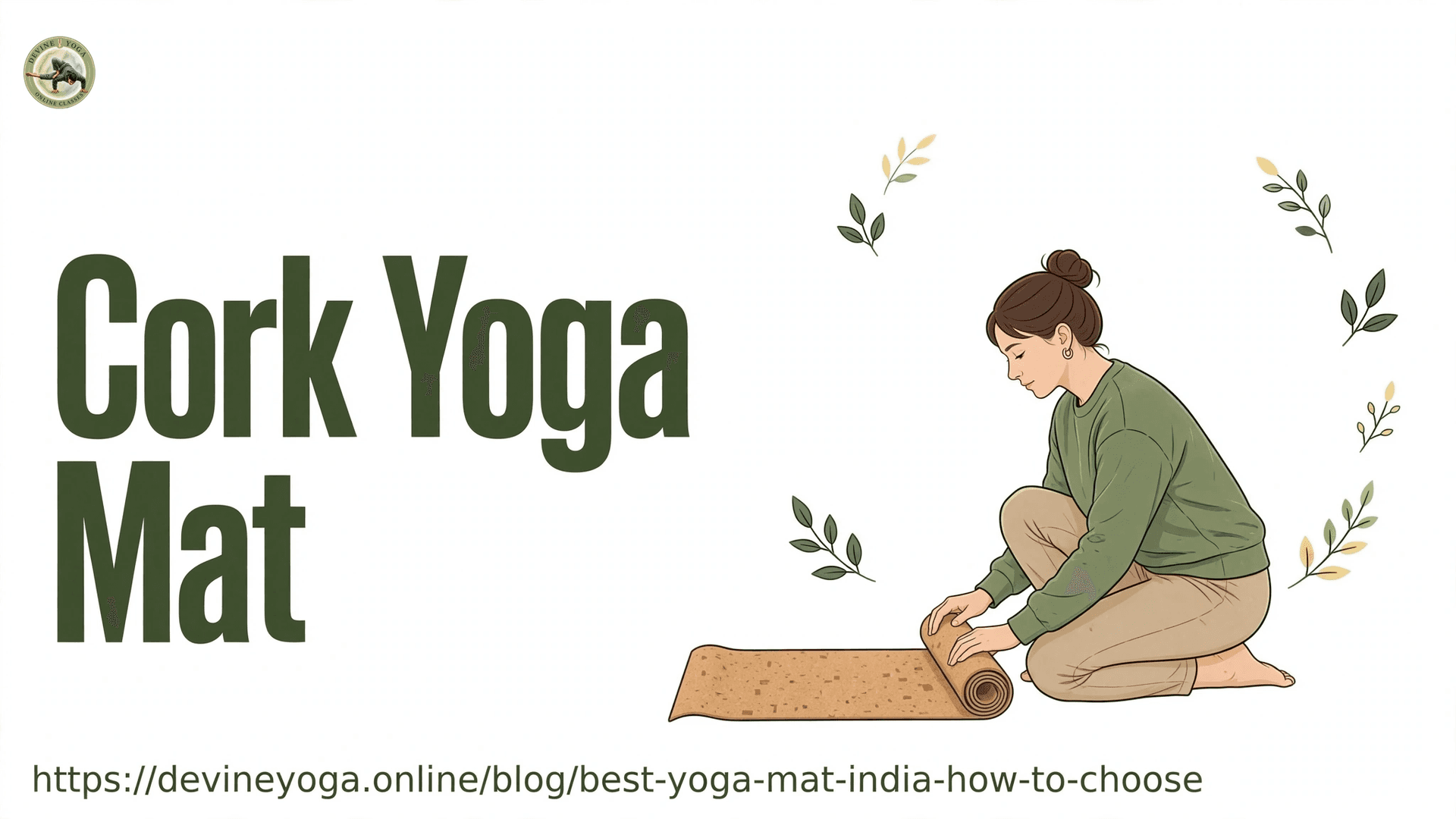
Cork yoga mats generally combine a cork top layer with a supportive base made from materials such as natural rubber or TPE.
Cork has a distinctive natural texture and is often selected by people who prefer a natural-feeling practice surface.
Advantages:
- Natural cork surface.
- Can offer good grip, particularly when slightly damp.
- Distinctive appearance and texture.
- Often easy to wipe clean when used according to manufacturer instructions.
Disadvantages:
- Quality depends on the cork and base material.
- Some versions can be heavier.
- The cork layer may wear with improper handling.
- Not every cork mat is latex-free; check its base material.
Who should choose it?
Cork mats may suit people who practise regularly, sweat during yoga or prefer a natural surface.
5. Cotton Yoga Mat
Cotton yoga mats have a different feel from conventional rubber or foam mats.
They are traditionally associated with certain Indian yoga practices and can be used for meditation, gentle yoga and selected floor-based practices.
Advantages:
- Soft, fabric-based surface.
- Breathable feel.
- Can be washable, depending on construction.
- Useful as an additional layer over another mat.
Disadvantages:
- Usually provides less cushioning.
- May move on smooth flooring unless properly secured.
- Absorbs sweat and requires regular washing.
- May not provide sufficient grip for dynamic yoga sequences.
Who should choose it?
Cotton mats can be useful for meditation, gentle practices and people who prefer a traditional fabric surface.
Yoga Mat Material Comparison
| Material | Main advantage | Main limitation | Suitable for |
|---|---|---|---|
| PVC | Affordable and widely available | Environmental concerns and variable grip | Budget-conscious beginners |
| TPE | Lightweight and comfortable | Durability varies | Home and studio practice |
| Natural rubber | Strong grip | Heavy; latex allergy concern | Dynamic yoga |
| Cork | Natural textured surface | Base material and care requirements | Regular practice |
| Cotton | Soft and breathable | Limited cushioning | Meditation and gentle yoga |
How to Choose the Best Yoga Mat in India
Now that you understand the different materials, let's look at the practical factors that should influence your purchase.
1. Identify Your Yoga Practice
Start by understanding which type of yoga you practise most frequently.
For example:
- If you practise Hatha Yoga, choose a mat with balanced cushioning and grip.
- If you practise Ashtanga Yoga, prioritise stability and grip during repeated movements.
- If you practise Vinyasa Yoga, look for a surface that supports smooth transitions.
- If you mainly practise meditation, comfort may be more important than advanced grip.
- If you practise restorative yoga, additional cushioning may be useful.
Choosing according to your actual routine is more helpful than purchasing a mat simply because it is popular.
2. Choose the Right Thickness
Thickness determines how much cushioning your mat provides.
For most beginners, a mat around 4–6 mm is a practical starting point. However, your flooring, comfort requirements and yoga style should also influence the decision.
| Thickness | Feel | Best for |
|---|---|---|
| Around 3 mm | Thin and firm | Balance poses and travel |
| 4–6 mm | Balanced comfort and stability | Most beginners and everyday practice |
| 5–8 mm | Soft and cushioned | Restorative yoga and sensitive joints |
| 10–12 mm | Very soft | Not recommended for standing balance poses |
3. Check the Surface Grip
Do not assume that a mat labelled non-slip will perform equally well in every situation.
Look for a textured surface and, where possible, test it before purchasing.
Try placing your hands in a Downward-Facing Dog position and check whether they remain stable without excessive pressure.
If you practise in a warm room or sweat heavily, consider a mat specifically designed to maintain grip in damp conditions.
4. Select the Right Size
Your entire body should fit comfortably on the mat during standing and lying-down poses.
A standard mat may work for many people, but taller practitioners may need an extra-long version.
Check both length and width rather than looking only at thickness.
5. Consider Your Budget
A higher price does not automatically mean a better mat.
Compare the material, grip, dimensions, durability and warranty, if available.
A reasonably priced mat that supports your regular practice can be a better purchase than an expensive mat with features you will rarely use.
6. Check Material Safety and Manufacturer Information
Look for clear material information rather than relying only on marketing terms such as eco-friendly, natural or non-toxic.
If you have a latex allergy, avoid natural rubber unless the manufacturer confirms the product is safe for your particular sensitivity.
If a mat is advertised as OEKO-TEX STANDARD 100 certified, verify that the label or certificate applies to the specific mat or material; do not assume certification from a brand or a general "eco-friendly" claim.
If a new mat has a strong chemical smell, allow it to air out in a well-ventilated area before use. A smell alone cannot establish whether a product is safe or unsafe.
Best Yoga Mat for Different Yoga Styles
Different yoga practices involve different movements. Therefore, the ideal mat for one style may not be the most comfortable choice for another.
Let's understand what to look for.
1. Hatha Yoga
Hatha Yoga generally involves holding postures, practising controlled movements and coordinating breathing with physical activity.
Recommended mat: A 4–6 mm TPE, PVC or natural rubber mat with good grip.
Look for a surface that offers enough cushioning for seated and kneeling postures without becoming too soft for standing poses.
2. Vinyasa Yoga
Vinyasa Yoga connects movement with breathing. Practitioners frequently transition between postures.
Recommended mat: A firm 3–5 mm mat with reliable grip.
A mat that moves around or becomes slippery during transitions can interrupt the flow of practice.
3. Ashtanga Yoga
Ashtanga Yoga follows a structured sequence of postures and can involve repeated movements and considerable physical effort.
Recommended mat: A firm natural rubber or suitable high-grip mat, generally around 4–5 mm.
Grip is particularly important because repeated movements and perspiration can make the surface challenging.
4. Restorative Yoga
Restorative Yoga focuses on relaxation and supported postures held for longer periods.
Recommended mat: A comfortable 5–8 mm mat, depending on personal preference and flooring.
Additional cushioning can make longer floor-based sessions more comfortable.
5. Yin Yoga
Yin Yoga involves holding selected postures for extended periods, often with support from props.
Recommended mat: A 5–6 mm mat or a thinner mat combined with a suitable blanket.
Comfort is important because practitioners remain in positions longer than they might during a flowing yoga session.
6. Meditation and Pranayama
Meditation and Pranayama involve sitting comfortably while directing attention towards breathing and awareness.
Recommended mat: A comfortable surface with an optional folded blanket or meditation cushion.
Remember that a yoga mat does not need to provide all your sitting support. A cushion under the hips can help some practitioners maintain a comfortable upright posture.
Yoga Mat Size: Length and Width Guide
The size of your yoga mat is just as important as its material and thickness.
A mat that is too short may cause your head or feet to extend beyond its surface during lying-down postures. A narrow mat may also feel restrictive when practising wide-legged standing poses.
Here are common dimensions to consider.
| Mat size | Approximate dimensions | Suitable for |
|---|---|---|
| Compact | 173 × 61 cm | Average-height practitioners |
| Standard | 183 × 61 cm | Most adults |
| Extra long | 190–200 × 61–66 cm | Taller practitioners |
| Extra wide | 183 × 76 cm | People wanting more practice space |
These are buying-guide examples, not fixed industry standards. Actual dimensions vary by brand.
How to Select the Correct Size
Consider these points before purchasing:
- Check your height: Your mat should comfortably accommodate your body when lying flat.
- Consider your movement: Wide-legged postures may require additional width.
- Check available space: Make sure the mat fits comfortably in your home practice area.
- Think about portability: Larger mats are generally more difficult to carry.
If you are taller than average, an extra-long yoga mat can make a noticeable difference to your practice.
Common Mistakes Beginners Make and How to Avoid Them
1. Buying the thickest mat. A 10–12 mm mat feels soft in the shop but hurts balance in Tree Pose and Warrior III. Solution: 6 mm with a small knee pad for sensitive spots.
2. Choosing colour over grip. A beautiful pastel mat that slips is frustrating and unsafe. Solution: Test grip first, colour second.
3. Not cleaning regularly. Sweat + dust = slippery surface + odour + bacteria. Solution: Quick wipe after every session, a 2-minute routine.
4. Wearing shoes on it. Footwear damages the texture and reduces the mat's lifespan. Solution: Always step onto your mat barefoot.
5. Storing it rolled tight while damp. This creates odour and mould, especially in humid Indian monsoons. Solution: Air dry completely before rolling.
6. Ignoring body type. A 4 mm rubber mat may be perfect for a 60 kg practitioner but painful for a 90 kg beginner with knee issues. Listen to your body.
Conclusion
There is no single best yoga mat in India. The best one is the mat that suits your body, your style, your floor and your budget. A medium-thickness, good-grip mat that you actually enjoy unrolling will serve you better than the most expensive one that stays in its cover.
Start by deciding where and how you practise, pick a material that works in our weather, and check reviews after months of use. Then look after it, and it will look after you.
New to yoga? Try our beginner-friendly yoga routine to practise simple postures on your new mat.
If you would like to practise with a teacher who can correct your alignment live, you can start a free trial with Devine Yoga Online and see how a good mat feels in a real class.
Frequently asked questions
Which is the best yoga mat in India for beginners?
For most beginners, a 6 mm TPE mat with double-sided anti-slip texture is best. It offers good cushioning for knees, is light, affordable, and easy to clean. Upgrade to natural rubber once you practise 3+ times weekly.
Is a thicker yoga mat better?
Not necessarily. Thicker mats provide more cushioning, which can be useful for seated and floor-based postures. However, very soft mats may reduce stability during standing and balancing poses. For many practitioners, 4–6 mm offers a reasonable balance between comfort and stability.
What is the best thickness for a yoga mat?
For most people, 4 to 6 mm is the best balance of comfort and stability. Thinner mats, around 3 mm, are better for balance and travel, while thicker mats suit sensitive joints. If your knees hurt, add a folded blanket rather than choosing a very thick mat.
How long does a yoga mat last?
With regular use, a good mat usually lasts one to three years, depending on the material, how often you practise and how you care for it. Replace it when it flakes, cracks, loses grip or begins to smell even after cleaning.
Can I do yoga without a mat?
Yes. Traditionally, people used grass, cloth or woven seats. On a carpeted or wooden floor, a folded blanket works. On slippery tiles, however, a mat is safer, because slipping can lead to injury.
How do I clean a yoga mat?
Wipe it with a damp cloth after practice and, where the manufacturer allows it, wash it weekly with mild soap and water or a suitable mat spray. Avoid harsh chemicals and strong sun. Let it dry fully, flat and in shade, before rolling it up.
Reading is a start. A live teacher is the shortcut.
In a Devine Yoga Online class your trainer sees you, corrects you by name and adapts every pose to your body - beginners included.
Related blogs
Yoga Mistakes Beginners Make
Discover the most common yoga mistakes beginners make and learn simple, practical fixes to improve your alignment, breathe better, and practise safely.
8 min read
Online Yoga for Weight Loss: Beginner's Guide
Learn how online yoga can support weight loss, which styles to try, and how to build a realistic beginner yoga plan at home.
8 min read
Hatha Yoga for Beginners
Learn the basics of Hatha yoga with our beginner-friendly guide. Master gentle poses, improve flexibility, and start your calming practice at home today.
8 min read