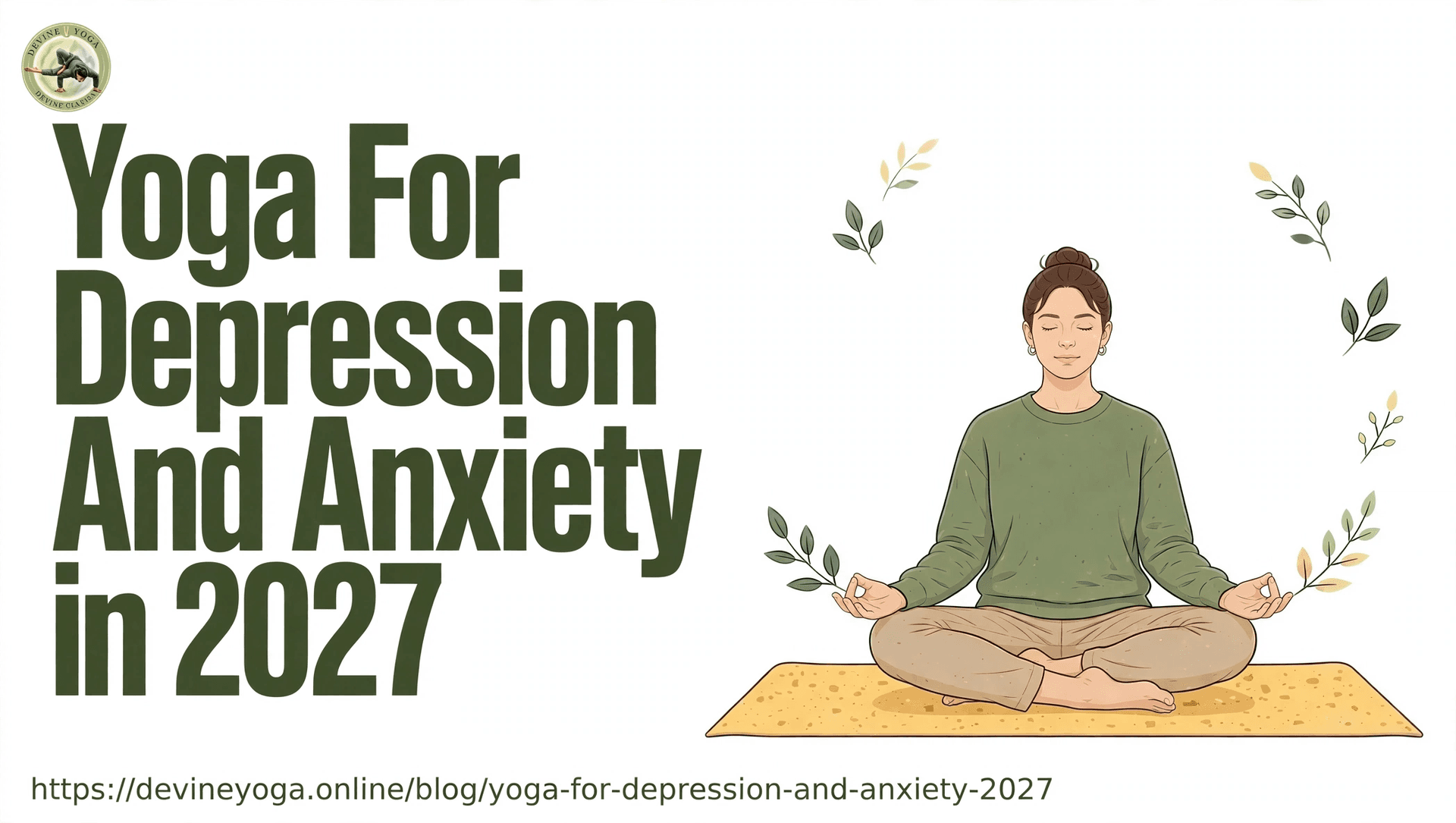
Yoga for Depression and Anxiety in 2027
Discover how yoga for depression and anxiety in 2027 may support mental health with gentle poses, breathing techniques, and safe routines.
Summarize this blog with:
Yoga for Depression and Anxiety in 2027
Living with depression or anxiety can make even simple daily tasks feel exhausting. While therapy, medication, and medical guidance remain the cornerstone of mental health care, more people are turning to yoga for depression and anxiety as a gentle, accessible way to support their emotional well-being.
What Is Depression?
Depression is a mental health condition characterised by persistent sadness, loss of interest or pleasure in activities, and changes in emotional and physical well-being.
It is different from the temporary sadness that people may experience after a difficult day or personal disappointment.
Common symptoms of depression may include:
- Persistent sadness or low mood.
- Loss of interest in previously enjoyable activities.
- Changes in sleeping patterns.
- Low energy or ongoing tiredness.
- Difficulty concentrating or making decisions.
- Feelings of guilt, hopelessness or worthlessness.
- Changes in appetite.
- Withdrawal from social activities.
What Is Anxiety?
Anxiety is a natural emotional response to uncertainty, pressure or situations that feel threatening. However, when anxiety becomes excessive, persistent or difficult to manage, it may affect everyday life.
Anxiety disorders involve more than occasional nervousness or worry.
Common symptoms may include:
- Excessive worrying.
- Feeling restless or constantly on edge.
- Difficulty relaxing.
- Racing thoughts.
- Trouble concentrating.
- Sleep disturbances.
- Increased muscle tension.
- Physical symptoms such as a racing heartbeat or sweating.
Different types of anxiety disorders include generalised anxiety disorder, panic disorder and social anxiety disorder.
Difference Between Depression and Anxiety
| Depression | Anxiety |
|---|---|
| Often involves persistent low mood | Often involves excessive worry or fear |
| May reduce interest in activities | May create avoidance of stressful situations |
| Can cause low energy | Can cause restlessness or tension |
| May affect sleep and appetite | May cause sleep difficulties |
| Can involve hopelessness | Can involve persistent anticipation of danger |
How Can Yoga Help With Depression and Anxiety in 2027?
Yoga is a mind-body practice that combines physical postures, breathing techniques and mindfulness. It encourages people to pay attention to their bodies, movements and breathing.
When practised regularly and comfortably, yoga may offer a supportive way to manage everyday stress and develop emotional awareness.
There are several ways yoga may contribute to mental well-being.
1. Encourages Physical Relaxation
Gentle yoga movements can help release everyday muscle tension and encourage physical relaxation.
Practices such as restorative yoga, gentle stretching and relaxation postures may be particularly suitable for people who prefer a slower approach.
2. Develops Breathing Awareness
Yoga breathing practices, also known as pranayama, encourage awareness of the breathing process.
Slow, comfortable breathing may help some people feel calmer during periods of everyday stress.
However, breathing exercises should be gentle. Forceful breathing or prolonged breath retention may be uncomfortable for some individuals, particularly those experiencing panic symptoms.
3. Promotes Mindfulness
Mindfulness involves paying attention to the present moment without immediately judging your thoughts or feelings.
Yoga can incorporate mindfulness by encouraging you to notice your movements, breathing and physical sensations.
This may help develop greater awareness of emotional responses.
4. Encourages Regular Physical Activity
Yoga involves physical movement, which can be a valuable part of a healthy lifestyle.
Gentle movement may be particularly approachable for individuals who find intense exercise difficult.
5. Creates Time for Self-Care
Setting aside time for yoga can create a structured opportunity to focus on personal well-being.
A short daily practice can help establish a routine that includes movement, breathing and relaxation.
Benefits of Yoga for Depression and Anxiety
Yoga may support different aspects of physical and emotional well-being. Its potential benefits can depend on the type of practice, individual needs and consistency.
Here are some ways yoga may contribute to mental wellness.
1. May Help Manage Everyday Stress
Stress can affect both the body and mind. Gentle yoga combines movement, breathing and attention, providing an opportunity to slow down and relax.
A short yoga session may help create a break from everyday pressures.
2. Supports Emotional Awareness
Yoga encourages people to notice physical sensations, breathing patterns and emotional responses.
Developing this awareness may help individuals better recognise how they respond to different situations.
3. May Support Better Sleep Habits
Restorative yoga, gentle stretching and relaxation exercises can be included in a calming bedtime routine.
These practices may help some people unwind before sleeping, although yoga is not a substitute for assessment or treatment of persistent sleep problems.
4. Encourages Concentration and Mindfulness
Yoga requires attention to body movements, posture and breathing.
Regular practice may help individuals develop awareness of distractions and practise bringing their attention back to the present moment.
5. Promotes Physical Activity
Gentle yoga can help people incorporate movement into their daily routine.
Physical activity is an important part of overall health and can complement a broader mental wellness plan.
6. Encourages Self-Compassion
Yoga is not about competing with others or achieving perfect postures.
A mindful practice encourages individuals to respect their physical limitations and approach themselves with patience.
7. Creates a Healthy Daily Routine
A consistent yoga schedule can provide structure to the day.
Combining movement, breathing and relaxation may help establish a positive self-care habit.
8. Supports Mind-Body Connection
Yoga encourages individuals to observe the relationship between physical sensations, breathing and emotional experiences.
This awareness may help people become more attentive to their overall well-being.
Best Yoga Poses for Depression and Anxiety
If you are experiencing anxiety or low mood, start with comfortable movements rather than challenging yoga postures. You do not need to perform every pose to benefit from a yoga session.
Here are eight beginner-friendly yoga poses to consider.
1. Balasana (Child's Pose)
Child's Pose is a gentle resting posture that involves folding the upper body towards the thighs while sitting back towards the heels.
It is often included in restorative and gentle yoga sessions.
How to practise:
- Begin on your hands and knees.
- Slowly move your hips towards your heels.
- Extend your arms forward or rest them alongside your body.
- Allow your forehead to rest on a comfortable surface.
- Breathe naturally and remain in the position for a few comfortable breaths.
Potential benefits:
- Encourages physical relaxation.
- Provides a gentle resting position.
- Helps create awareness of breathing.
- Can be included in a calming yoga routine.
Modification: Place a cushion between your thighs and calves or support your forehead with a yoga block. Avoid forcing the knees or hips into a position that causes discomfort.
2. Sukhasana (Easy Pose)
Sukhasana is a comfortable seated posture commonly used for meditation, breathing exercises and mindfulness.
It provides a simple position for developing awareness of your breath.
How to practise:
- Sit on a yoga mat or comfortable cushion.
- Cross your legs naturally.
- Keep your spine comfortably upright.
- Relax your shoulders and place your hands on your knees.
- Focus on your natural breathing.
Potential benefits:
- Encourages mindfulness.
- Supports comfortable breathing awareness.
- Helps establish a meditation routine.
- Promotes relaxed sitting posture.
3. Marjaryasana-Bitilasana (Cat-Cow Pose)
Cat-Cow Pose combines two gentle movements that involve alternating between rounding and extending the spine.
It is commonly practised during warm-ups and gentle yoga sessions.
How to practise:
- Begin on your hands and knees.
- Keep your hands beneath your shoulders and knees beneath your hips.
- As you breathe in, gently lift your chest and tailbone.
- As you breathe out, round your back comfortably.
- Repeat slowly while coordinating movement with your breathing.
Potential benefits:
- Encourages spinal mobility.
- Provides gentle physical movement.
- Develops awareness of breathing and movement.
- Helps release everyday back tension.
4. Viparita Karani (Legs-Up-the-Wall Pose)
Legs-Up-the-Wall Pose is a restorative yoga posture in which you lie on your back with your legs supported vertically against a wall.
It can be a comfortable way to pause and relax after a busy day.
How to practise:
- Sit sideways next to a wall.
- Gently turn onto your back.
- Move your legs up against the wall.
- Adjust your hips to a comfortable distance from the wall.
- Relax your arms and breathe naturally.
Potential benefits:
- Provides a supported resting position.
- Encourages physical relaxation.
- Offers a gentle alternative to active yoga poses.
- Can be included in an evening relaxation routine.
Precaution: Avoid or seek professional guidance before practising inverted or legs-elevated positions if you have glaucoma, certain eye conditions, uncontrolled blood pressure or other relevant medical concerns.
5. Setu Bandhasana (Bridge Pose)
Bridge Pose is a gentle backbend that involves lifting the hips while keeping the shoulders and feet supported on the floor.
It is commonly included in beginner and restorative yoga sequences.
How to practise:
- Lie on your back with your knees bent.
- Place your feet flat on the floor, hip-width apart.
- Keep your arms beside your body.
- Gently lift your hips while maintaining a comfortable position.
- Hold briefly without straining.
- Slowly lower your hips back to the floor.
Potential benefits:
- Encourages gentle movement.
- Engages the legs and gluteal muscles.
- Supports hip and spinal mobility.
- Adds variety to a gentle yoga routine.
6. Tadasana (Mountain Pose)
Mountain Pose is a basic standing yoga posture that focuses on balance, alignment and body awareness.
It is suitable for people who prefer simple standing movements.
How to practise:
- Stand with your feet comfortably positioned.
- Distribute your weight evenly between both feet.
- Keep your spine naturally upright.
- Relax your shoulders and arms.
- Breathe normally while maintaining a comfortable standing position.
Potential benefits:
- Develops body awareness.
- Encourages balanced standing posture.
- Provides a simple mindfulness exercise.
- Helps establish a foundation for other yoga poses.
7. Baddha Konasana (Butterfly Pose)
Butterfly Pose is a seated posture that gently stretches the inner thighs and encourages comfortable hip movement.
How to practise:
- Sit with your legs extended.
- Bend your knees and bring the soles of your feet together.
- Hold your feet gently with your hands.
- Allow your knees to move towards the floor without forcing them.
- Keep your back comfortably upright and breathe naturally.
Potential benefits:
- Encourages hip mobility.
- Provides gentle stretching.
- Develops awareness of body sensations.
- Can be included in a relaxing yoga session.
8. Savasana (Corpse Pose)
Savasana is a relaxation posture generally practised at the end of a yoga session.
It involves lying comfortably on your back and allowing the body to rest.
How to practise:
- Lie comfortably on your back.
- Keep your legs relaxed and slightly apart.
- Place your arms beside your body.
- Close your eyes if comfortable.
- Allow your breathing to remain natural.
- Stay in the position for a few minutes.
Potential benefits:
- Encourages relaxation.
- Provides time for rest after physical activity.
- Develops awareness of physical sensations.
- Helps conclude a yoga session calmly.
Breathing Exercises for Anxiety and Mental Relaxation in 2027
Breathing exercises are an important part of many yoga traditions. They are commonly known as Pranayama.
1. Anulom Vilom (Alternate Nostril Breathing)
Anulom Vilom involves alternating the flow of breathing between the nostrils.
How to practise:
- Sit comfortably with your back upright.
- Gently close your right nostril with your thumb.
- Breathe in through your left nostril.
- Close your left nostril and release the right.
- Breathe out through the right nostril.
- Continue gently, alternating sides.
Do not force the breath or hold it. Stop if you feel dizzy or uncomfortable.
2. Bhramari Pranayama (Humming Bee Breathing)
Bhramari is a traditional breathing technique in which a gentle humming sound is produced while breathing out.
How to practise:
- Sit in a comfortable position.
- Relax your face and shoulders.
- Breathe in gently through your nose.
- Breathe out slowly while making a soft humming sound.
- Repeat a few times if comfortable.
Potential benefits:
- Encourages breathing awareness.
- Provides a rhythmic focus.
- Can be included in a relaxation routine.
3. Diaphragmatic Breathing (Belly Breathing)
Diaphragmatic breathing involves breathing comfortably while allowing the abdomen to expand naturally during inhalation.
How to practise:
- Lie down or sit comfortably.
- Place one hand on your abdomen.
- Breathe in gently through your nose.
- Notice your abdomen expanding naturally.
- Breathe out slowly without forcing the air.
- Continue for a few comfortable cycles.
This technique can help you become more aware of your breathing pattern.
4. Mindful Breathing
Mindful breathing is one of the simplest techniques for beginners.
Rather than changing your breathing pattern, you simply observe it.
How to practise:
- Sit comfortably.
- Notice the natural movement of your breath.
- Pay attention to the sensation of inhaling and exhaling.
- If your attention wanders, gently return it to your breathing.
- Continue for two to five minutes.
Important: If focusing on your breath increases anxiety or panic, open your eyes, return attention to your surroundings and stop the exercise if needed. You can instead focus on your feet touching the floor or other external sensations.
Common Yoga Mistakes to Avoid in 2027
When practising yoga for mental wellness, the objective should be comfort, awareness and consistency rather than achieving perfect postures.
Avoid these common mistakes:
- Expecting immediate results: Yoga is not a quick solution for depression or anxiety.
- Practising difficult poses too early: Start with gentle movements and gradually develop your practice.
- Ignoring physical discomfort: Never force a posture that causes pain.
- Following advanced breathing techniques without guidance: Begin with natural breathing awareness.
- Comparing yourself with others: Every person's physical and emotional experience is different.
- Ignoring professional treatment: Yoga should complement, not replace, appropriate mental healthcare.
- Being inconsistent with practice: Choose a manageable routine rather than an unrealistic schedule.
Frequently asked questions
Can yoga cure depression and anxiety?
No. Yoga is not a cure or a replacement for professional care. It may be used as a complementary practice alongside guidance from a qualified healthcare professional.
How often should I do yoga for anxiety and depression?
A gentle 10–20-minute practice several times a week may be a manageable starting point. Choose a routine that feels comfortable, and seek professional guidance if unsure.
What are the best yoga poses for anxiety?
Beginner-friendly options may include Child’s Pose, Easy Pose, Cat-Cow Pose, Mountain Pose and Savasana. Practise comfortably and modify poses to suit your abilities.
What if I feel overwhelmed during a yoga class?
Pause, rest in a comfortable position, and return attention to your surroundings. You do not need to force a pose or continue an exercise that feels uncomfortable.
Reading is a start. A live teacher is the shortcut.
In a Devine Yoga Online class your trainer sees you, corrects you by name and adapts every pose to your body - beginners included.
Most popular blogs
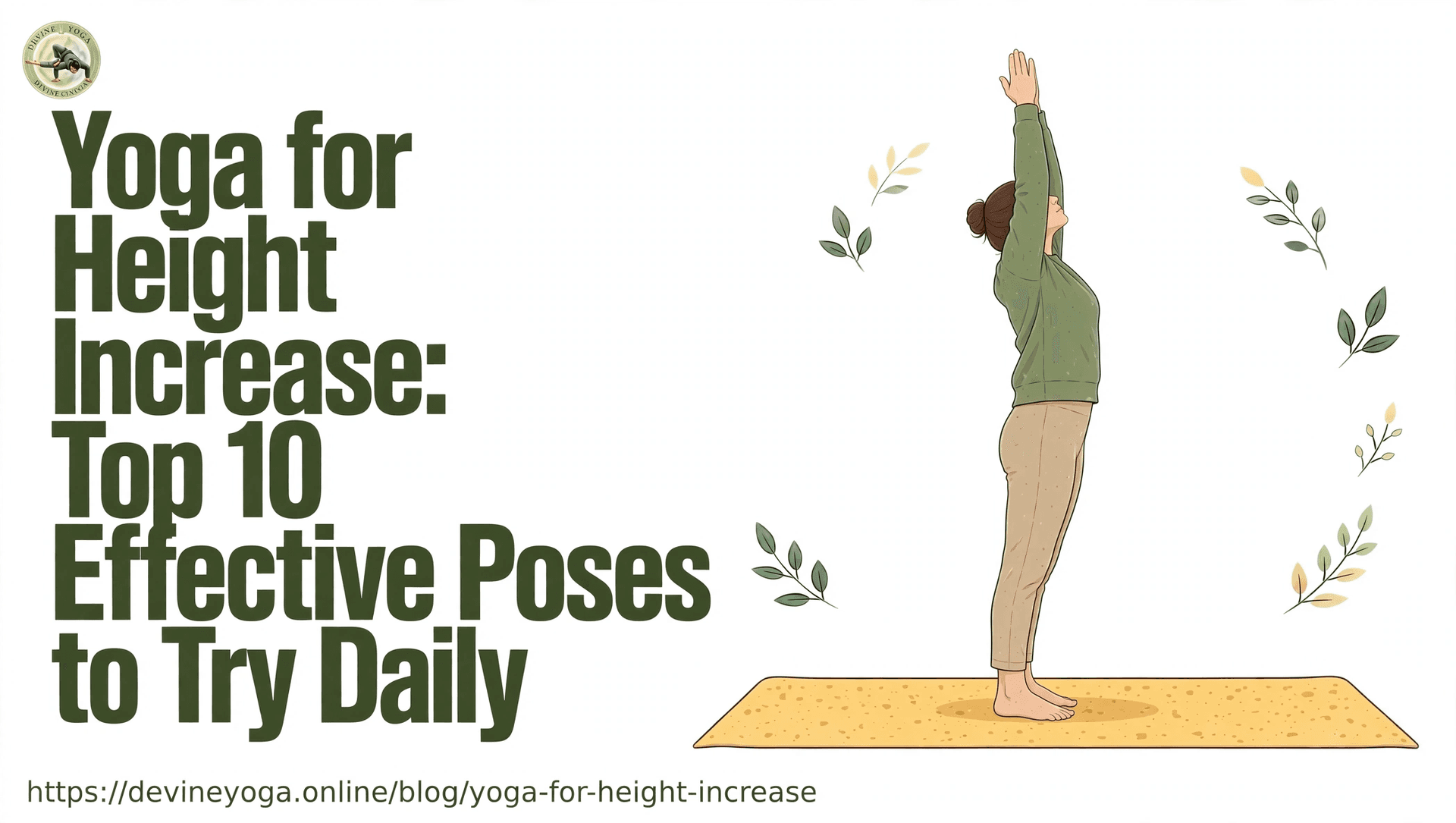
Yoga for Height Increase: 10 Effective Poses to Try
Explore 10 yoga poses for better posture, flexibility and body alignment. Learn how to practise them daily and understand what yoga can do for height.
Published:
9 min read
What Is Aerial Yoga? Meaning, Benefits, and Basics
What is aerial yoga? Learn its meaning, how aerial hammock yoga works, benefits, safety tips, basics for beginners & who should avoid it.
Published:
12 min read
Yoga for Senior Citizens: Benefits, Easy Poses and Safety Tips
Explore gentle yoga for senior citizens, including chair yoga, beginner-friendly poses, benefits, safety tips and a simple daily routine for healthy ageing.
Published:
18 min read