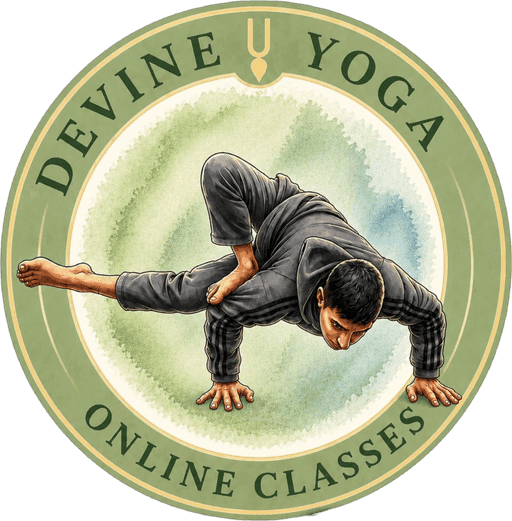
Restorative Yoga
Restorative yoga uses props and long, supported holds for deep rest. Learn the benefits, what you need and a 20-minute routine you can do at home.
Summarize this blog with:
What is restorative yoga?
Restorative yoga is the opposite of a workout. Instead of stretching hard or building strength, you set up your body in comfortable, fully supported shapes and stay there while you breathe slowly. Props do the work, so your muscles can release.
A class might include only four to six poses. Many are lying down, such as a supported backbend over a bolster or legs resting up a wall. The goal is rest, not effort.
Where does it come from?
Restorative yoga grew out of the Iyengar tradition. B.K.S. Iyengar developed supported poses to help students with injuries and illness, and his student Judith Hanson Lasater helped popularize and name the modern restorative style in the West from the 1970s and 1980s.
What happens in a class?
A typical 60 to 75 minute class includes:
- Settling in: getting comfortable with props, dimmed lights and quiet
- Breath awareness: slow, easy breathing
- Supported poses: 4 to 6 poses, each held for 5 to 20 minutes
- Final rest: a longer Savasana
- Gentle close: rolling to one side and sitting up slowly
Teachers talk less than in other classes. You may be covered with a blanket, and music is usually soft or absent.
Benefits
- Deep relaxation: Slow breathing and long holds help many people feel calmer.
- Stress relief: It gives the body a break from constant “go” mode.
- Better sleep for some people: An evening session can help you wind down.
- Eases tension: Supported poses release tightness in the back, hips and shoulders gently.
- Recovery: A good option on rest days, or after a hard week or workout.
- Body awareness: Staying still teaches you to notice tension and breath.
Research suggests yoga overall can support stress management and wellbeing, and small studies of restorative yoga report benefits for relaxation, sleep and mood. Studies are small, and results vary. It is not a treatment for insomnia, depression or any other condition.
What you need
| Prop | Use |
|---|---|
| Bolster | Supports the back, hips or knees; a firm pillow can replace it |
| Blankets (2 to 3) | Cushioning, warmth and height adjustments |
| Blocks (2) | Support under knees, head or hands; stacked books also work |
| Eye pillow | Optional, for darkness and comfort |
| Wall | For legs-up-the-wall pose |
A quiet room, dim lights and a warm space help. Wear soft, warm clothes.
A simple 20-minute home routine
Breathe slowly through your nose. Stay long enough that your body softens, but never into pain.
- Supported child’s pose (Balasana), 4 minutes: knees wide, bolster or pillows under your chest, head turned to one side. Switch sides halfway.
- Supported reclined butterfly (Supta Baddha Konasana), 5 minutes: lie back over a bolster, soles of the feet together, blocks or blankets under the knees.
- Legs up the wall (Viparita Karani), 5 minutes: hips near the wall, legs resting up, a folded blanket under the hips if comfortable.
- Supported twist, 3 minutes each side: lie on your side or sit with a bolster alongside and rest your torso over it.
- Savasana, 5 minutes: lie on your back with a blanket over you and a pillow under the knees.
Tip: If a pose pinches or strains, change the props. Comfort comes first.
Common mistakes
- Not using enough props. If you’re gripping, add support until you feel held.
- Staying cold. Your body temperature drops during stillness, so use a blanket.
- Pushing for a stretch. The point is rest, not flexibility.
- Looking at your phone or planning your day. Let the mind settle if you can.
- Rushing out. Come up slowly, to avoid dizziness.
- Expecting instant calm. Some people feel restless the first few times.
Who should be careful?
Restorative yoga is very gentle, but talk to your doctor and tell your teacher first if you:
- Are pregnant (avoid lying flat on the back later in pregnancy, and use a prenatal-trained teacher)
- Have glaucoma, high blood pressure or a heart condition (poses with the head below the heart may not suit you)
- Have acid reflux, a hiatal hernia or breathing problems (some reclined poses can worsen symptoms)
- Have recent surgery, back or neck injuries
- Have a history of trauma or anxiety that stillness may bring up
Medical disclaimer: This article is for general education and is not medical advice. Consult a qualified healthcare professional before starting yoga.
Try Restorative Yoga live. Your first 3 days are free.
Join a live Devine Yoga Online class: a real trainer watches you over video, corrects your poses by name and adapts every move to your body, beginners included.
More types of yoga
Ashtanga Yoga
Ashtanga yoga is a style in which you move through a set series of poses in a fixed order.
Explore More
Face Yoga
Face yoga combines facial exercises, gentle self-massage, breathing and relaxation.
Explore More
Flow Yoga
Flow yoga, also called vinyasa flow, is a style in which poses are linked together in a continuous sequence.
Explore More