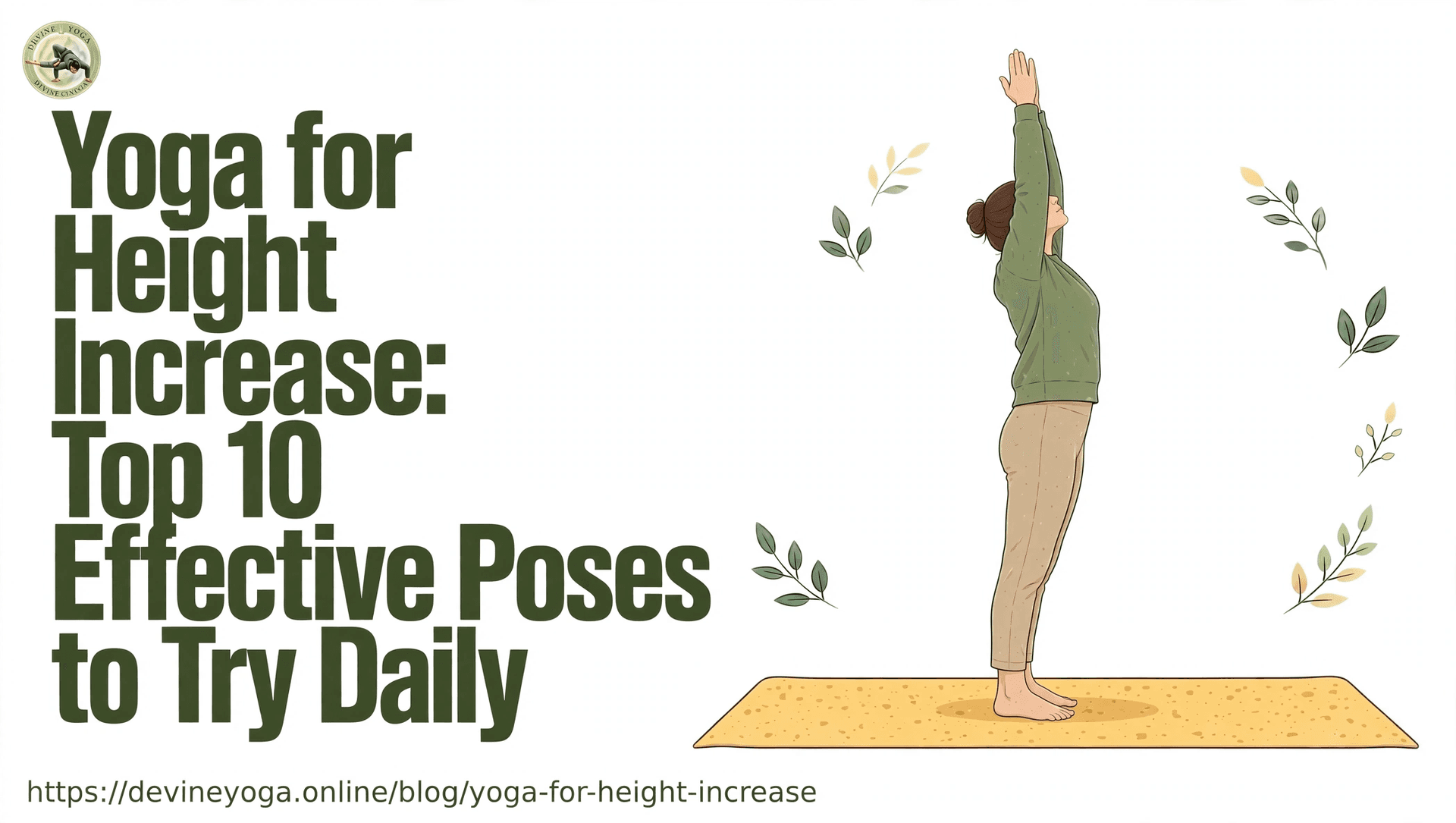
Yoga for Height Increase: 10 Effective Poses to Try
Explore 10 yoga poses for better posture, flexibility and body alignment. Learn how to practise them daily and understand what yoga can do for height.
Summarize this blog with:
Are you looking for natural ways to improve your posture and feel more confident about your height? Yoga can be a helpful part of your daily fitness routine. It combines physical postures, controlled breathing and mindful movement to support flexibility, balance and body awareness.
Many people search for yoga for height increase because they hope certain stretches will make them taller. However, it is important to understand what yoga can and cannot do. Yoga does not make your bones longer or increase your genetic adult height. It may help improve posture, spinal mobility and body alignment, which can help you stand more upright.
Can Yoga Really Increase Height?
Yoga cannot directly increase your height by lengthening your bones. Your adult height is influenced mainly by genetics, along with factors such as nutrition, hormones and overall health.
During childhood and adolescence, bones grow in length through areas called growth plates. Once these plates close near the end of puberty, bones no longer grow longer naturally. The timing varies from person to person.
However, yoga can still be useful. Regular practice may improve flexibility, strengthen muscles and encourage better posture. If you tend to slouch, improving your posture may help you appear taller and stand more comfortably.
Remember: yoga is a wellness practice, not a guaranteed height-increase treatment.
10 Effective Yoga Poses to Try Daily for Increase Height
Here are 10 yoga poses that can help improve flexibility, balance, strength and posture. Beginners should start gently and focus on correct technique rather than trying to achieve a perfect pose.
1. Tadasana (Mountain Pose)
Tadasana is one of the basic standing yoga poses. It teaches you to stand with an upright spine and balanced body alignment.
How to practise:
- Stand straight with your feet together or slightly apart.
- Keep your arms relaxed beside your body.
- Distribute your body weight evenly across both feet.
- Gently lift your chest and relax your shoulders.
- Keep your head aligned with your spine.
- Breathe naturally and hold for 20-30 seconds.
Benefits:
- Encourages an upright standing posture.
- Improves body awareness.
- Supports balance and stability.
- Helps develop a strong standing foundation.
2. Vrikshasana (Tree Pose)
Vrikshasana is a balancing pose that helps improve stability and concentration. It also encourages you to maintain an upright body position.
How to practise:
- Stand straight with your feet together.
- Shift your weight onto your left foot.
- Place the sole of your right foot against your left calf or inner thigh.
- Avoid placing your foot directly on your knee.
- Bring your palms together in front of your chest.
- Keep your back straight and look at a fixed point.
- Hold for 15-30 seconds and change sides.
Benefits:
- Improves balance and coordination.
- Strengthens the legs.
- Encourages upright posture.
- Develops concentration.
3. Bhujangasana (Cobra Pose)
Bhujangasana is a gentle backbend that opens the chest and encourages spinal mobility. It is often included in beginner yoga routines.
How to practise:
- Lie on your stomach with your legs extended.
- Place your palms beside your chest.
- Keep your elbows close to your body.
- Inhale and gently lift your chest using your back muscles and hands.
- Keep your shoulders relaxed and elbows slightly bent.
- Hold for 10-20 seconds.
- Slowly lower your chest and relax.
Benefits:
- Encourages spinal mobility.
- Opens the chest and shoulders.
- Stretches the front of the body.
- Helps develop back-body awareness.
4. Trikonasana (Triangle Pose)
Trikonasana is a standing pose that stretches the sides of the body and improves balance. It also encourages controlled movement and body alignment.
How to practise:
- Stand with your feet wide apart.
- Turn your right foot outward.
- Extend both arms at shoulder level.
- Slowly bend towards your right side.
- Rest your right hand on your shin, ankle or a yoga block.
- Extend your left arm upwards if comfortable.
- Keep your chest open and breathe normally.
- Repeat on the other side.
Benefits:
- Stretches the sides of the body.
- Improves flexibility in the legs and hips.
- Supports balance.
- Encourages better body alignment.
5. Adho Mukha Svanasana (Downward-Facing Dog)
This popular yoga pose stretches the back of the body, including the shoulders, hamstrings and calves. It also develops strength in the arms and legs.
How to practise:
- Begin on your hands and knees.
- Place your hands shoulder-width apart.
- Tuck your toes and slowly lift your hips.
- Move your chest gently towards your thighs.
- Keep your knees slightly bent if your hamstrings feel tight.
- Let your head relax between your arms.
- Hold for 15-30 seconds while breathing comfortably.
Benefits:
- Stretches the shoulders, legs and back.
- Builds upper-body strength.
- Improves flexibility.
- Encourages full-body coordination.
6. Ustrasana (Camel Pose)
Ustrasana is a backbend that stretches the front of the body. It may be helpful for people who want to improve chest and shoulder mobility.
How to practise:
- Kneel on your yoga mat with your knees hip-width apart.
- Place your hands on your hips.
- Gently lift your chest.
- Slowly lean backwards without forcing your lower back.
- Keep your hands on your hips or reach towards your heels if comfortable.
- Hold for 10-15 seconds.
- Return slowly to the starting position.
Benefits:
- Stretches the front of the body.
- Opens the chest and shoulders.
- Encourages spinal mobility.
- Improves flexibility.
Beginner tip: Keep your hands on your hips if reaching your heels feels difficult.
7. Paschimottanasana (Seated Forward Bend)
Paschimottanasana is a seated forward bend that stretches the back of the legs and encourages flexibility.
How to practise:
- Sit on the mat with both legs extended.
- Keep your spine upright.
- Inhale and raise your arms gently.
- Exhale and bend forward from your hips.
- Reach towards your feet, ankles or shins.
- Keep your knees slightly bent if necessary.
- Hold for 15-20 seconds without forcing the stretch.
Benefits:
- Stretches the hamstrings and back.
- Improves flexibility.
- Encourages controlled breathing.
- Supports comfortable movement.
8. Chakrasana (Wheel Pose)
Chakrasana is an advanced backbend that requires good shoulder, wrist and spinal mobility. It should not be a starting pose for beginners.
How to practise:
- Lie on your back with your knees bent.
- Keep your feet flat on the mat.
- Place your palms beside your ears with fingers pointing towards your shoulders.
- Press through your hands and feet to lift your body gradually.
- Only go as far as your mobility allows.
- Hold briefly if comfortable.
- Lower your body slowly and rest.
Benefits:
- Develops back and shoulder strength.
- Stretches the front of the body.
- Challenges flexibility and coordination.
Important: Learn this pose with a qualified yoga instructor. Avoid it if you have wrist, shoulder, neck or back problems unless a healthcare professional has advised that it is suitable.
9. Surya Namaskar (Sun Salutation)
Surya Namaskar is a sequence of yoga movements that combines stretching, controlled breathing and physical activity. It can be adapted to different fitness levels.
How to practise:
- Begin in a standing position with your palms together.
- Inhale and raise your arms.
- Exhale and bend forward comfortably.
- Step back into a lunge.
- Move into a plank or a beginner-friendly variation.
- Lower your body with control.
- Move into Cobra Pose.
- Lift your hips into Downward-Facing Dog.
- Step forward and return to standing.
- Complete the sequence on both sides.
Benefits:
- Encourages full-body movement.
- Improves flexibility and coordination.
- Builds muscular endurance.
- Supports an active daily routine.
Beginners can start with two or three comfortable rounds and gradually increase as their fitness improves.
10. Hastapadasana (Standing Forward Bend)
Hastapadasana is a standing forward bend that stretches the back of the legs and encourages flexibility.
How to practise:
- Stand straight with your feet together.
- Inhale and raise your arms.
- Exhale and bend forward slowly from your hips.
- Bring your hands towards your feet or place them on your shins.
- Keep your knees slightly bent if needed.
- Relax your neck and breathe naturally.
- Slowly return to standing.
Benefits:
- Stretches the hamstrings.
- Encourages flexibility in the back of the body.
- Supports comfortable movement.
- Helps develop body awareness.
Tips to Support Healthy Growth for Increase Height
If you are still growing, remember that healthy development depends on several factors. Yoga can be one part of a balanced lifestyle, but it is not a replacement for proper nutrition, sleep or medical care.
1. Eat a Balanced Diet
Include a variety of nutritious foods such as fruits, vegetables, whole grains, pulses, dairy or suitable alternatives, nuts and protein-rich foods.
2. Get Enough Sleep
Good sleep supports overall health and development. Follow a consistent sleep schedule and aim for an age-appropriate amount of rest.
3. Stay Physically Active
Along with yoga, enjoy activities such as walking, cycling, swimming or age-appropriate sports.
4. Maintain Good Posture
Avoid sitting in the same position for long periods. Keep your back supported while sitting and take regular movement breaks.
5. Follow a Consistent Routine
Practise yoga regularly without forcing your body. Consistency, comfort and correct technique are more important than the number of poses you complete.
6. Seek Medical Advice When Needed
If a child or teenager is growing more slowly than expected, speak with a paediatrician. A healthcare professional can assess growth patterns and identify whether further evaluation is needed.
Common Mistakes to Avoid While Practising Yoga
Yoga should feel controlled and comfortable. Avoid these common mistakes:
- Forcing stretches: Do not push your body beyond its comfortable range.
- Ignoring posture: Correct alignment is more important than reaching a particular position.
- Skipping warm-ups: Prepare your body with gentle movements before deeper stretches.
- Expecting quick height results: Yoga does not guarantee an increase in height.
- Trying advanced poses too early: Learn the basics before attempting challenging backbends or inversions.
- Practising through pain: Stop if you experience sharp pain, dizziness or unusual discomfort.
- Being inconsistent: Build a realistic routine instead of trying to do too much in one session.
Precautions Before Practising Yoga
Yoga is generally safe for many people when practised correctly, but some poses may need modification.
Keep these precautions in mind:
- Start with beginner-friendly poses.
- Practise on a stable, non-slip yoga mat.
- Avoid forcing your spine into deep bends.
- Use a yoga block or other suitable support when needed.
- Learn advanced poses under qualified supervision.
- If you are pregnant or have an existing injury or medical condition, consult a healthcare professional about suitable modifications.
- Stop practising if you feel pain or dizziness.
Children and teenagers should practise age-appropriate yoga with suitable guidance. If you have concerns about a young person's height or growth, consult a paediatrician rather than relying on yoga routines or height-increase products.
Frequently asked questions
Can yoga increase height after adulthood?
Yoga does not lengthen adult bones or increase genetic height. It may support posture, flexibility and body awareness.
Which yoga poses may help improve posture?
Mountain Pose, Tree Pose and Triangle Pose can help practise balance and upright alignment. Choose comfortable variations and focus on technique.
Is yoga safe for children and teenagers?
Age-appropriate yoga can be practised with suitable guidance. For concerns about a child’s growth, consult a paediatrician.
How often should I practise yoga?
Choose a manageable routine and practise consistently without forcing stretches. Beginners can start gently and adapt duration to their comfort.
Reading is a start. A live teacher is the shortcut.
In a Devine Yoga Online class your trainer sees you, corrects you by name and adapts every pose to your body - beginners included.
Most popular blogs
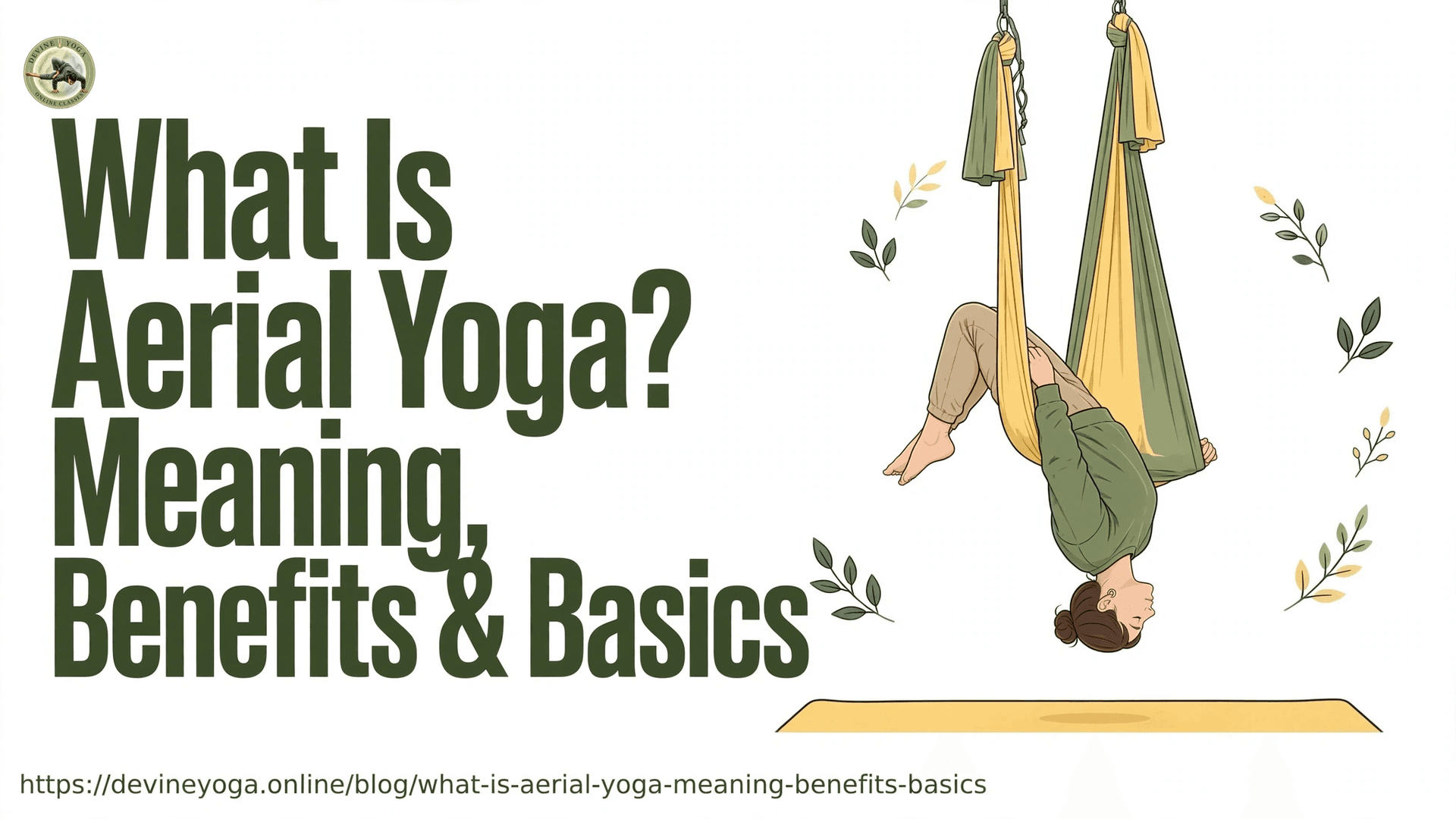
What Is Aerial Yoga? Meaning, Benefits, and Basics
What is aerial yoga? Learn its meaning, how aerial hammock yoga works, benefits, safety tips, basics for beginners & who should avoid it.
Published:
12 min read
Yoga for Senior Citizens: Benefits, Easy Poses and Safety Tips
Explore gentle yoga for senior citizens, including chair yoga, beginner-friendly poses, benefits, safety tips and a simple daily routine for healthy ageing.
Published:
18 min read
7-Day Yoga Challenge 2027: Start Your Wellness Journey
Start your 7-Day Yoga Challenge 2027 with simple daily poses, breathing exercises and mindfulness practices. Build a healthier wellness routine.
Published:
7 min read