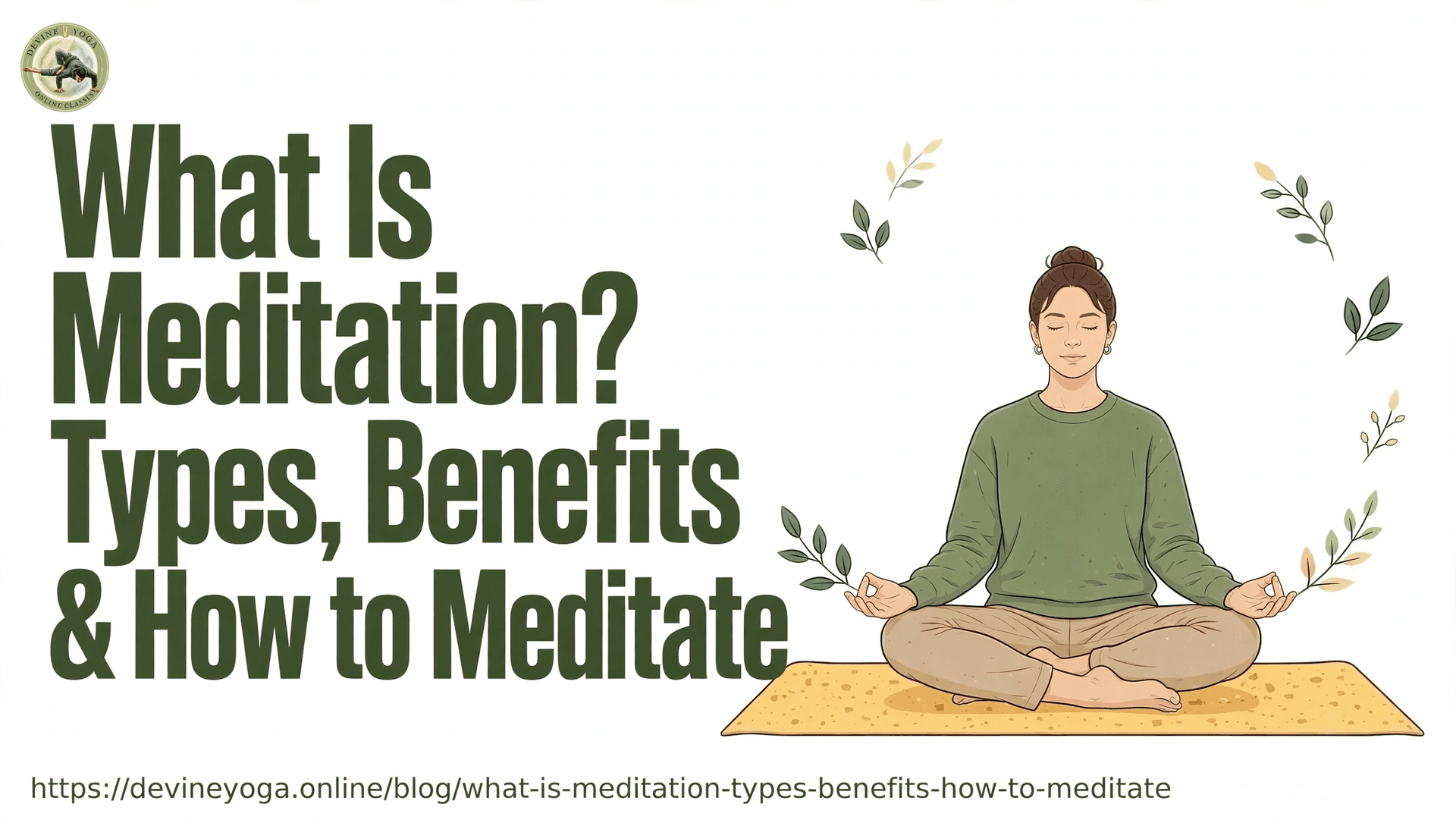
What Is Meditation? Types, Benefits & How to Meditate
Discover what meditation is, its different types, benefits for mind and body, and simple steps to start meditating daily.

Summarize this blog with:
What Is Meditation?
Meditation is a practice that involves training your attention and awareness to develop a calmer and more focused state of mind. It encourages you to pay attention to the present moment rather than becoming overwhelmed by past experiences or future worries.
The practice often involves focusing on your breathing, repeating a mantra, observing your thoughts or following guided instructions.
You are not trying to fight your thoughts. You are learning to notice them without getting carried away by them.
One common misconception is that meditation means completely stopping your thoughts. However, that is not its purpose. Thoughts naturally arise during meditation. The practice is about noticing them without immediately reacting and gently returning your attention to your chosen focus.
What Are the Different Types of Meditation?
There is no single meditation technique that works for everyone. Different practices offer different experiences, making it easier to find an approach that matches your personal preferences and wellness goals.
1. Mindfulness Meditation
Mindfulness meditation involves paying attention to the present moment without judging your thoughts, emotions or surroundings.
During this practice, you observe what is happening within and around you. You might focus on your breathing, sounds, physical sensations or thoughts as they arise.
Potential benefits:
- Develops present-moment awareness.
- Encourages better emotional awareness.
- May help manage everyday stress.
- Supports attention and concentration.
Mindfulness meditation is a popular starting point for beginners because it does not require complicated techniques.
2. Guided Meditation
Guided meditation involves following instructions provided by a meditation teacher, audio recording or meditation application.
The instructor may guide you through breathing exercises, visualisation, relaxation or body awareness.
Potential benefits:
- Makes meditation easier for beginners.
- Provides structure and direction.
- Encourages relaxation.
- Helps maintain focus during practice.
It is a useful option for people who find it difficult to meditate independently.
3. Mantra Meditation
Mantra meditation involves repeating a word, sound or phrase to help maintain concentration.
A mantra may be repeated silently or aloud. Traditional examples include the sound Om and other Sanskrit mantras used in spiritual practices.
The repetition provides the mind with a consistent point of focus.
Potential benefits:
- Encourages concentration.
- Provides structure to meditation.
- Can support a calming routine.
- Connects meditation with traditional spiritual practices.
4. Transcendental Meditation
Transcendental Meditation is a specific form of mantra-based meditation taught through a structured instruction programme.
It involves silently using a personalised mantra according to the method taught by a certified instructor.
Potential benefits:
- Provides a structured meditation approach.
- Encourages regular practice.
- May support relaxation and stress management.
It is important to understand that Transcendental Meditation is a specific technique, not a general name for all mantra meditation.
5. Loving-Kindness Meditation (Metta Meditation)
Loving-kindness meditation, also known as Metta meditation, focuses on developing feelings of kindness, compassion and goodwill towards yourself and others.
During the practice, you silently repeat positive wishes such as:
- May I be happy.
- May I be healthy.
- May I feel peaceful.
- May others experience happiness and well-being.
Gradually, these wishes can be extended towards family members, friends and other people.
Potential benefits:
- Encourages compassion.
- Promotes self-kindness.
- Supports emotional awareness.
- Helps cultivate positive intentions towards others.
6. Body Scan Meditation
Body scan meditation involves directing your attention towards different parts of your body, usually from your feet to your head.
You observe physical sensations such as warmth, pressure, tightness or relaxation without trying to change them.
Potential benefits:
- Develops body awareness.
- Helps identify areas of physical tension.
- Encourages relaxation.
- Supports mindfulness practice.
It is commonly included in structured mindfulness programmes.
7. Walking Meditation
Walking meditation involves bringing awareness to the experience of walking.
Instead of walking automatically while thinking about other things, you pay attention to your steps, body movements, breathing and surroundings.
Potential benefits:
- Combines gentle movement with mindfulness.
- Encourages awareness of the surroundings.
- Offers an alternative to seated meditation.
- Can be practised outdoors or indoors.
8. Visualization Meditation
Visualization meditation involves creating a mental image of a peaceful place, positive experience or meaningful goal.
For example, you might imagine sitting beside a calm lake, walking through a green forest or watching the sunrise.
The purpose is to use mental imagery as a focus for attention and relaxation.
Potential benefits:
- Encourages imaginative awareness.
- Provides a structured focus.
- May support relaxation.
- Can be combined with guided meditation.
What Are the Benefits of Meditation?
Meditation is not a magic cure, but consistent practice is associated with several meaningful benefits. Here is what research and clinical experience suggest, without overpromising:
Reduces Stress and Anxiety
Meditation helps you notice stress earlier and respond more calmly. By focusing on slow breathing and the present moment, you reduce rumination - the loop of replaying worries.
Many people report feeling calmer after just one week of daily 10-minute practice.
Improves Focus and Concentration
Every time you bring your attention back to your breath, you strengthen your attention muscle. Over weeks, this can translate into better focus at work, while studying, and during conversations.
Supports Better Sleep
Body scan and guided meditation before bed can help quiet mental chatter. Instead of scrolling or replaying the day, you give your mind a single, calming anchor.
Tip: Keep the lights low and avoid meditation apps with bright screens right before sleep.
Improves Emotional Awareness and Balance
Meditation creates space to notice emotions like anger, sadness, or overwhelm without immediately reacting. This does not mean you stop feeling emotions. It means you understand them better.
Loving-kindness meditation, in particular, is often used to build self-compassion.
Supports Physical Relaxation
Slow breathing during meditation can help release tension in the shoulders, jaw, neck, and back - areas where many people hold stress. It pairs well with gentle yoga, stretching, and breathwork (Pranayama).
May Help With Pain Management
Some mindfulness-based programmes have been studied as complementary approaches to pain management.
However, results differ across conditions and individuals. Meditation should not replace appropriate medical evaluation or treatment.
How to Meditate for Beginners: Step-by-Step Guide
Starting meditation does not have to be complicated. You do not need to sit for long periods or follow advanced spiritual practices.
Step 1: Find a Quiet and Comfortable Place
Choose a peaceful location where you can sit without unnecessary distractions.
You can meditate in your bedroom, living room, garden or any comfortable space.
Step 2: Sit in a Comfortable Position
Sit on a yoga mat, cushion or chair. Keep your back naturally upright and relax your shoulders.
You do not have to sit in the lotus position. Choose a posture that allows you to remain comfortable.
Step 3: Close Your Eyes or Soften Your Gaze
Gently close your eyes if comfortable, or look softly towards a fixed point.
Allow your body to settle before beginning.
Step 4: Focus on Your Breathing
Notice the natural movement of your breath.
Pay attention to how the air enters and leaves your body. Avoid forcing yourself to breathe in a particular way.
Step 5: Observe Your Thoughts
Your mind will naturally wander. You may think about work, responsibilities or other everyday experiences.
This is completely normal.
Simply notice the thought and gently bring your attention back to your breathing.
Step 6: Continue for a Few Minutes
If you are a beginner, start with five minutes.
As you become comfortable, gradually increase your practice to 10 or 15 minutes.
Step 7: End Your Meditation Slowly
When you finish, take a moment to notice your surroundings.
Gently open your eyes, move your fingers and return to your daily activities without rushing.
Beginner tip: Do not judge your meditation session based on how many thoughts you had. Returning your attention to your breathing is part of the practice itself.
What Is the Best Time to Meditate?
Meditation can be practised at different times throughout the day. The best time is the one that allows you to practise regularly without unnecessary interruptions.
1. Morning Meditation
Morning is a popular time to meditate because it provides an opportunity to begin the day with a calm and focused mindset.
You can practise breathing awareness or mindfulness meditation after waking up.
2. Afternoon Meditation
A short afternoon meditation session can provide a break from work and other daily responsibilities.
It can be particularly useful when you need a moment to pause and refocus.
3. Evening Meditation
Evening meditation offers an opportunity to reflect on your day and transition away from work-related activities.
Gentle mindfulness or guided relaxation can be suitable options.
4. Before Bedtime
Some people prefer meditation before sleeping because relaxation practices can help them unwind.
Choose a comfortable position and try a short body scan or guided meditation.
Common Meditation Mistakes to Avoid
Many beginners believe meditation requires perfect concentration and complete silence. These expectations can make the practice unnecessarily difficult.
1. Trying to Stop Every Thought
Having thoughts during meditation is normal. Instead of trying to eliminate them, notice them and gently return your attention to your chosen focus.
2. Starting With Long Sessions
Beginning with 30–60 minutes of meditation may feel challenging.
Start with five minutes and increase your duration gradually.
3. Expecting Immediate Results
Meditation is a practice that develops over time. Avoid expecting instant changes in your mood, concentration or stress levels.
4. Choosing an Uncomfortable Position
You do not need to sit in a difficult yoga posture to meditate.
A comfortable chair, cushion or mat can work equally well.
5. Practising Without Consistency
Meditating occasionally may make it harder to establish a routine.
Choose a realistic daily time that fits your lifestyle.
6. Comparing Your Experience With Others
Every individual experiences meditation differently. Focus on developing your own practice rather than comparing your progress with someone else's.
Frequently asked questions
What is meditation in simple words?
Meditation is a practice where you focus your attention on one thing, like your breath, to calm your mind and become more aware of the present moment. When your mind wanders, you gently bring it back.
What are the main types of meditation?
The main types include mindfulness, focused attention, guided, body scan, mantra, loving-kindness, and movement meditation.
How should a beginner start meditating?
Find a quiet place, sit comfortably, and focus on your natural breathing for five minutes. Whenever your mind wanders, gently bring your attention back to your breath.
How many minutes should I meditate daily?
Beginners can start with five minutes per day and gradually increase to 10–20 minutes, depending on their comfort and schedule.
Can meditation help reduce stress and anxiety?
Mindfulness meditation may help some people manage stress and anxiety symptoms. It is a complementary wellness practice and should not replace professional mental healthcare.
Is it better to meditate in the morning or at night?
Both can work. Morning meditation can provide a calm start, while evening practice can offer a chance to unwind. Choose a time you can maintain consistently.
Reading is a start. A live teacher is the shortcut.
In a Devine Yoga Online class your trainer sees you, corrects you by name and adapts every pose to your body - beginners included.
Most popular blogs
7-Day Yoga Challenge 2027: Start Your Wellness Journey
Start your 7-Day Yoga Challenge 2027 with simple daily poses, breathing exercises and mindfulness practices. Build a healthier wellness routine.
Published:
7 min read
Yoga for Depression and Anxiety in 2027
Discover how yoga for depression and anxiety in 2027 may support mental health with gentle poses, breathing techniques, and safe routines.
Published:
12 min read
Yoga for Height Increase: 10 Effective Poses to Try
Explore 10 yoga poses for better posture, flexibility and body alignment. Learn how to practise them daily and understand what yoga can do for height.
Published:
9 min read