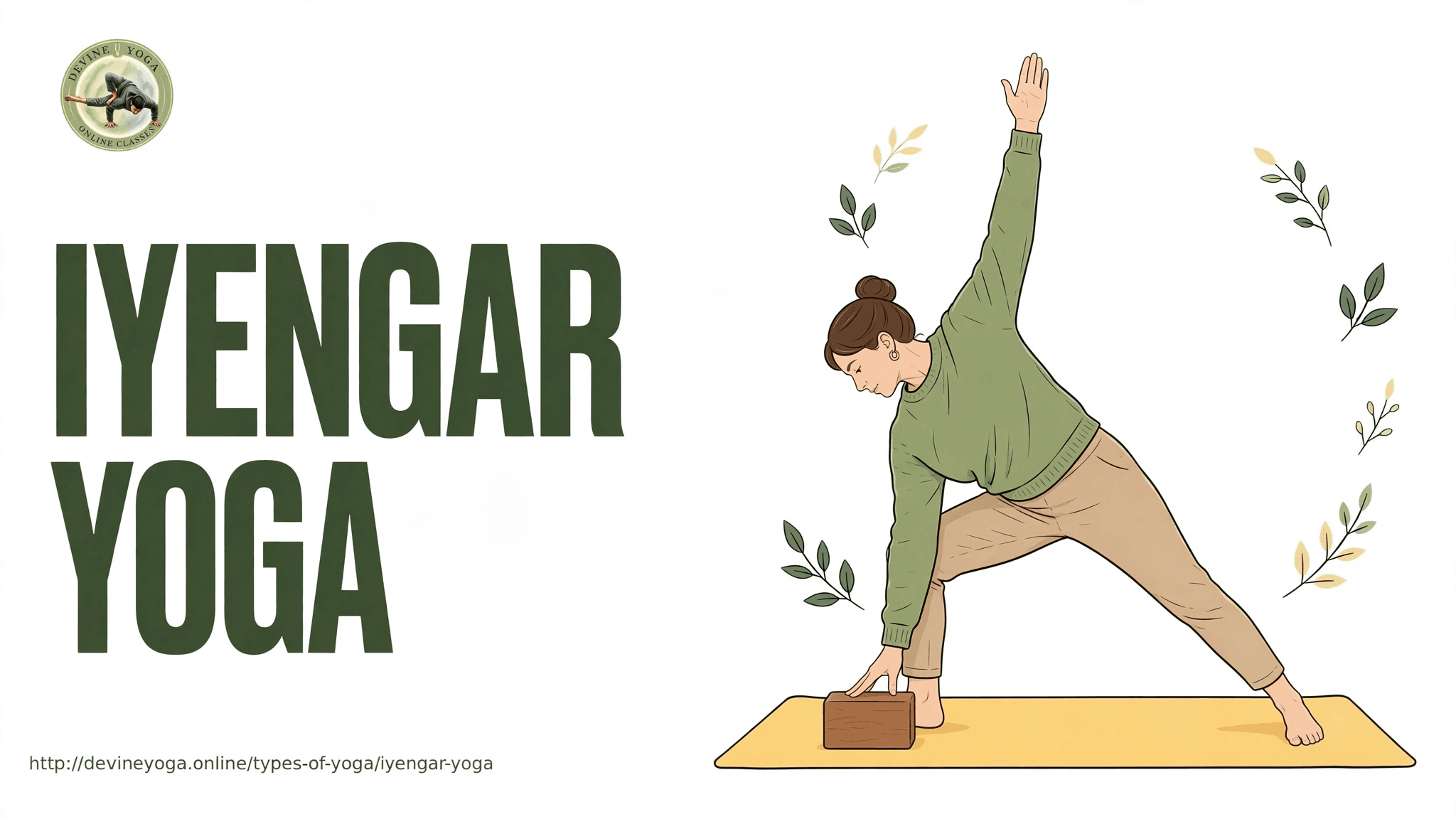
Iyengar Yoga
Learn how Iyengar yoga uses precise alignment and props like blocks and belts. See the benefits, who it suits and how to start at home as a beginner.
Summarize this blog with:
What is Iyengar yoga?
Iyengar yoga is a form of Hatha yoga built around three ideas: alignment, precision and timing. You learn exactly where each part of the body should be in a pose, and you hold the pose long enough to feel and adjust it.
Props are a signature feature. Blocks, belts (straps), bolsters, blankets, chairs and wall ropes help you reach a pose safely instead of forcing it. Classes are slow, detailed and often teach fewer poses than a flow class.
Where does it come from?
Iyengar yoga was developed by B.K.S. Iyengar (1918 to 2014), who studied under T. Krishnamacharya and went on to teach for decades in Pune, India. His 1966 book Light on Yoga introduced the method to a worldwide audience, and in 1975 the Ramamani Iyengar Memorial Yoga Institute (RIMYI) opened in Pune.
Certified Iyengar teachers complete long, structured training, which is one reason the style is known for its careful teaching.
What happens in a class?
A typical 60 to 90 minute class includes:
- Opening: a short chant or settling in
- Standing poses: such as Tadasana, Trikonasana and Virabhadrasana, held with careful alignment
- Seated and floor poses: forward folds, twists and hip openers
- Props work: adjustments with blocks, straps or a wall
- Closing: restorative poses and Savasana
The teacher gives detailed cues, such as how to lift the kneecap or lengthen the spine, and often demonstrates before you try.
Benefits
- Better alignment and posture: Detailed cues help you notice how you sit and stand.
- Strength and stability: Long holds build muscular endurance, especially in the legs and core.
- Flexibility, safely: Props let you reach poses without strain.
- Body awareness: You learn to feel small differences in your alignment.
- Calm focus: Concentrating on details quiets a busy mind.
- Accessibility: Props make poses available to stiff beginners and people with limitations.
Research on yoga overall suggests modest benefits for stress, wellbeing and low back pain, and some studies on Iyengar yoga have looked at back and neck pain. Evidence is limited and results vary. It is not a medical treatment.
Is it good for beginners?
Yes. The slow pace, clear instruction and props make it one of the most beginner-friendly styles.
It may suit you if you:
- Are stiff, new to yoga or want to learn poses properly
- Prefer clear, detailed instruction
- Have minor limitations and want to practice carefully (with your doctor’s approval)
- Dislike fast, flowing classes
Another style may suit you better if you:
- Want a fast, sweaty workout (try Vinyasa or Power yoga)
- Get restless holding poses (try a flow class)
- Mainly want deep relaxation (try Yin or Restorative)
Common props and what they do
| Prop | Use |
|---|---|
| Block | Brings the floor closer in forward folds and standing poses |
| Belt (strap) | Extends your reach in stretches like hamstring work |
| Bolster | Supports the body in restful poses |
| Blanket | Cushions knees or lifts the hips in seated poses |
| Chair | Supports seated and supported poses |
| Wall | Helps with balance and alignment |
No props at home? Use a firm cushion, a long scarf or belt, and a sturdy wall.
Common mistakes
- Forcing the pose instead of using props.
- Holding the breath while concentrating on alignment.
- Over-gripping: keep the face and shoulders soft.
- Skipping rest between poses.
- Copying from photos without a teacher’s feedback.
Who should be careful?
Talk to your doctor and tell your teacher first if you are pregnant, have injuries or recent surgery, high blood pressure, a heart or breathing condition, osteoporosis or glaucoma. Iyengar teachers often adapt poses for these situations, but approval from your doctor comes first. Stop if you feel dizzy, breathless or sharp pain.
Medical disclaimer: This article is for general education and is not medical advice. Consult a qualified healthcare professional before starting yoga.
Iyengar vs similar styles
| Iyengar | Hatha | Vinyasa | |
|---|---|---|---|
| Pace | Slow | Slow to moderate | Moderate to fast |
| Focus | Precise alignment | General basics | Flowing movement |
| Props | Central | Sometimes | Occasional |
| Pose length | Long holds | Medium holds | Short, linked |
| Best for | Beginners, stiff bodies, detail lovers | Beginners | People who like to move |
Frequently asked questions
What is Iyengar yoga in simple words?
A slow, detailed style of yoga that focuses on correct alignment and uses props to help you into poses safely.
Is Iyengar yoga good for beginners?
Yes. The slow pace, clear cues and props make it very beginner-friendly.
Is Iyengar yoga a good workout?
It builds strength and stamina through long holds, but it is less of a cardio workout than Vinyasa or Power yoga.
Do I need props at home?
Helpful but not essential. A cushion, a belt or scarf and a wall can replace most props.
Can Iyengar yoga help back pain?
Some people find careful, supported practice helpful, but it isn’t a treatment. Check with your doctor and tell your teacher about your back first.
Try Iyengar Yoga live. Your first 3 days are free.
Join a live Devine Yoga Online class: a real trainer watches you over video, corrects your poses by name and adapts every move to your body, beginners included.
More types of yoga
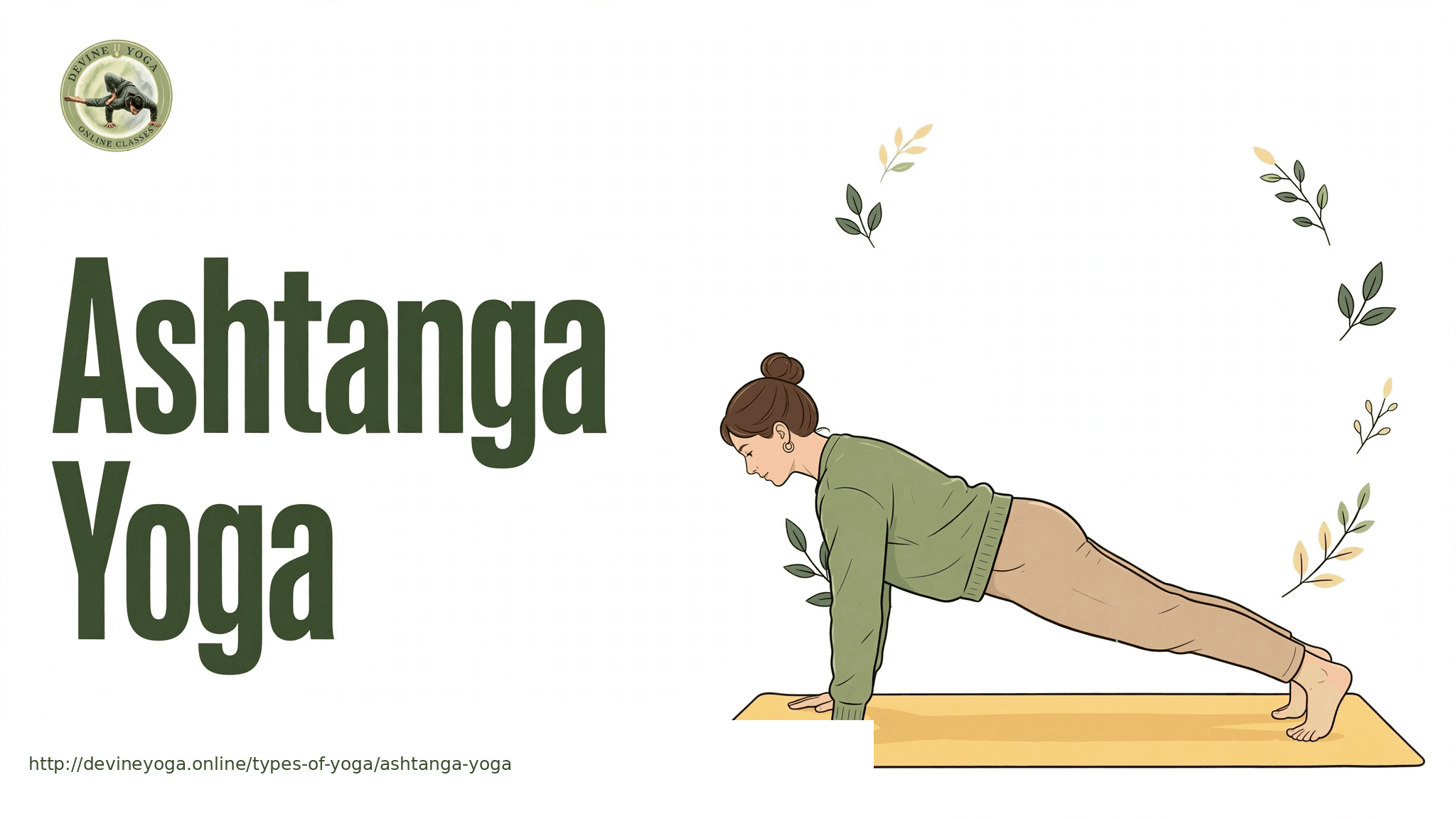
Ashtanga Yoga
Ashtanga yoga is a style in which you move through a set series of poses in a fixed order.
Explore More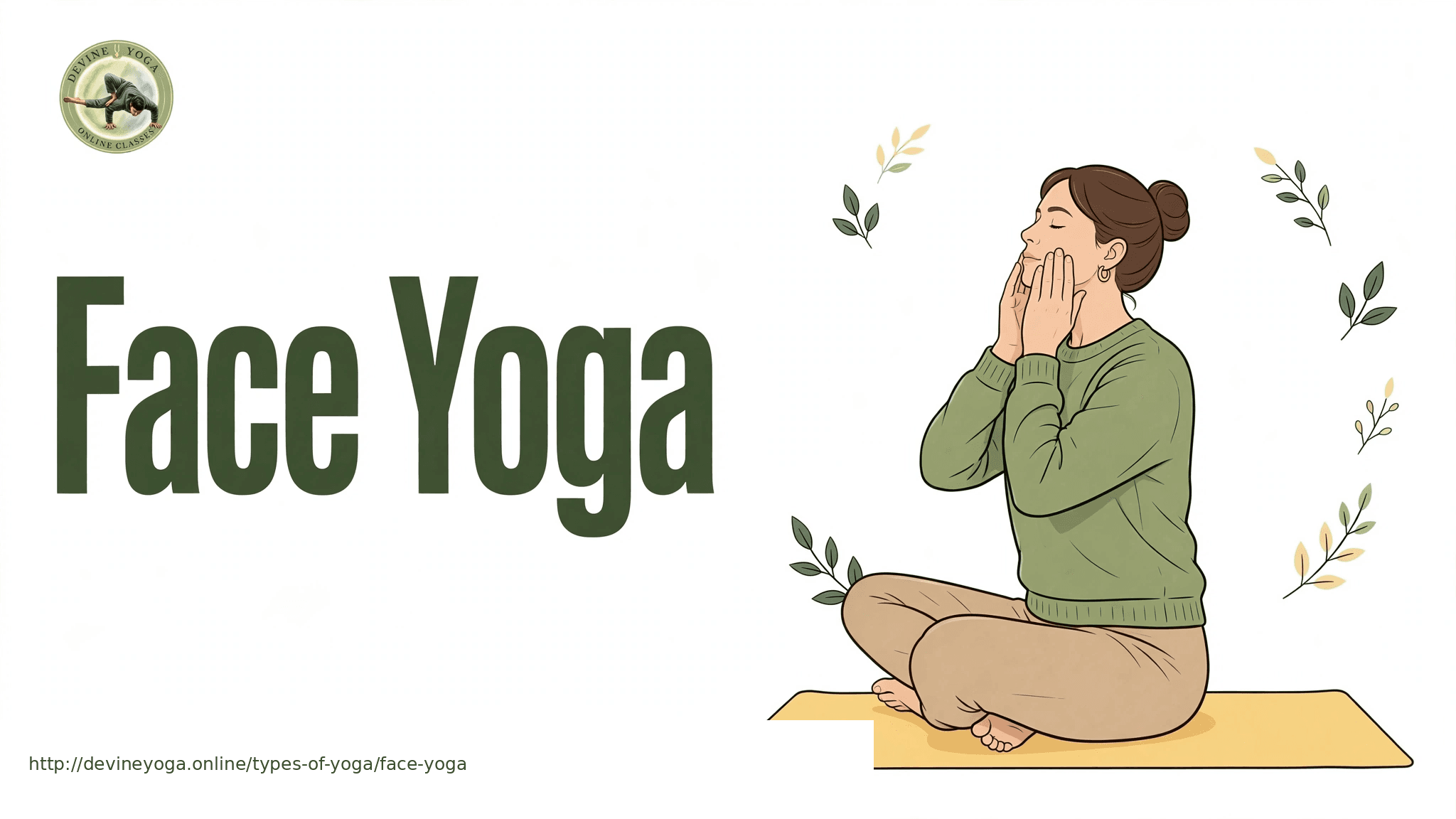
Face Yoga
Face yoga combines facial exercises, gentle self-massage, breathing and relaxation.
Explore More
Flow Yoga
Flow yoga, also called vinyasa flow, is a style in which poses are linked together in a continuous sequence.
Explore More