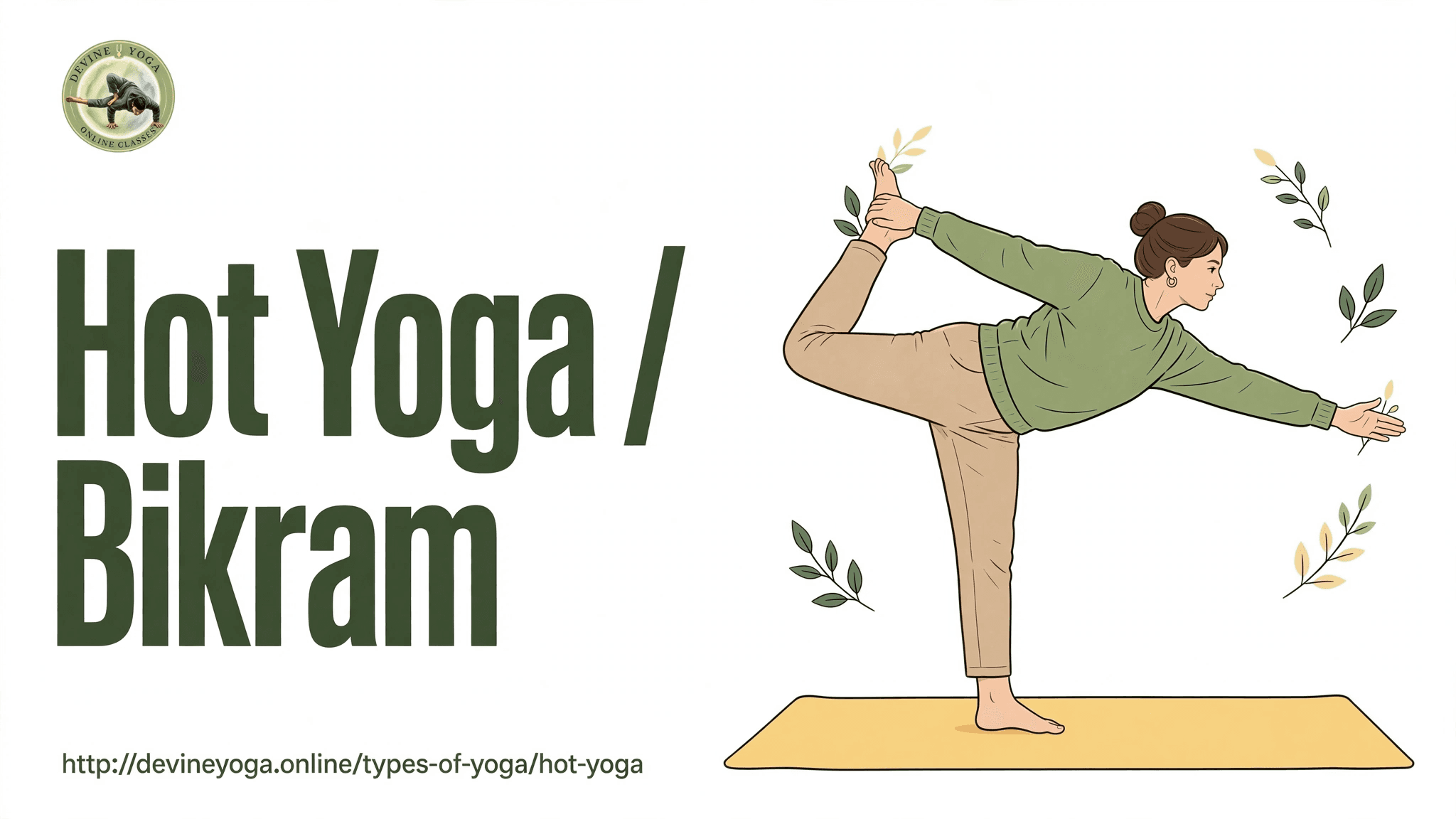
Hot Yoga / Bikram
What is hot yoga, and how is Bikram different? Learn the benefits, the real risks of the heat, who should avoid it and how to stay safe in class.
Summarize this blog with:
What is hot yoga?
Hot yoga is a broad term for yoga practiced in a warmed studio. The style of yoga can vary. It might be Vinyasa, Hatha or a set sequence, but the room is heated, often with added humidity.
The idea is that heat warms the muscles, which can make stretching feel easier, and that sweating feels cleansing. A hot class is also physically demanding, because your body works to cool itself while you move.
What is Bikram yoga?
Bikram yoga is a trademarked style created by Bikram Choudhury. Every class follows the same pattern:
| Feature | Details |
|---|---|
| Length | About 90 minutes |
| Temperature | About 40°C (105°F) |
| Humidity | About 40% |
| Sequence | 26 postures and 2 breathing exercises, always in the same order |
| Teaching style | Scripted instructions, often with mirrors in the room |
Because the sequence never changes, you can track your own progress from class to class. Some studios that no longer use the name “Bikram” teach the same sequence as “hot 26” or “traditional hot yoga.”
Where does it come from?
Bikram Choudhury, born in Kolkata, developed the sequence from Hatha yoga poses and began teaching in the US in the early 1970s. The style became hugely popular in the West from the 1990s onward.
A note on trust. Bikram Choudhury has faced multiple civil lawsuits alleging sexual misconduct, which he has denied, and in 2016 a US jury awarded damages in a case brought by a former employee. Many studios have moved away from his name for this reason. We mention this so readers have the full picture.
Hot yoga vs Bikram yoga
| Hot yoga | Bikram yoga | |
|---|---|---|
| Sequence | Varies by studio and teacher | Fixed 26 poses and 2 breathing exercises |
| Style | Any style, heated | One specific sequence |
| Temperature | Usually 32 to 40°C | About 40°C |
| Class length | 45 to 90 minutes | 90 minutes |
| Teaching | Varies | Scripted |
Benefits
- Feels warm and loosening: Many people find stretching feels easier in heat.
- Strength and stamina: The poses and the heat make it a demanding workout.
- Focus: Handling discomfort and keeping steady breath can build mental resilience.
- Routine: The fixed Bikram sequence makes progress easy to notice.
- Sweat and energy: Many people feel energized or satisfied afterwards.
Research is limited. A few small studies of Bikram yoga have reported improvements in flexibility, balance and strength in healthy adults. Some research has also found that body temperature and heart rate can rise a lot during hot classes. Heat does not make the stretch “safer” or more effective, and the idea that sweating “detoxifies” the body is not supported by solid evidence. Your liver and kidneys do that job.
The risks of the heat
Heat adds real risks that regular yoga doesn’t have:
- Dehydration and electrolyte loss from heavy sweating
- Dizziness or fainting, especially when standing up quickly
- Heat exhaustion, with headache, nausea, cramps, confusion or a very fast heartbeat
- Overstretching. Warm muscles may let you move beyond a safe range without feeling it, and the joint can pay the price later
- Low blood pressure or blood sugar episodes in some people
Stop and cool down if you feel dizzy, nauseated, confused, faint or have chest pain. Leave the room, sit down, sip water and tell the teacher. Seek medical help if it doesn’t pass quickly.
Who should be careful?
Talk to your doctor before trying hot yoga if you:
- Are pregnant (most doctors advise against heated yoga)
- Have heart disease, high or low blood pressure, or a circulation problem
- Have diabetes
- Have asthma or other breathing conditions
- Are prone to fainting, dizziness or heat sensitivity
- Have an eating disorder or are dehydrated or underweight
- Take medications that affect sweating, blood pressure or fluid balance
- Have an injury or hypermobile joints
Medical disclaimer: This article is for general education and is not medical advice. Consult a qualified healthcare professional before trying hot yoga, especially if you have a health condition.
How to stay safe in a hot class
- Start with a shorter class (45 to 60 minutes) and a lower temperature if you can.
- Hydrate before, during and after. Drink water through the day, not just at class.
- Eat lightly, about 2 to 3 hours beforehand.
- Wear light, breathable clothing and bring a towel.
- Take breaks. Rest in Child’s pose or Savasana whenever you need to.
- Don’t compete or push for depth. Stay within your normal range.
- Get up slowly from lying or forward folds.
- Tell the teacher if you’re new, pregnant or have any condition.
Should you do hot yoga at home?
No. Don’t heat your room to copy a hot class. Studios use controlled heating, ventilation and humidity, plus staff who watch for problems. Heating a home with heaters is harder to control and increases risks. If you want a warming practice at home, try a gentle Vinyasa flow in a comfortable room instead.
Common mistakes
- Not drinking enough beforehand.
- Going on an empty or very full stomach.
- Overstretching because the muscles feel loose.
- Staying in the room when feeling unwell.
- Treating it as weight loss. Much of the weight lost in a hot class is water, which returns when you rehydrate.
- Skipping rest days.
Frequently asked questions
What is hot yoga in simple words?
Yoga practiced in a heated room, usually 32 to 40°C. The style of yoga varies, but the heat is what makes it “hot.”
What is the difference between Bikram and hot yoga?
Bikram is one specific hot yoga sequence of 26 poses and 2 breathing exercises in about 90 minutes at 40°C. “Hot yoga” covers any style in a heated room.
Is hot yoga good for weight loss?
You sweat a lot, but most of that is water. Weight loss depends on overall diet and activity, and yoga alone is not a guaranteed method.
Does hot yoga detox the body?
No. Sweating helps cool you, but your liver and kidneys handle detoxification. There is no solid evidence that hot yoga “flushes toxins.”
Is hot yoga safe for beginners?
It can be for healthy adults who start gently, hydrate and take breaks. Check with your doctor if you have a health condition, and avoid it if pregnant.
What should I wear?
Light, breathable, close-fitting clothes, plus a towel and a water bottle.
Try Hot Yoga / Bikram live. Your first 3 days are free.
Join a live Devine Yoga Online class: a real trainer watches you over video, corrects your poses by name and adapts every move to your body, beginners included.
More types of yoga
Ashtanga Yoga
Ashtanga yoga is a style in which you move through a set series of poses in a fixed order.
Explore More
Face Yoga
Face yoga combines facial exercises, gentle self-massage, breathing and relaxation.
Explore More
Flow Yoga
Flow yoga, also called vinyasa flow, is a style in which poses are linked together in a continuous sequence.
Explore More