Aerial Yoga
Aerial yoga uses a ceiling hammock to support your poses. Learn what happens in class, the benefits, who should avoid it and why it is not a home practice.
Summarize this blog with:
What is aerial yoga?
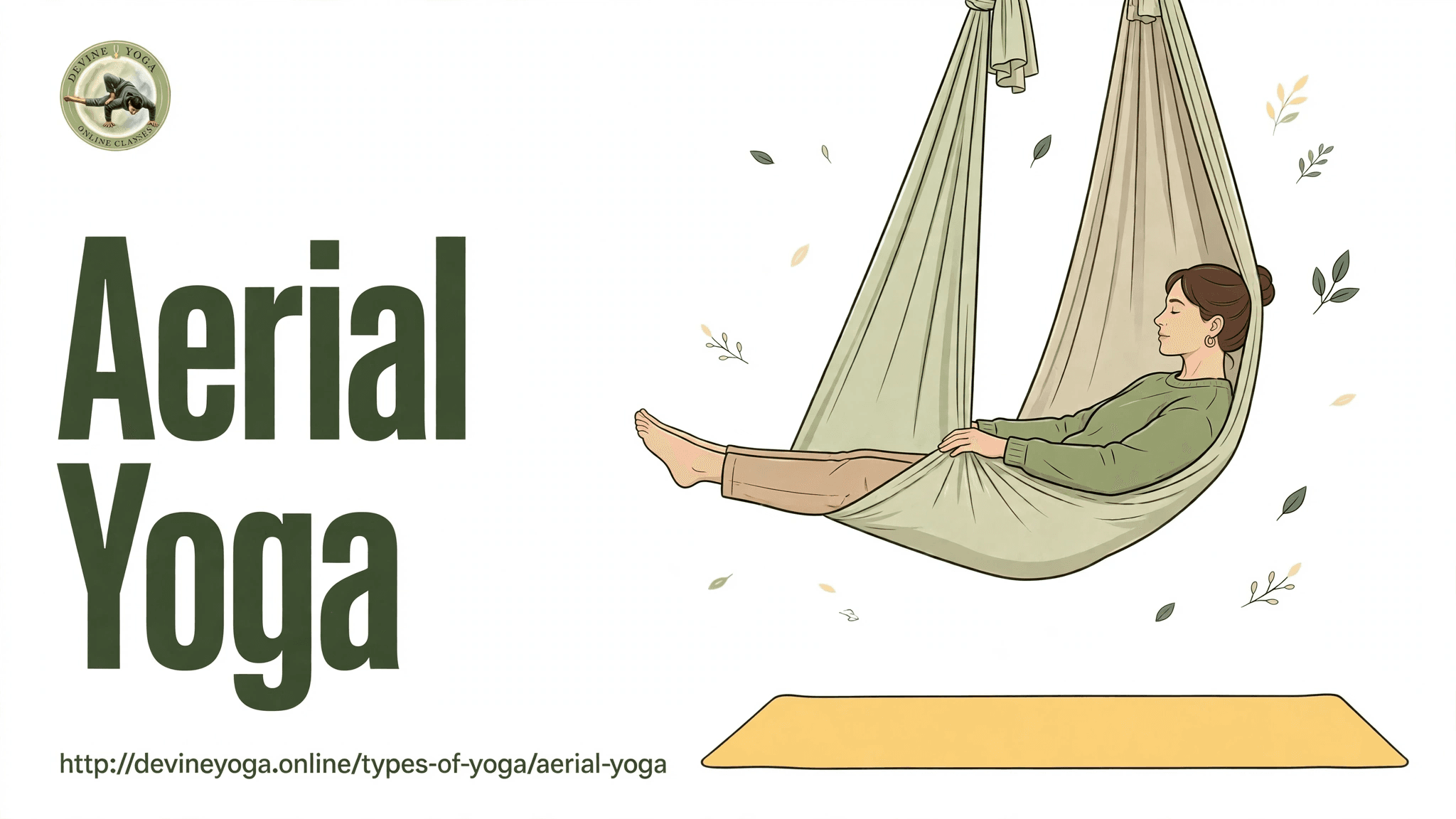
Aerial yoga blends traditional yoga poses with elements of aerial arts and Pilates. You use a hammock (also called a silk, swing or sling) made of strong, stretchy fabric, anchored to the ceiling at about hip height.
The hammock can act as a seat, a support under the hips or a sling for the legs. Poses range from simple supported stretches to gentle inversions, where your head hangs below your heart. Most beginner classes keep your feet close to the floor.
Where does it come from?
Aerial yoga is a modern invention, not a traditional Indian practice. It was popularized in the 2000s by Christopher Harrison, a dancer and gymnast who founded the AntiGravity method in New York. Today many studios teach their own versions, and training standards vary.
What happens in a class?
A typical 45 to 60 minute class includes:
- Orientation: how to adjust the hammock height and safely get in and out
- Warm-up: simple stretches and breathing
- Supported poses: standing and seated poses with the hammock as a prop
- Hanging and gentle inversions: only when you’re ready, with the teacher watching
- Cocoon relaxation: lying wrapped in the hammock for the final rest
Beginners usually stay close to the ground, and many classes have no full inversions at first.
Benefits
- Spinal decompression feeling: Hanging stretches can feel like a release for the back, though this is a sensation, not a proven treatment.
- Joint-friendly stretching: The hammock takes some weight, which can reduce load on the wrists and knees.
- Strength and core work: Holding yourself in the hammock uses your arms, shoulders and trunk.
- Flexibility: Support lets you ease into stretches without forcing.
- Playfulness: Many people find it fun, which helps them stay consistent.
- Relaxation: The cocoon pose at the end feels deeply restful to many people.
There is very little research on aerial yoga. A few small studies have looked at flexibility, balance and mood, but the evidence is limited. Claims that aerial yoga “decompresses the spine,” “detoxifies the body” or fixes back pain are not well supported.
Is aerial yoga good for beginners?
It can be, in a beginner class with a trained teacher and a properly rigged studio. You don’t need to be flexible or strong, but you should be comfortable being supported off the ground.
It may suit you if you:
- Enjoy playful, creative movement
- Want joint-friendly stretching
- Are curious about inversions and want to try them with support
- Like a class that feels different from a mat class
Another style may suit you better if you:
- Feel anxious about heights or hanging
- Want a traditional, meditative practice
- Prefer to practice at home with no equipment
- Have any of the conditions listed below
What you need
| Item | Notes |
|---|---|
| Aerial hammock | Provided by the studio. Must be rated for body weight and professionally installed |
| Rigging | Anchored to ceiling points that are tested to hold dynamic loads |
| Clothing | Fitted, covered clothing with long sleeves and leggings, to prevent fabric burn and chafing |
| No jewelry or zips | They can snag or damage the fabric |
Safety first: why this is not a DIY practice
Do not hang a hammock at home from a regular ceiling hook, beam or door frame. The forces on an anchor point are much greater than your body weight, and a failed anchor can cause serious injury.
Look for a studio that:
- Uses professionally installed and inspected rigging
- Has teachers with specific aerial yoga training, not just a general yoga certificate
- Teaches you how to enter and exit the hammock safely
- Limits class size so the teacher can see everyone
- Keeps mats on the floor and the space clear
Common mistakes
- Rushing into inversions. Take your time, and stay near the floor until you feel secure.
- Setting the hammock at the wrong height. The teacher should help with this.
- Skipping the orientation. The safe entry and exit matter.
- Wearing the wrong clothes. Zips, jewelry and loose clothing cause problems.
- Holding the breath. Breathe slowly through your nose.
- Coming up too fast from an inversion. Return slowly to avoid dizziness.
- Ignoring the signals. Dizziness, pressure in the head or numbness are signs to come down.
Who should be careful?
Talk to your doctor and tell your teacher first if you:
- Are pregnant (inversions and hanging are generally not advised without specialist guidance)
- Have glaucoma or other eye pressure conditions
- Have high or low blood pressure or a heart condition
- Have vertigo, dizziness or balance problems
- Have osteoporosis, recent fractures or recent surgery
- Have neck, shoulder, wrist or spine injuries
- Have a hernia, a detached retina or ear infections
- Are on blood-thinning medication or prone to fainting
- Exceed the hammock’s weight limit
Come down and rest if you feel dizzy, nauseated, faint, or have pain or pressure in the head, eyes or chest.
Medical disclaimer: This article is for general education and is not medical advice. Consult a qualified healthcare professional before trying aerial yoga, especially if you have a health condition.
Aerial yoga vs similar styles
| Aerial | Hatha | Yin | |
|---|---|---|---|
| Equipment | Ceiling-rigged hammock | Mat | Mat and props |
| Pace | Slow to moderate | Slow to moderate | Very slow |
| Intensity | Low to moderate | Low to moderate | Low |
| Home practice | Not safe without proper rigging | Easy | Easy |
| Inversions | Supported, optional | Rare | Rare |
| Best for | Playful, joint-friendly stretching | Beginners | Deep stretch |
Frequently asked questions
What is aerial yoga in simple words?
Yoga practiced with a fabric hammock hung from the ceiling. The hammock supports your body, so you can stretch and sometimes invert with less strain.
Is aerial yoga good for beginners?
Yes, in a beginner class with a trained teacher and a safely rigged studio. You don’t need strength or flexibility, but tell the teacher about any health conditions.
Is aerial yoga safe?
It is generally safe in a well-run studio, but there are risks like falls, dizziness and strain. Don’t rig a hammock at home.
Can aerial yoga help back pain?
Some people find hanging stretches relieving, but it is not a proven treatment. Check with your doctor first, since inversions don’t suit everyone.
Can I do aerial yoga online?
Not safely at home unless you have a professionally installed rig. For most people, aerial yoga is an in-studio practice.
What should I wear?
Fitted, covered clothing, including long sleeves and leggings, with no zips or jewelry.
Try Aerial Yoga live. Your first 3 days are free.
Join a live Devine Yoga Online class: a real trainer watches you over video, corrects your poses by name and adapts every move to your body, beginners included.
More types of yoga
Ashtanga Yoga
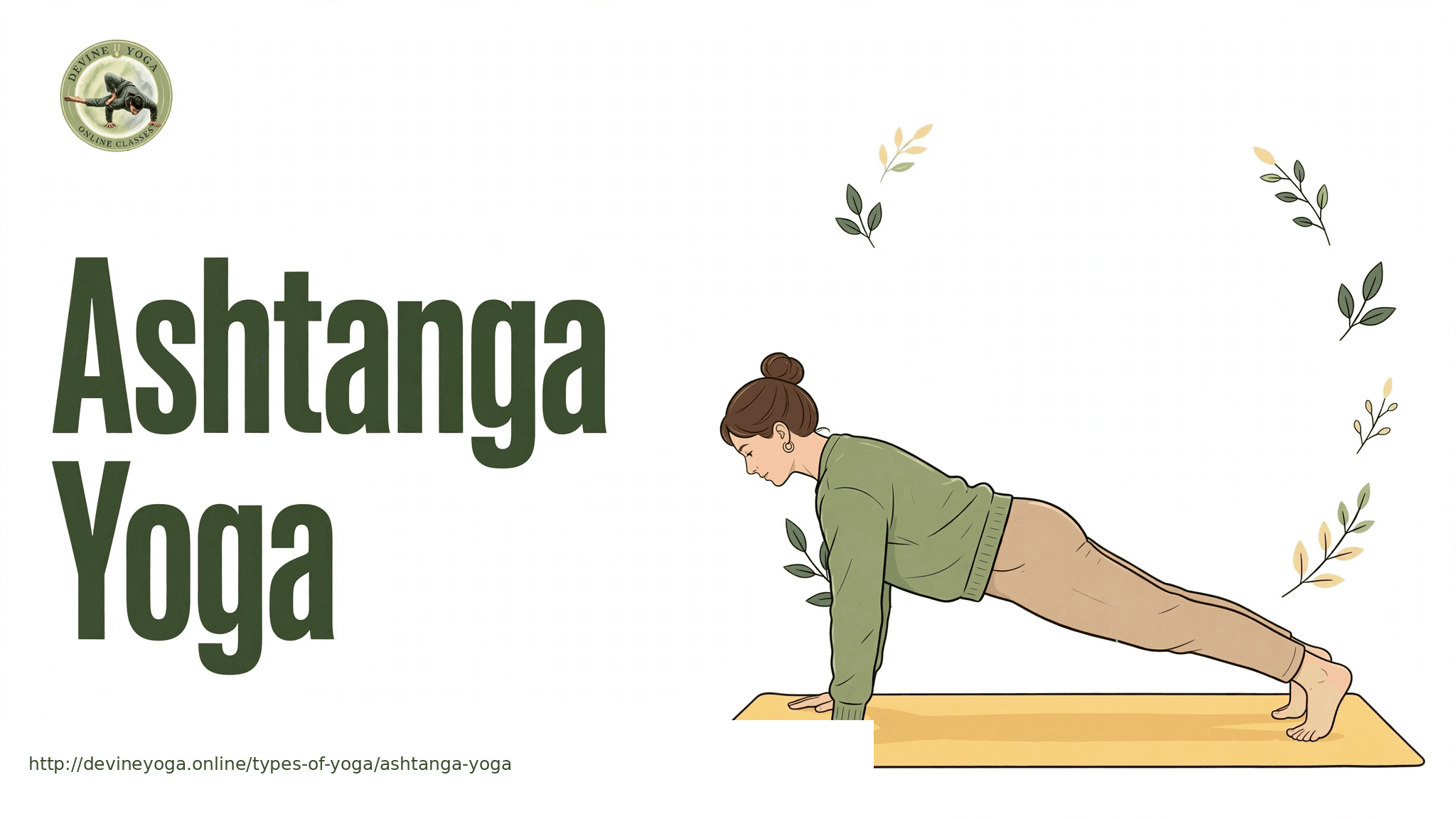
Ashtanga yoga is a style in which you move through a set series of poses in a fixed order.
Explore More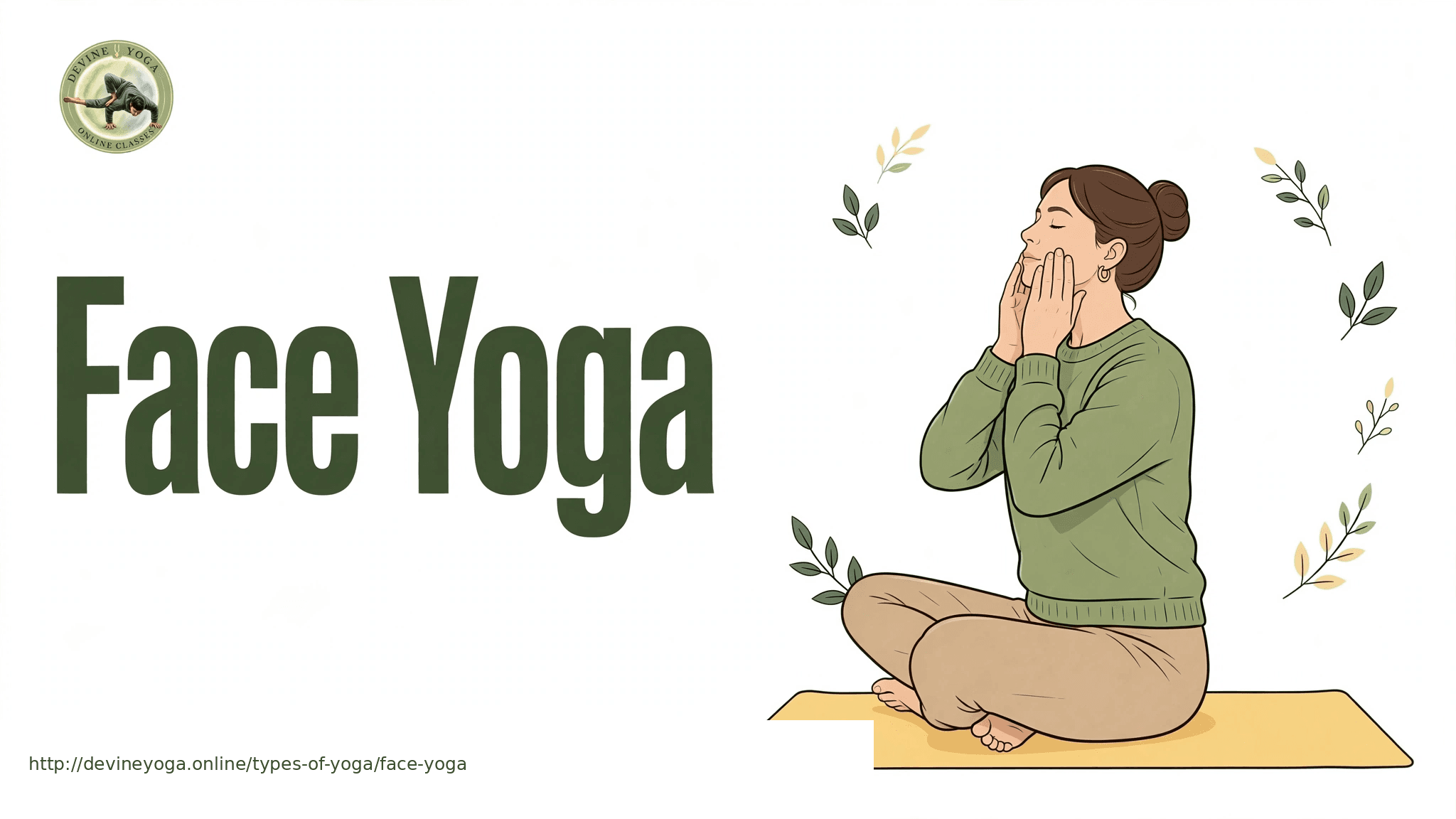
Face Yoga
Face yoga combines facial exercises, gentle self-massage, breathing and relaxation.
Explore More
Flow Yoga
Flow yoga, also called vinyasa flow, is a style in which poses are linked together in a continuous sequence.
Explore More